
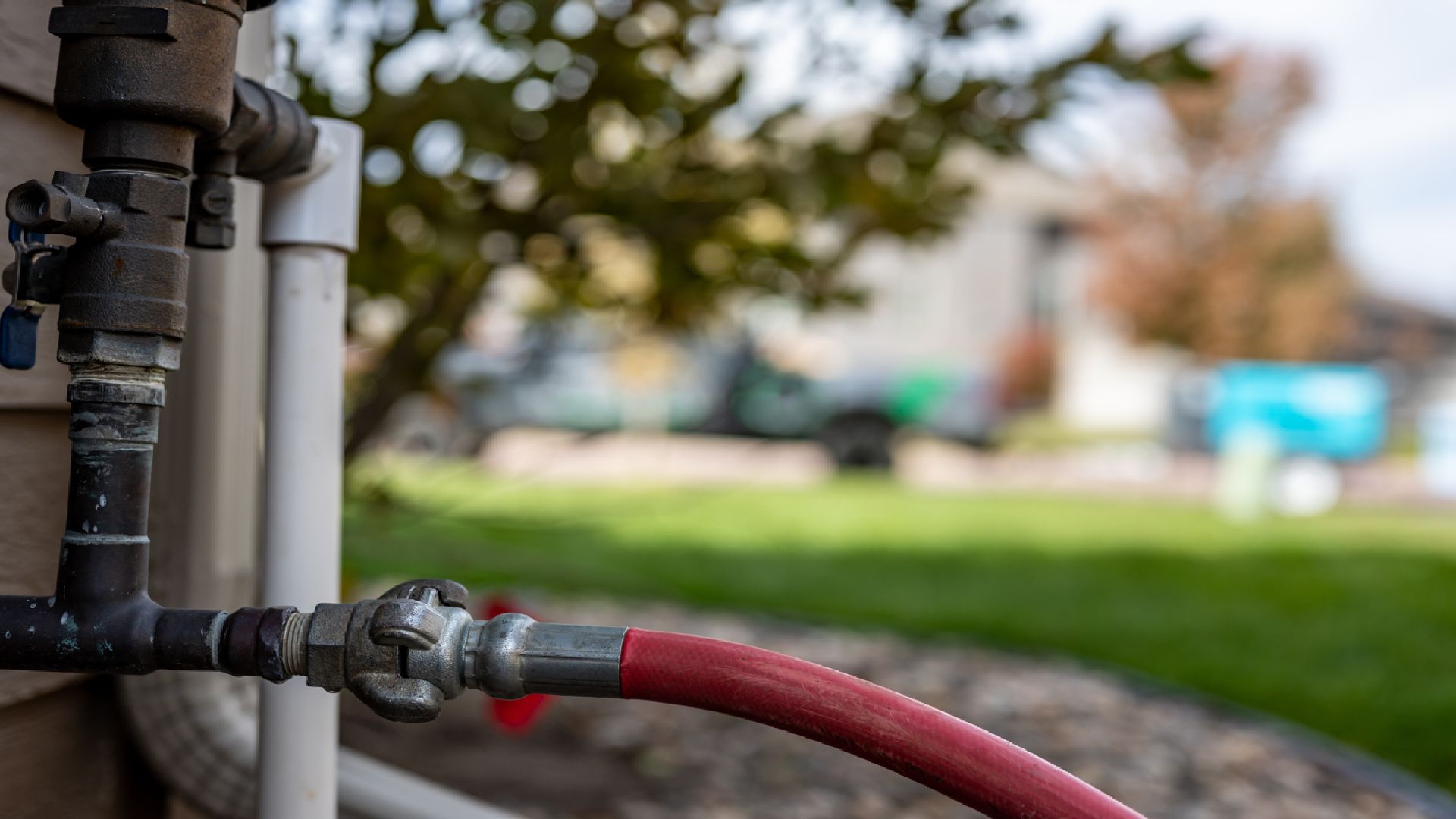
Leaving water in your irrigation system over winter is a fast way to ruin expensive plumbing. As trapped water freezes, it expands, snapping underground PVC pipes, shattering valve manifolds, and cracking exposed backflow assemblies. Fixing freeze damage in the spring often requires tearing up your lawn and paying hefty repair bills.
Taking a little time in the autumn to properly shut down and drain your sprinklers protects your equipment, saves money, and ensures your system is ready to fire back up smoothly when warmer weather returns.
Ignoring your sprinkler system in the fall is a gamble your wallet will lose. Water left trapped inside your pipes expands with incredible force when it freezes, turning underground PVC lines into brittle plastic, shattering valve manifolds, and exploding your backflow assembly.
What starts as a minor late-season maintenance chore quickly turns into a nightmare of torn-up lawns, flooded soil beds, and a hefty repair bill. Properly draining and blowing out your water lines in the fall prevents these structural failures and keeps your system functional for the following season.
Timing is everything when shutting down your irrigation for the year. You should aim to winterize your system in mid-to-late fall, ideally 1 to 2 weeks before your region’s forecasted first hard freeze.
While light ground frosts around 32°F won't immediately penetrate the soil to damage buried pipes, a hard freeze (defined as temperatures dropping to 28°F or lower for several continuous hours) will quickly freeze water inside shallow lines and exposed backflow preventers.
Source link





