
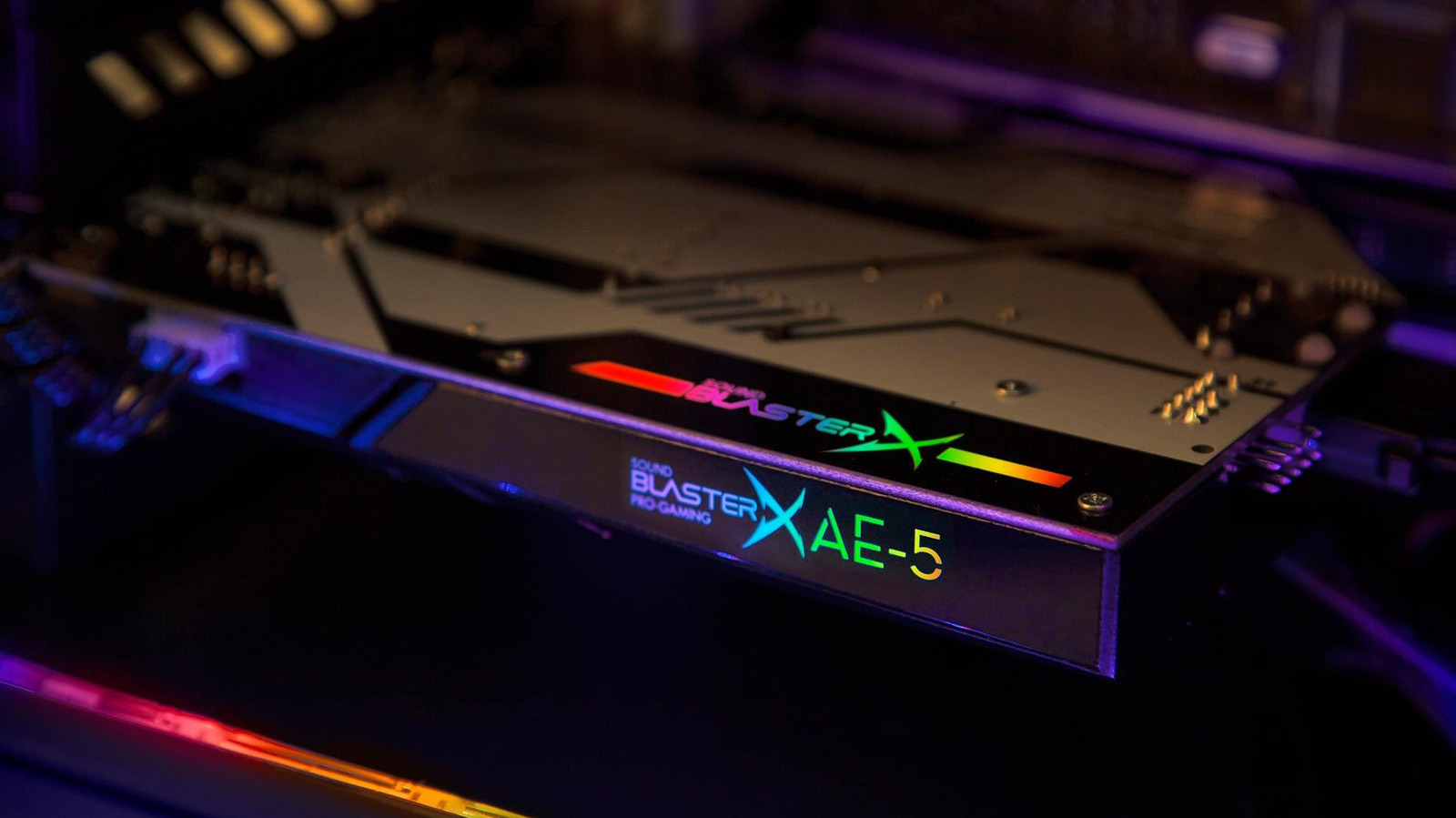
Most people don't need to buy a sound card, but certain use cases can benefit from adding one.
Many eons ago, in the '80s and '90s, a dedicated sound card was a must-have for any PC gamer or musician. Your machine's built-in hardware was limited to bleeps and bloops, or at best some convoluted tricks to fudge low-res samples. Just having music and effects that didn't grate on your ears was a major advancement. You'd no more consider skipping a sound card back then than you would a 3D graphics card today.
As you've probably noticed, though, dedicated sound cards seem to have dropped off the radar. They are still a thing, yet even the one-time king of PC audio, Creative, seems to have relegated them to a sideshow. That might seem odd, given that in some ways, sound matters more than ever. It's common for media to be mixed for spatial audio formats like Dolby Atmos, which position sound "objects" in 3D space. There's also a push for lossless audio in both movies and music. Either of those can place serious demands on pipelines, as home theater owners will attest.
Standing on the outside, then, you might be understandably confused. Does a sound card still meaningfully improve audio quality? Should you consider one when building or upgrading a PC rig? The quick answer is that most shoppers can safely skip one, although there are cases when a separate audio interface is mandatory.
PC audio technology is no longer an afterthought, as it was in the '80s.
Source link





