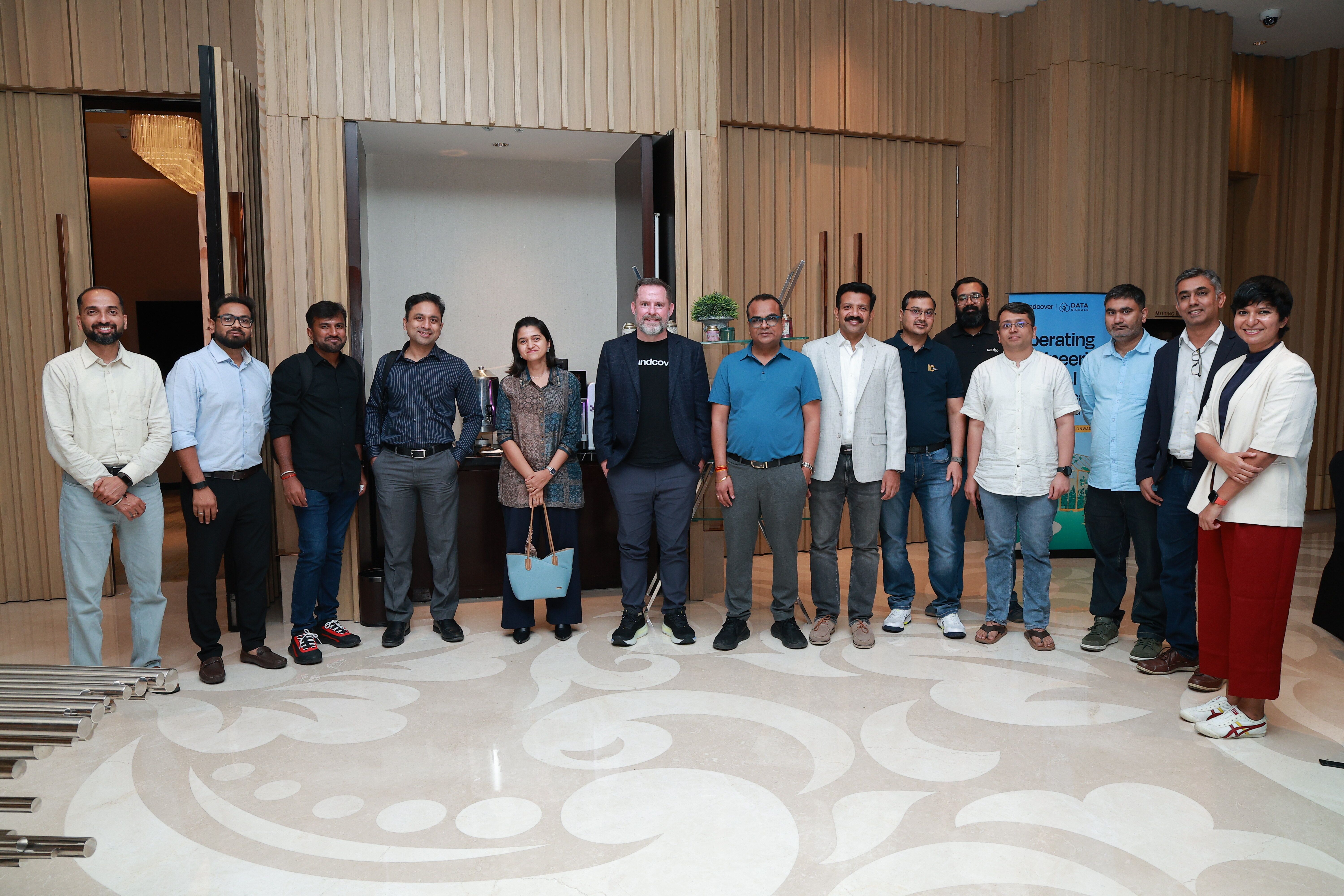
AI has made writing code faster than ever, but the harder question for engineering leaders is what happens after the code is written. At a roundtable on operating engineering in the AI era, leaders from logistics, food tech, healthcare, telecom, fintech, ecommerce and higher education compared notes on scaling with AI without losing reliability, security or control. The shared view was that speed is no longer the hard part. Governing it is.
The roundtable, moderated by Ipshita Basu, brought together Manjunath Nakshathri, Head of Engineering, Mojro; Shobhit Suman, CPO, HungerBox; Pavan Kumar A T, CTO, Digii (DigiiCampus); Pranjal Nadhani, Co-founder and CTO, Cautio; Kenil Paul, VP, Technology and Solutions, 6D Technologies; Rimjhim Agrawal, Co-founder and CTO, BrainSightAI; Dhruv Rastogi, Chief AI Officer, MediAssist; Chandrakesh Pandey, Senior Vice President of Technology, Niyo Solutions Inc.; Achal Sharma, CTO, TechnoSport; Sunil Kumar, Director Engineering, Meesho; and Anshul Sharma, Director Engineering, Scaler.
The session was hosted by groundcover and Data Signals in partnership with YourStory, and was led on the host side by Paul Trebe, Head of Sales and Partnership, groundcover, and Satish Dange, Founder, Data Signals.
Participants agreed that AI has compressed build time, but the pressure has shifted downstream. When agents generate large volumes of code, the questions become who reviews it, who tests it and who monitors dozens of deployments a day. Several leaders said their teams now spend more time on design, context and governance than on writing components.
Source link