
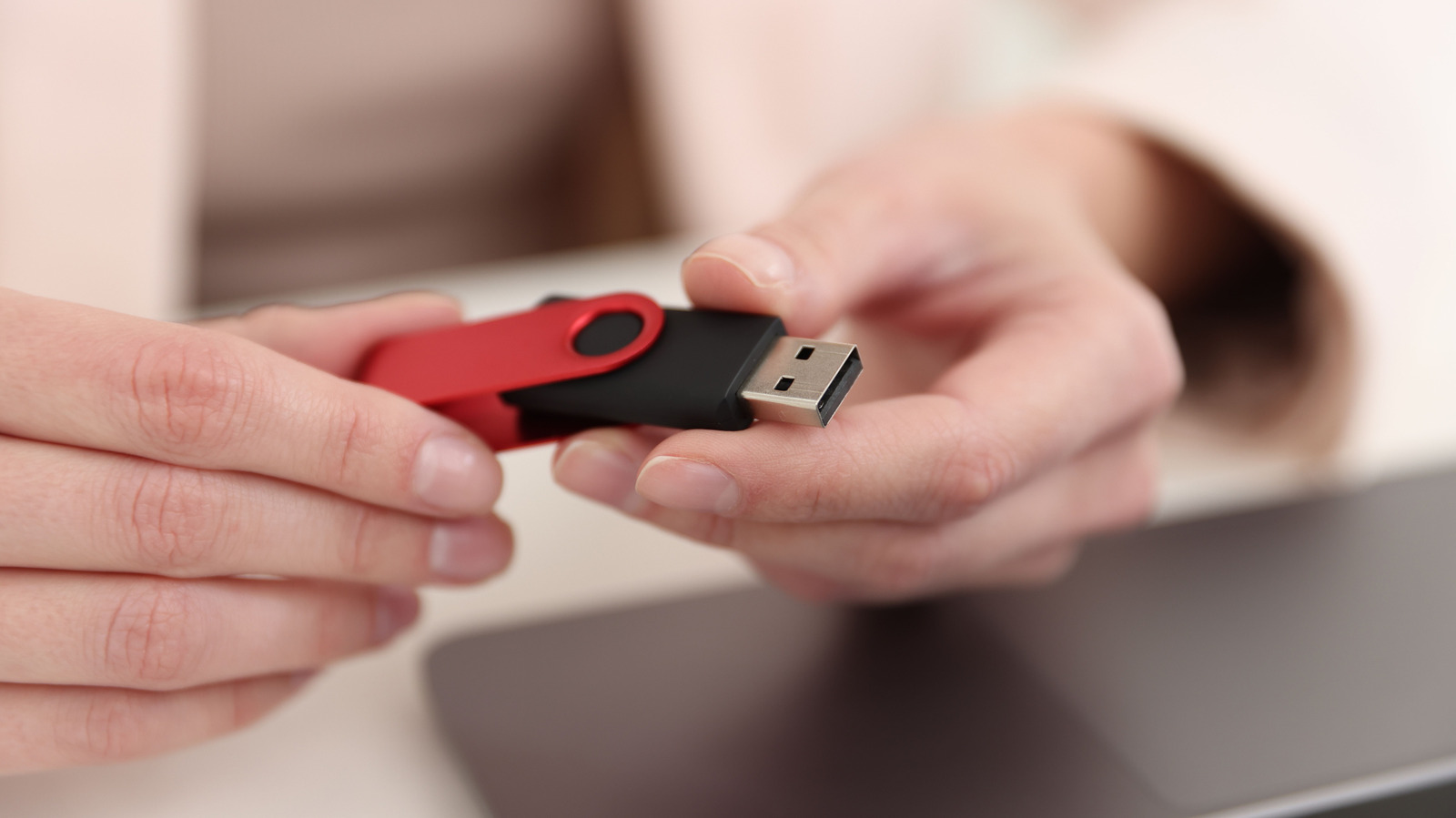
There's no hidden or extraordinary meaning for the letter "A" in USB-A. It's simply a letter designation for a Type-A connector, which is the familiar, wide rectangular plug found on flash drives and countless charging cables. USB itself stands for Universal Serial Bus, but the letter "A" identifies the connector type and nothing more. The same holds true for USB-B and USB-C connectors.
The reason for differentiating A, B and C goes back to the USB Implementers Forum (USB-IF) and the necessary designators for physical connections and power/data delivery. For instance, with a traditional printer, B is the square device connector and A is the rectangular end that plugs into your PC. In the early days, this was a simple method for informing consumers what goes where and why.
For everyday use, Type A is a connector label with charging capabilities or charging and data transfer. Sure, that's the boring way to describe it, but it really isn't anything beyond that. Alone, the USB-A designation doesn't tell you how quickly you can transfer files with it or how much charging power a USB-A port will spit out. At the end of the day, two ports with the same rectangular opening can represent two entirely different capabilities.
USB-A ports are reassuringly familiar to just about everyone, but the performance capabilities aren't readily apparent all the time. 0 connection has a maximum data rate of 480 Mbps, but there are faster USB-A implementations that support 5 Gbps or 10 Gbps. Keep in mind that those are connection limitations that determine why a device may or may not function as expected when you plug it in.
Source link





