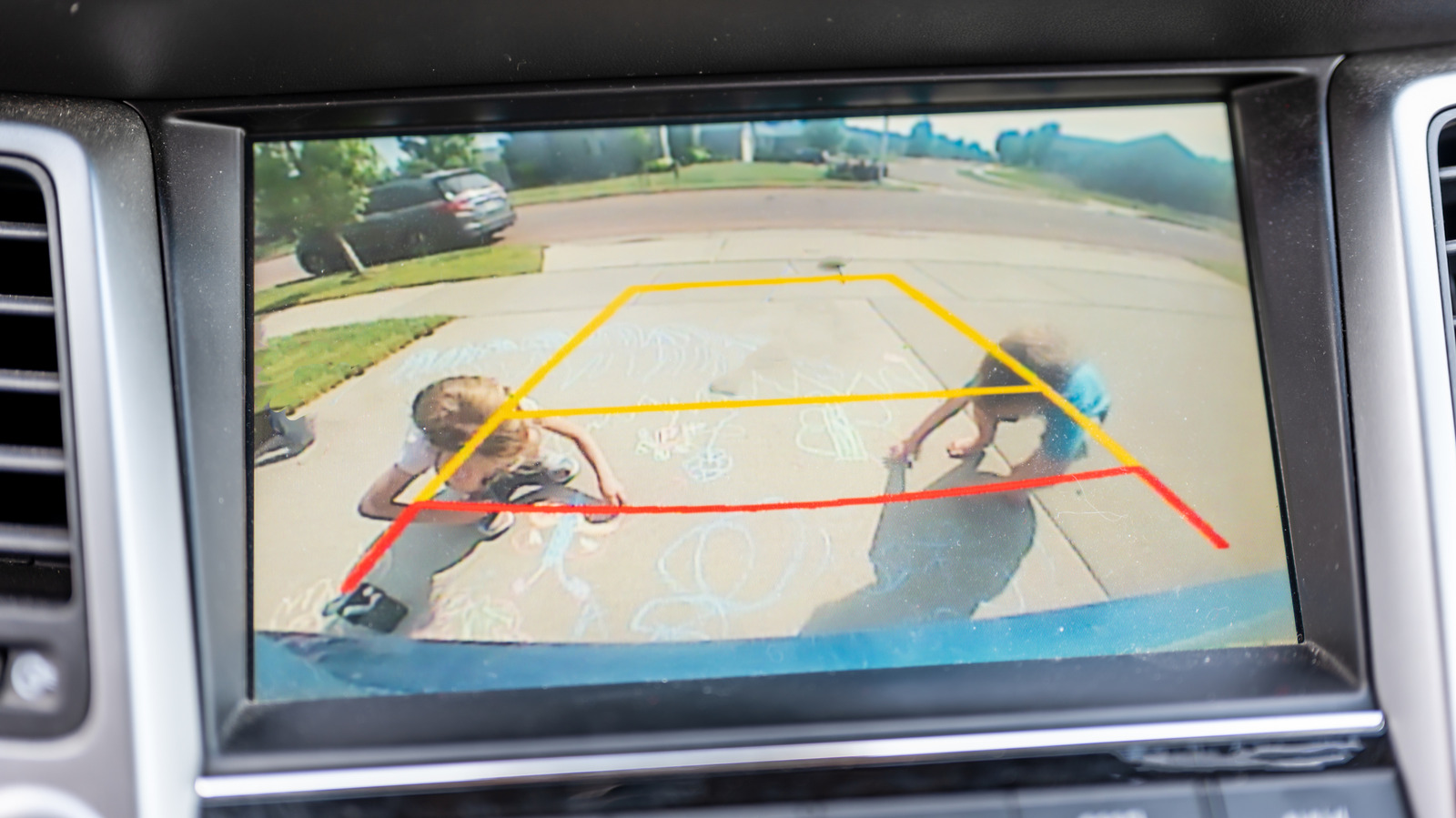
Not all backup cameras can give you an ongoing live feed while you drive.
Backing up in a vehicle without proper visibility can present drawbacks ranging from annoying, like dinging your bumper on a pole, to devastating, like backing-over accidents involving children or pets. To prevent this, new vehicles sold in the United States and the European Union are required to come equipped with backup cameras, which activate when a driver shifts into reverse and often include both a wide-angle view and guidance lines for safer maneuvering.
In addition to backup cameras, which help with parking and reversing out of driveways, there is also a demand for rearview cameras, which offer a live video feed of the road behind a vehicle and can record accidents and help maintain awareness of the traffic surrounding your car on the road. So, what is the difference between the two cameras, do all cars have them, and what features and benefits does each come with?
A backup camera is positioned on the back of your vehicle and offers a live video feed directly to your dashboard of what is behind you. It is only activated when your car shifts into reverse and is meant to help with maneuvering into tight parking spaces and preventing accidents, including backing into poles and other obstacles or tragic incidents involving pets or children. The display often includes guidance lines and sensors that beep when you get too close to a potential obstacle. Typically, these cameras use a wide-angle lens that offers a 150- or 180-degree view of the immediate surrounding area.
Source link