
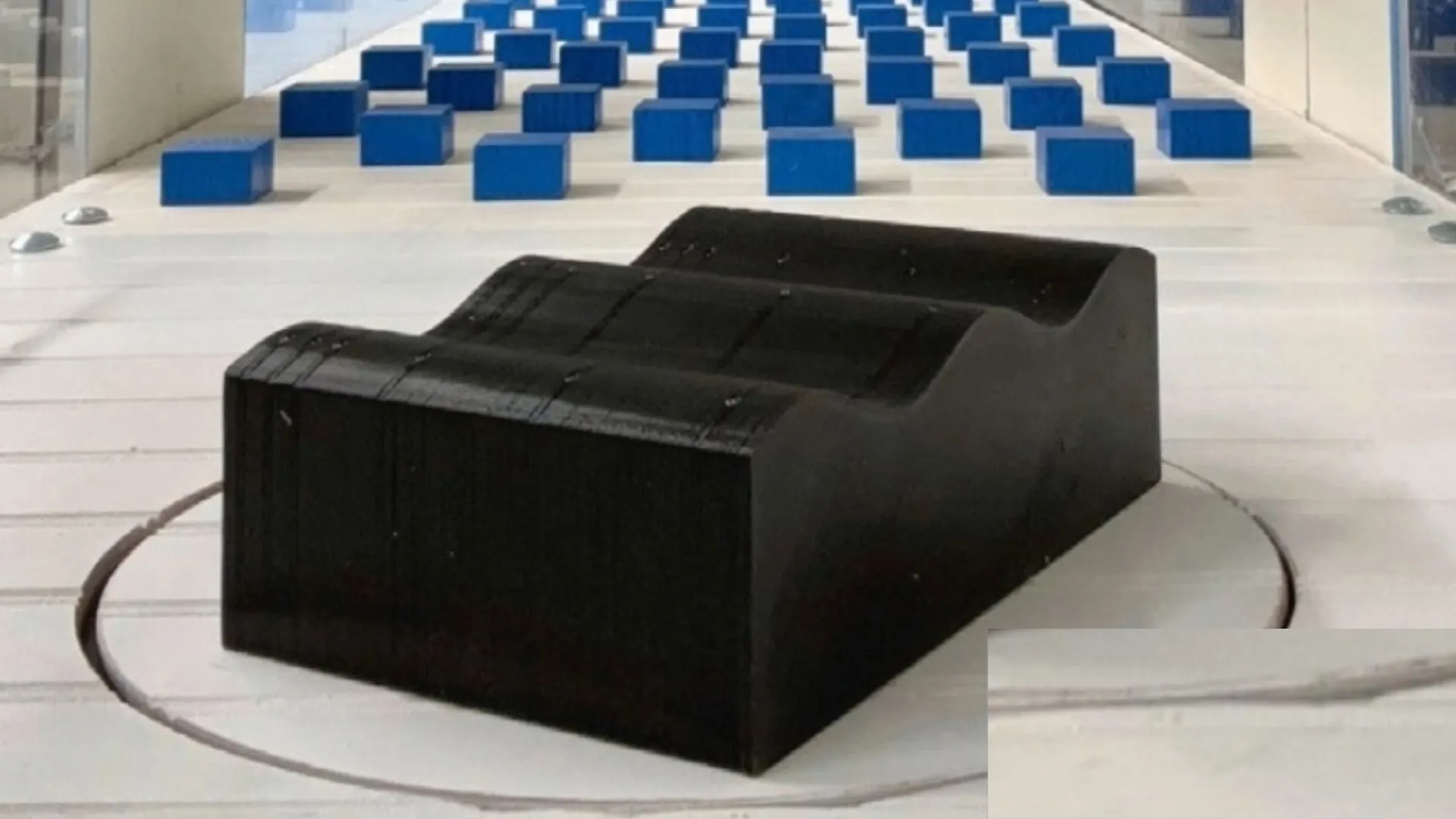
Researchers at Florida State University found that adding wave-shaped surfaces to building walls and roofs can cut wind loads on low-rise buildings by up to 60 percent. This approach could help make buildings stronger against hurricane-force winds.
The team used 3D-printed models with wave-shaped exteriors and tested them in a wind tunnel at the FAMU-FSU College of Engineering. The waves were 5 percent to 10 percent as tall as the buildings. They compared these models to standard buildings with flat surfaces.
The researchers measured wind pressures on the models as air flowed from different directions. The results showed that deeper wave patterns reduced strong pressure on the most vulnerable parts of a building.
The model with the deepest waves lowered peak wind pressures by 40 percent to 60 percent near the corners of roofs and walls, no matter which way the wind came from. These spots are especially at risk because strong air currents can form around building edges and cause powerful suction.
“Changing a building’s shape can significantly reduce the intensity of wind forces it has to withstand,” said Pedro Fernández-Cabán, one of the co-authors of the work and an assistant professor of civil engineering at the FAMU-FSU College of Engineering. “These nonconventional building shapes reduce the damage from worst-case severe weather scenarios. It’s another tool for engineers and designers to protect against wind damage.”
The curved surfaces disturb airflow as it moves across the building envelope. The airflow changes can break up concentrated pressure zones that often develop around flat walls and roof edges.
Source link





