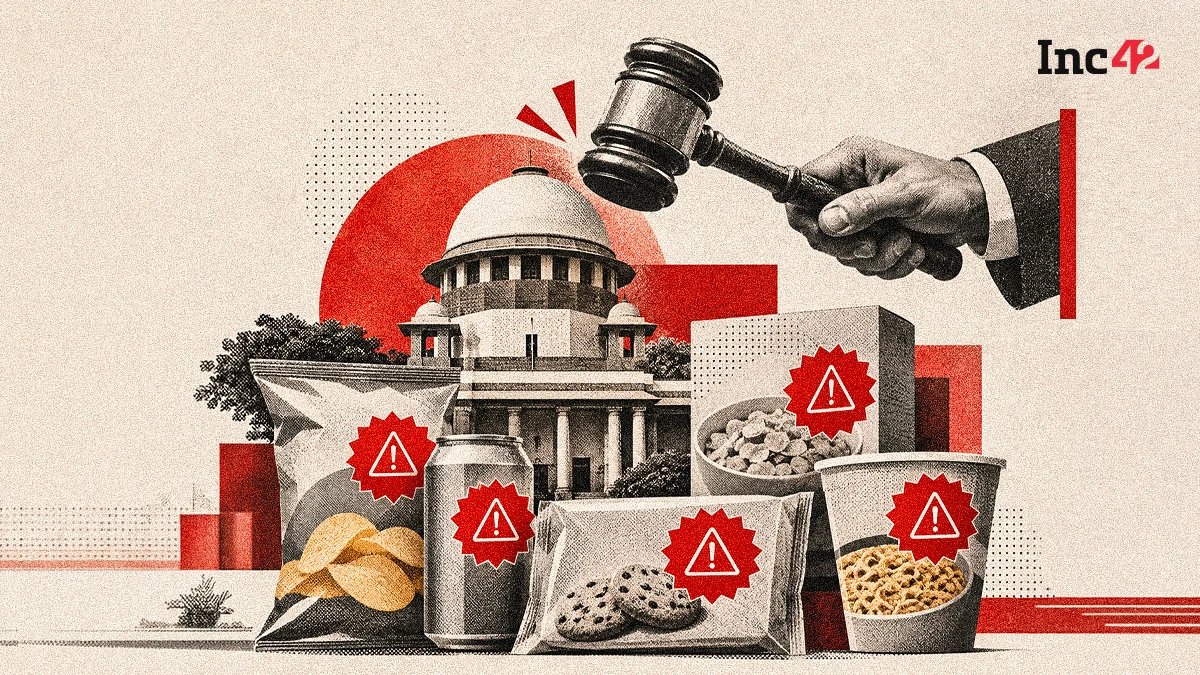
A packet of millet chips marketed as guilt-free could carry a warning for high salt. A snack claiming “no added sugar” could still need a high-sugar label. These are among the implications of the Supreme Court’s direction to the Food Safety and Standards Authority of India (FSSAI) to introduce separate front-of-pack pictorial warnings for packaged foods high in sugar, saturated fat, or salt. For food brands built around healthier ingredients, the warnings could highlight a gap in their positioning – products made without refined sugar or artificial additives can still be high in sugar, saturated fat, or salt. The November 26 judgment requires separate red hexagons carrying pictograms and the corresponding declarations “HIGH SUGAR”, “HIGH FAT”, or “HIGH SALT”, rather than combining multiple warnings within one symbol. The court also directed FSSAI to reassess the thresholds using total sugars and saturated fat, rather than added sugar and added fat. The public-health backdrop is significant. 4% in retail sales value between 2011 and 2021. The judgment also cited estimates that non-communicable diseases account for around 63% of deaths in India. The warning labels are intended to help consumers identify products high in sugar, saturated fat, or salt at the point of purchase. For food and beverage brands, this means assessing which products would need warnings and whether recipes can be changed to bring them below the prescribed limits without compromising taste, shelf life, or affordability. The FSSAI proposed approximately four months from the judgment to complete the regulatory process, including consultation and finalisation.
Source link