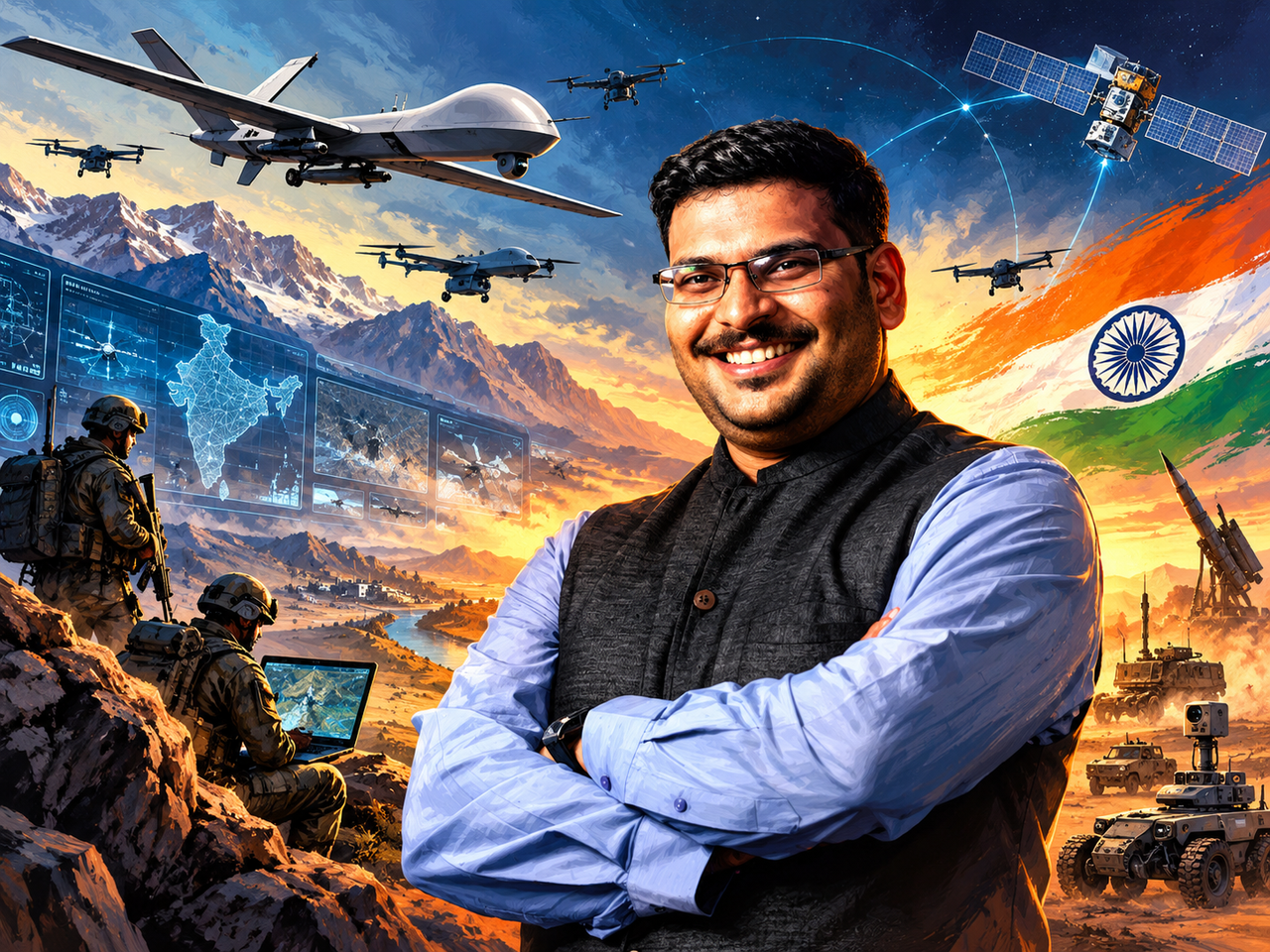
The future of warfare is being shaped by technologies that are changing how conflicts are planned, executed, and managed. Artificial intelligence (AI), autonomous platforms, advanced sensing, and intelligent communication systems are steadily transforming the modern battlefield. By 2035, warfare is likely to be defined not merely by the number of platforms a military possesses, but by how effectively it can connect, coordinate, and deploy them in complex and rapidly changing environments.
For defence forces across the world, preparing for this future requires a fundamental shift in thinking. The focus must move beyond acquiring advanced equipment towards building integrated, intelligent, and adaptable combat ecosystems. For India, this presents both a strategic necessity and an opportunity to strengthen its indigenous defence technology capabilities.
Artificial intelligence is expected to play an increasingly important role in future military operations. Modern battlefields generate enormous volumes of information through drones, satellites, surveillance systems, radars, and other sensors. Processing this information in real time is becoming increasingly difficult for human operators alone.
AI can help analyse this data, identify patterns, detect potential threats, and support faster decision-making. In a complex combat environment, the ability to convert raw information into actionable intelligence could significantly influence operational outcomes.
However, the role of AI should not be viewed simply as replacing human decision-making. Its greater value lies in supporting military personnel by reducing information overload, improving situational awareness, and enabling faster responses.
As we approach 2035, the challenge will be to develop AI systems that are reliable, secure, and capable of functioning under unpredictable battlefield conditions.
Source link