
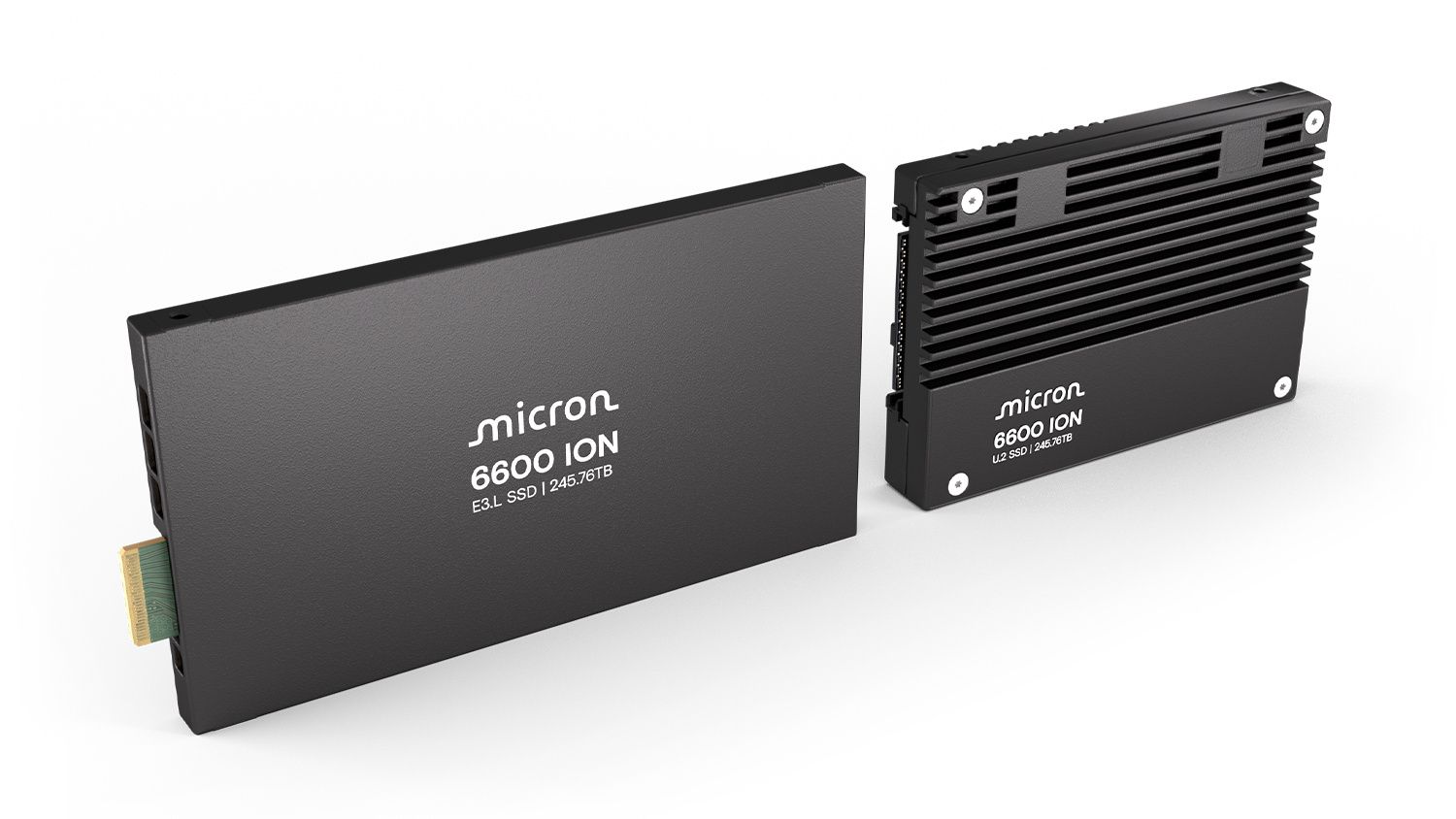
VAST Data says petabyte SSDs will outgrow RAID in today’s parallel file systems, according to a simulation of its own 900 PB system that puts the odds of data loss at 1 in 11 over 10 years. At Supercomputing 2026 (SC26), the company explains how.
Bigger drives take longer to rebuild after a failure, leaving more time for further failures to lose data, but operators will still want those large drives because many sites are power-constrained and storage power scales with bandwidth rather than capacity. VAST’s recommended fix: system-wide erasure coding with at least three parity strips.
The company’s principal technical strategist, Glenn Lockwood, walked through the simulation, described as a “discrete event simulation” using real failure data, in an Exhibitor Forum talk during SC26’s HPC System Hardware and Architecture session. With petabyte-scale SSDs swapped in, enclosure-local declustered RAID — the approach used by DDN EXAScaler and HPE Cray ClusterStor, per Lockwood — has those exceptionally high odds of data loss. With global declustering and extra parity, operators can get this down to 1 in 54 million, a significant improvement, but VAST’s own scheme gets to about 1 in 62 billion, three orders of magnitude better.
Lockwood’s case for petabyte SSDs rests on how storage power scales: at about 28 W per SSD, regardless of capacity and including its share of the surrounding infrastructure, plus 20 W per GB/s of bandwidth. ” Lockwood says, though, that “real AI applications in our experience have never approached needing anything close to that level of performance” from the storage.
Source link





