
Scientists at the Argonne National Laboratory (ANL) have turned to the world’s brightest light source, the Advanced Photon Source (APS), to probe nuclear materials in real time. This will advance nuclear forensics and improve future nuclear energy production.
Nuclear forensics is a critical component of global security, nuclear law enforcement, and non-proliferation efforts. Researchers can determine the origin, manufacturing, and intended use of nuclear materials through scientific examination.
Different processing steps leave unique chemical signatures on radioactive material. Studying these signatures could help determine if radioactive material is being diverted from legitimate uses to unauthorized ones.
However, these reactions happen so fast that studying them is extremely difficult. This is where the ANL team turned to APS, which is also an Argonne facility.
The APS is the world’s brightest X-ray light source. It uses a synchrotron to achieve this, where particles are accelerated in a circular path to generate intense beams. This allows researchers to study the tiniest details in materials.
While nuclear forensics has relied on chemical signatures observed after the reactions are complete, the APS allows for these reactions to be studied in real time. Conditions such as temperature, pressure, and the surrounding environment impact the reaction.
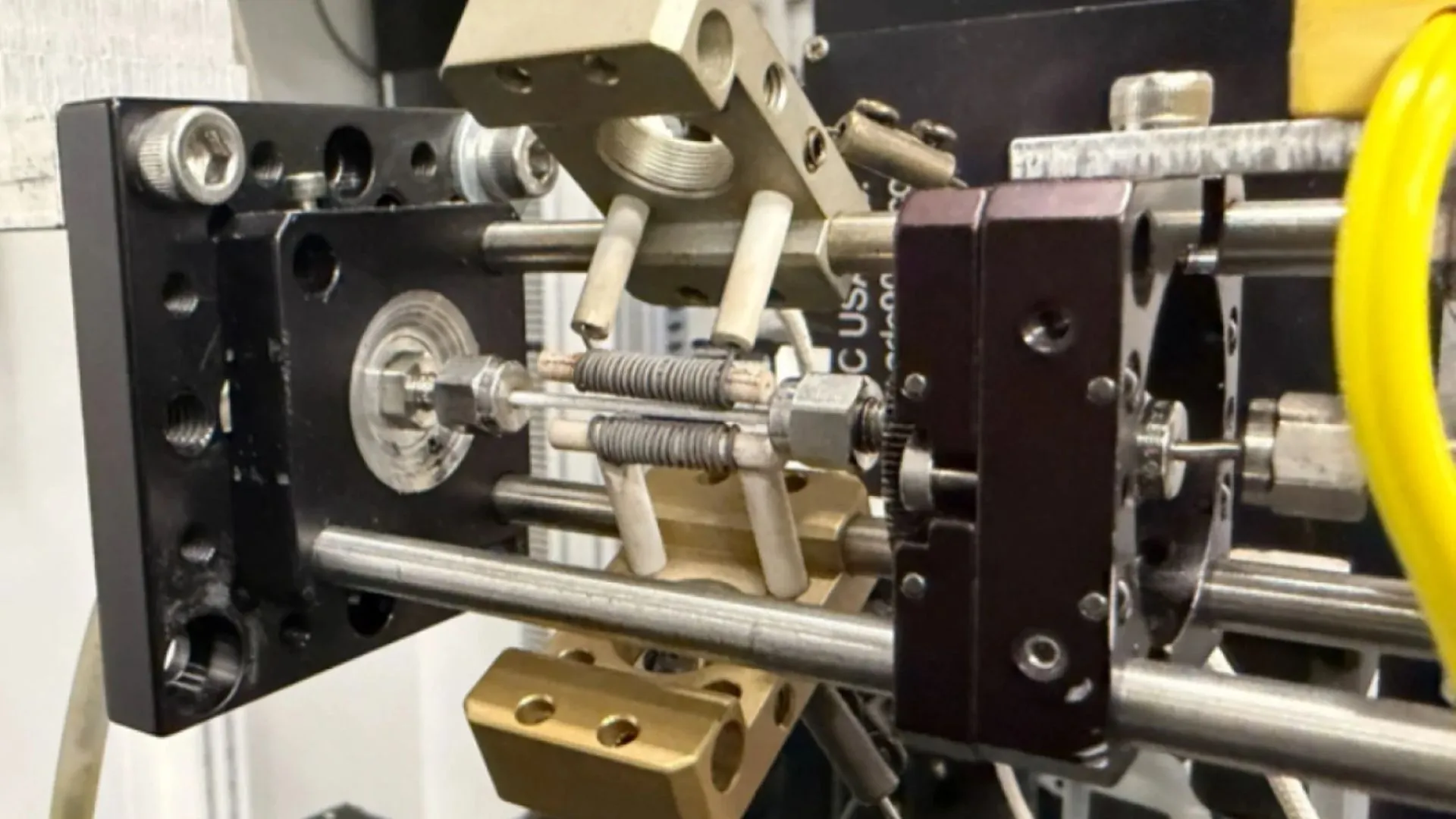
Using the APS, researchers can observe how the reactions are occurring, the movement of the particles, and the changes occurring in them, all in real time. But to do so, the team had to build customized sample containment boxes where they could carry out the measurements.
Since APS is used for a wide range of research activities, working with radioactive materials requires special arrangements.
Source link





