Researchers at the National Institute of Standards and Technology (NIST) have demonstrated a chip-based optical frequency comb that uses two lasers to generate precise light signals without the bulky stabilization equipment required by some earlier designs.
The development could help make optical atomic clocks smaller and more suitable for use outside laboratories. Such clocks could eventually support navigation systems in drones, submarines and other vehicles when GPS signals are unavailable or jammed.
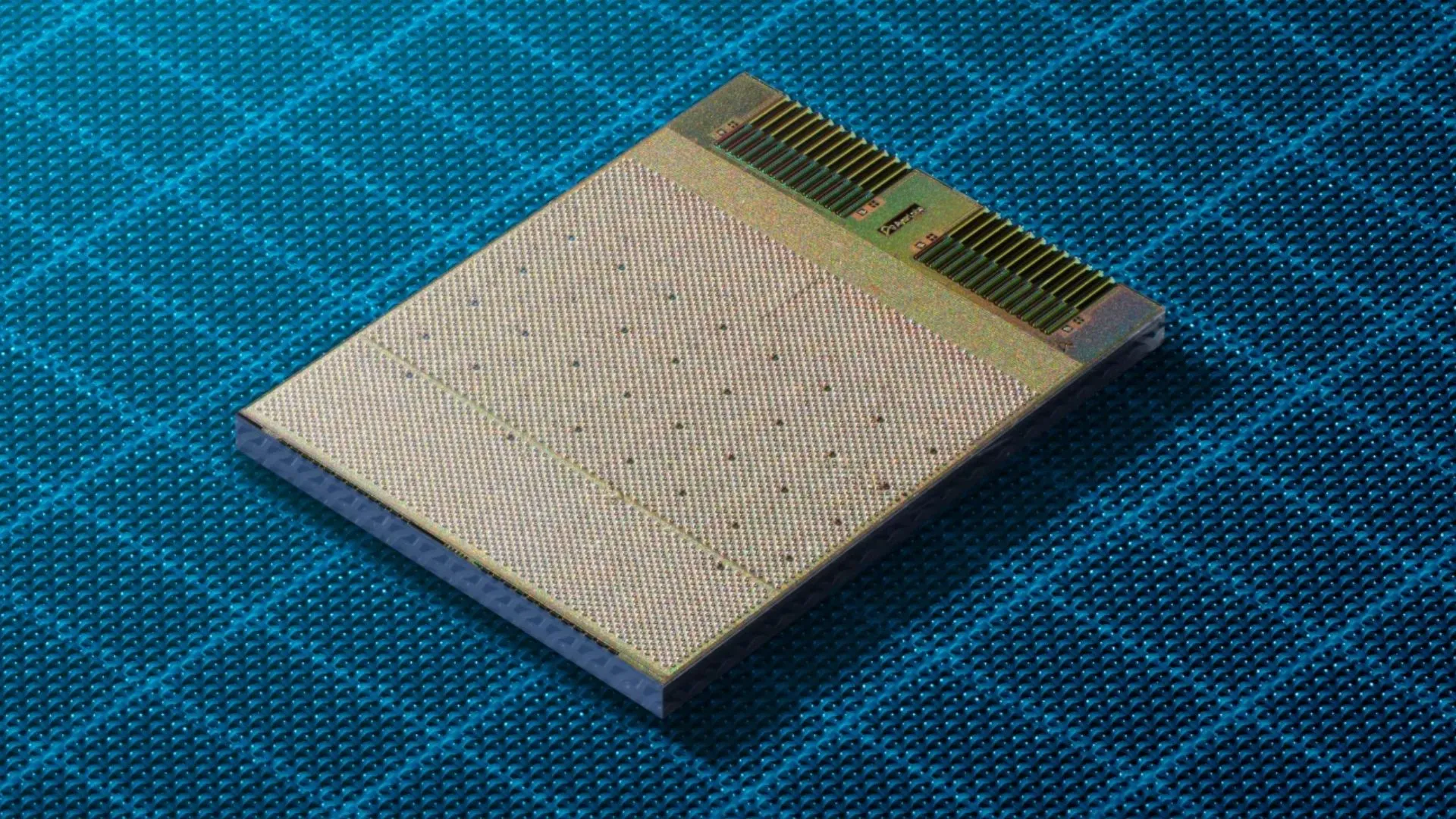
The device relies on a tiny ring-shaped structure called a microresonator. Light from two lasers circulates through the ring, producing a series of evenly spaced optical frequencies that can be used as highly precise measurement references.
The researchers, working with colleagues at the Joint Quantum Institute (JQI), a partnership between NIST and the University of Maryland, say the approach addresses a key obstacle in developing compact frequency combs: generating stable, high-quality signals without additional power-hungry equipment.
Optical frequency combs work much like rulers for light. Instead of measuring distance with evenly spaced marks, they produce a series of precisely separated frequencies that allow scientists to measure light with exceptional accuracy.
These devices are important components of optical atomic clocks, which use the vibrations of atoms at optical frequencies to measure time.
Conventional optical frequency comb systems can require multiple components to stabilize their signals. Although researchers have already developed miniature versions using microresonators, maintaining the required signal quality can still demand additional equipment.
NIST’s approach sends light from two lasers into the same microresonator. Their interaction generates the evenly spaced frequencies needed for optical measurements while avoiding the extra stabilization hardware associated with earlier single-laser methods.
Source link