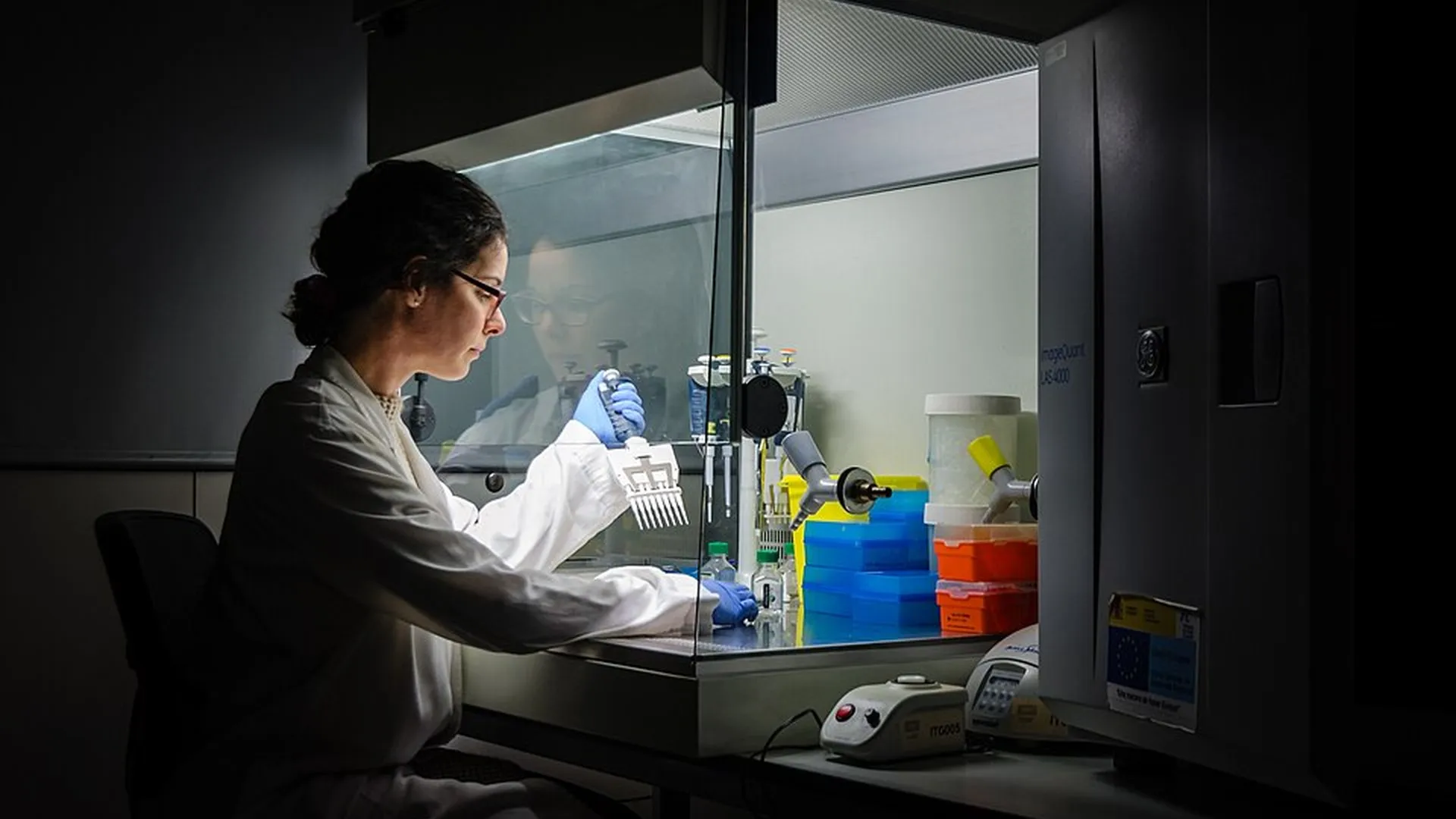
Producing green hydrogen could require fewer precious metals with a new catalyst developed by researchers in Braga, Portugal. The material outperformed a commercial benchmark despite containing roughly half its precious metal content by weight.
The team at the International Iberian Nanotechnology Laboratory (INL) combined platinum, nickel, and ruthenium into an alloy designed for proton exchange membrane water electrolysis, or PEMWE.
The study reported stable operation for more than 300 hours in a single-cell device at 60 °C (140°F).
The findings address a challenge for electrolyzers: reducing their reliance on expensive materials while maintaining performance during sustained operation.
PEMWE uses electricity to split water into hydrogen and oxygen. When powered by renewable electricity, it offers a route to green hydrogen production.
However, the hydrogen-producing reaction at the cathode depends heavily on scarce platinum-group metals.
Researchers in INL’s Kolen’ko Research Group used a continuous-flow synthesis reactor to produce nanoparticles of a platinum-nickel-ruthenium medium-entropy alloy.
Measuring just 1.5 nanometers across, the particles were uniformly anchored on defect-rich graphene.
The catalyst contained 20.5 percent precious metals by weight, compared with the commercial benchmark’s 40 percent platinum content. Despite its lower precious-metal content, it outperformed the benchmark across multiple measurements.
In a single-cell PEMWE device, the catalyst delivered a current density of 1.0 ampere per square centimeter at 1.6 volts.
The catalyst’s behavior during operation was central to its performance. Initially, nickel-oxide species covered parts of the particle surfaces. Under cathodic polarization, those oxides were reduced, exposing the metallic alloy beneath.
Source link