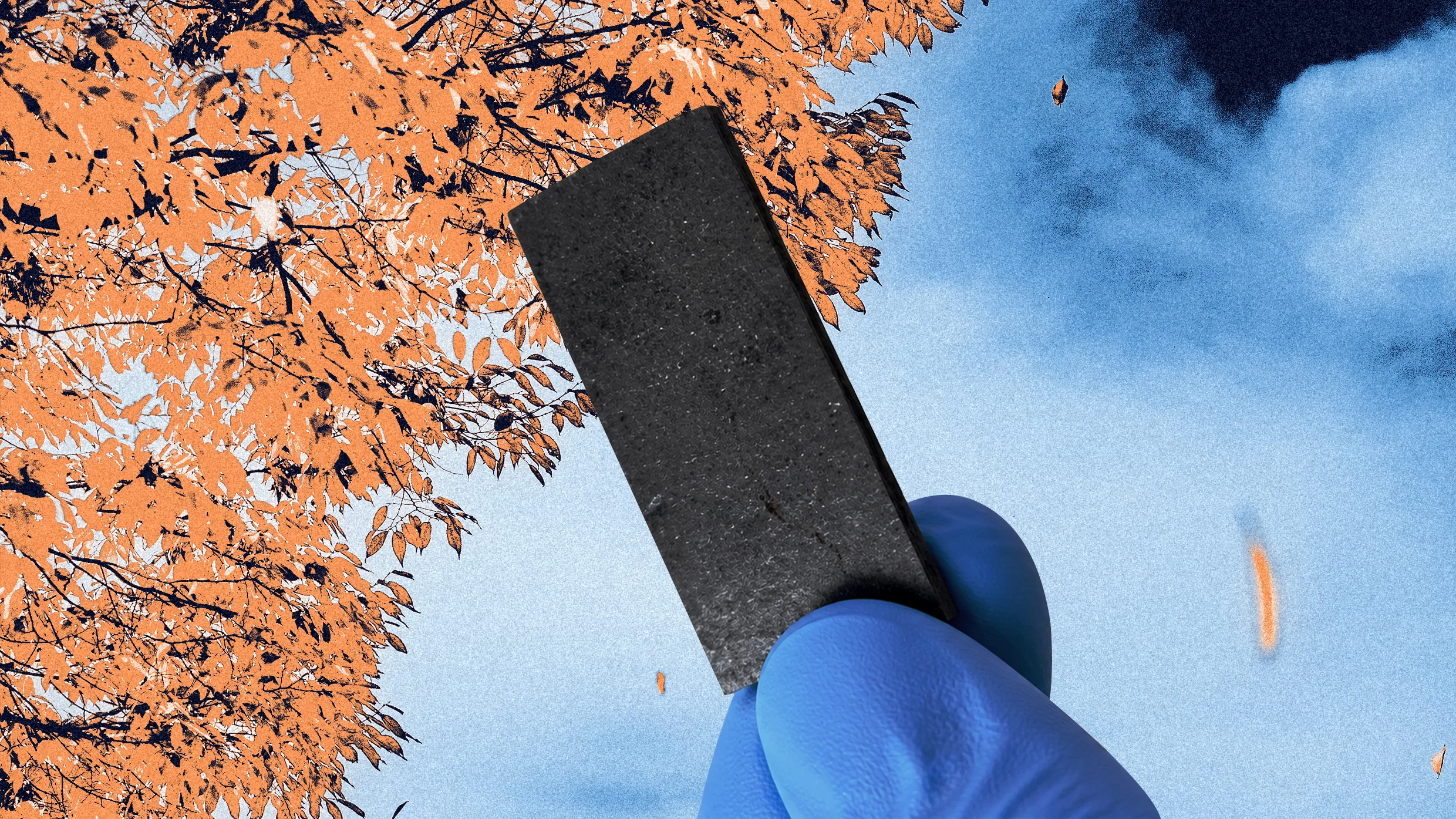
First-generation bioplastics were made from food crops like corn and sugar. A new biomaterials startup is using something very different: the autumn leaves collected by cities each fall.
The startup, Perennial Polymers, extracts the natural polymers in leaves—lignin and cellulose—to make plastic that can easily break down. It’s an approach that can ultimately be less expensive than making other bioplastics, the company says.
“I spent the last 12 years or so in the biomaterial space, and got to see from the inside how challenging it is, largely due to the economics,” says Nathan Noyes, founder of Perennial Polymers. “Two of the main reasons for that seemed to be that we were always relying on food-grade agricultural feedstock when moving away from petrochemicals, and the route to turn that into a plastic relied on fermentation, which is quite expensive.”
Urban leaves, he realized, didn’t require any agricultural land to grow, and there was already infrastructure in place to collect them. The startup, which works in a lab in Delaware, was inspired by previous academic research about the potential to use leaves to make new materials (like this study of maple leaves). After launching this summer, Perennial developed its own new material with a process designed to easily scale up, and filed provisional patents.
The startup’s formulation includes not only lignin and cellulose, but minerals from leaves to strengthen the bioplastic. Production is designed to be low cost, both because of the cheap feedstock and because it doesn’t require the expensive step of fermentation.
Source link