
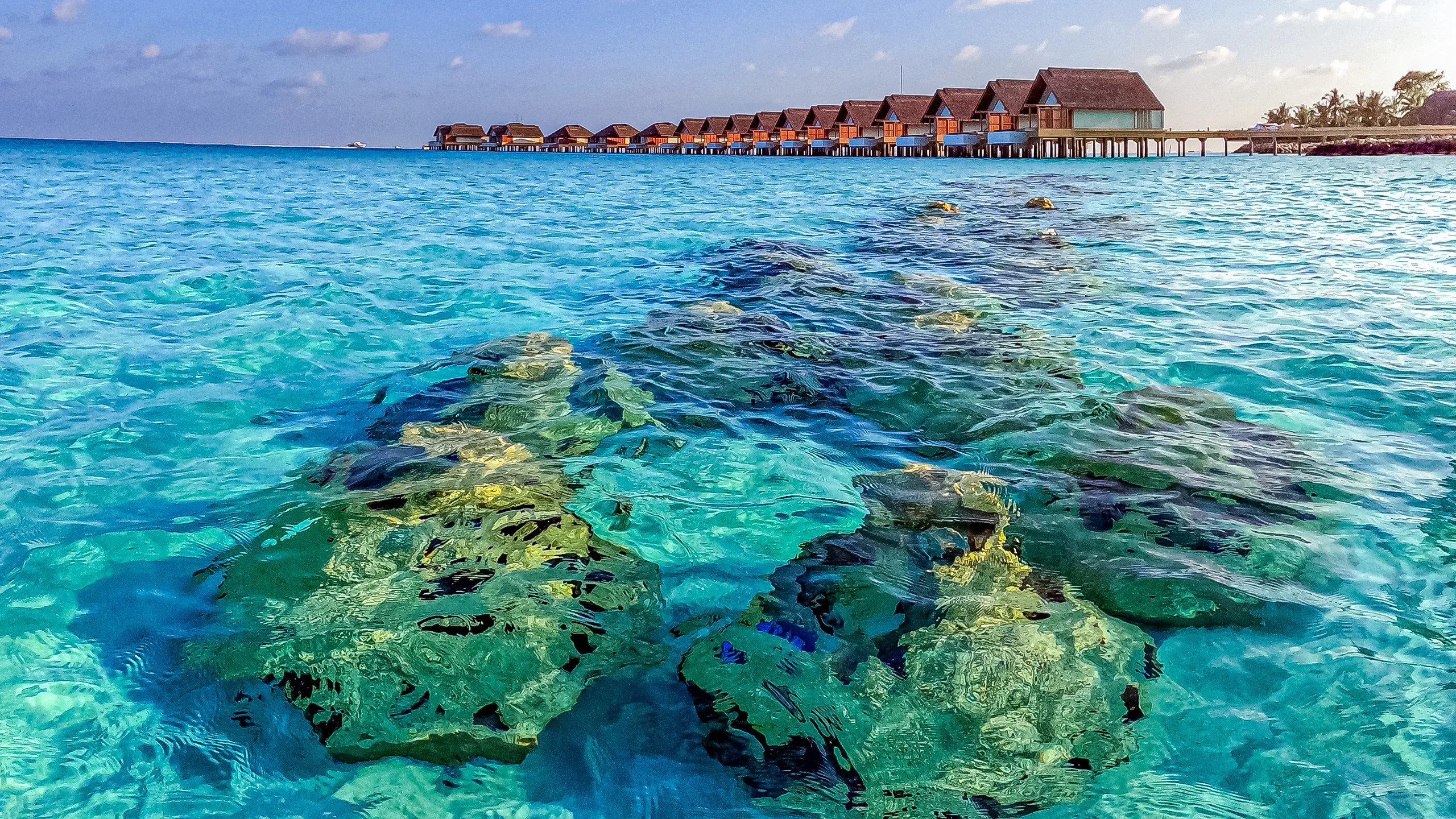
Until recently, a beach on a tiny island in the Maldives was eroding away. The usual solution would be to dredge sand to try to replace what was lost—but that works only temporarily, and it harms marine ecosystems. Two years ago, a Marriott resort on the island experimented with something different: using an artificial reef designed by Massachusetts Institute of Technology researchers to repair the beach.
Within six months, across a 300-foot shoreline, the depth of the beach grew by 90 feet. Now, two years later, that same beach has doubled in size. Underwater, the artificial reef is filled with new coral and marine life, from fish to sea anemones.
Coastal Assembly, a startup that spun out of the MIT research at the end of last year and raised $4.4 million in a round of funding this summer, is now scaling up. The company uses AI to analyze satellite and ocean current data at a shoreline, then plans the layout of custom concrete blocks that can help sand accumulate naturally via ocean waves.
” says Skylar Tibbits, a professor in MIT’s architecture department who runs the university’s Self-Assembly Lab , a research group that explores how materials and environments can transform themselves.
Source link