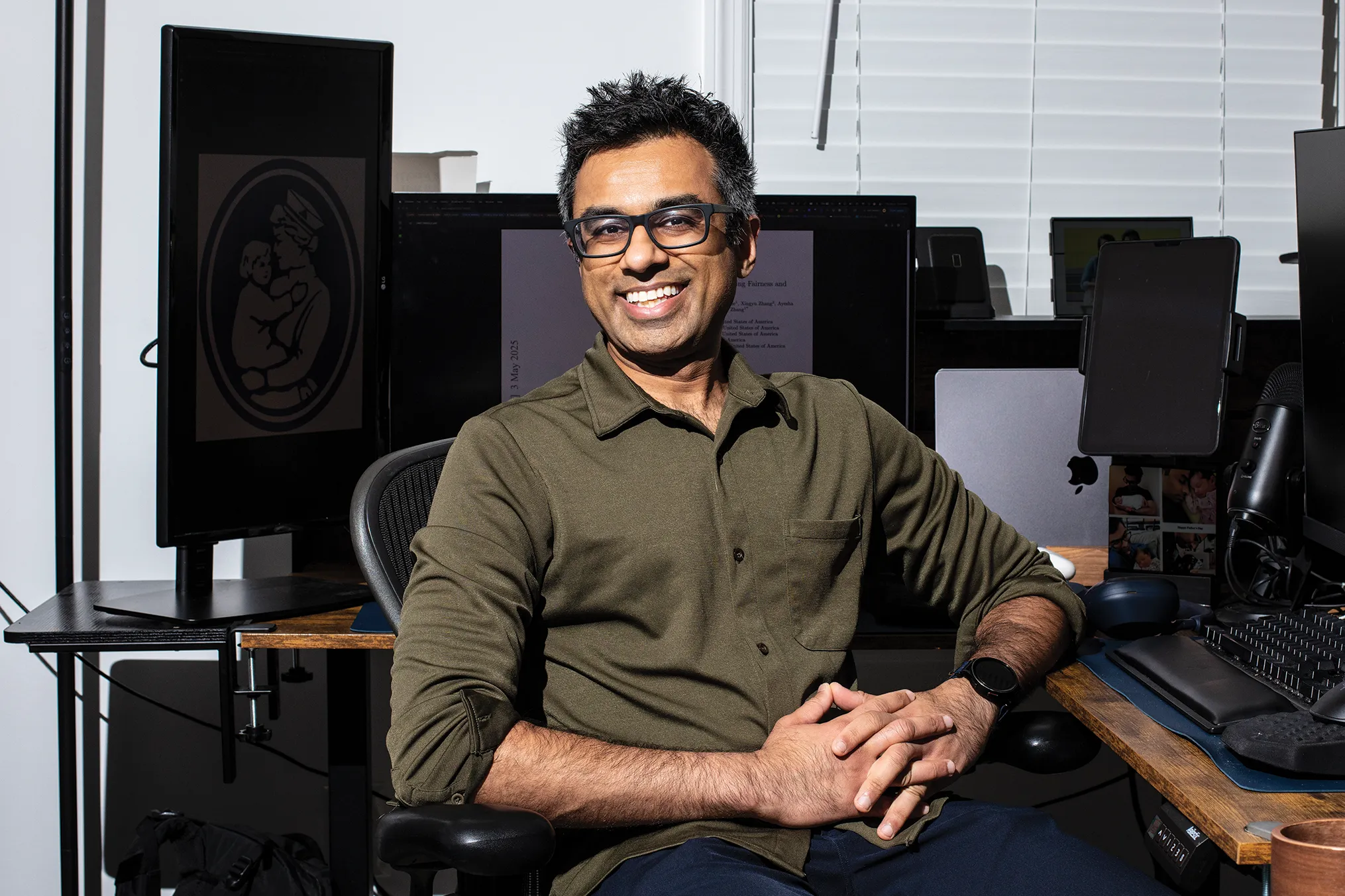
When Boston Children’s Hospital posted a job listing for a prompt engineer in 2023, Dinesh Rai decided to apply. He didn’t expect to get the job.
At the time, prompt engineering was being touted as one of the hot new jobs created by generative AI. Companies wanted people who knew how to coax the best answers from large language models (LLMs) by carefully wording instructions, supplying examples, and giving the systems personas or other context.
Bachelor’s degree in supply-chain management and marketing sciences, Rutgers Business School; Doctor of Medicine, Albert Einstein College of Medicine
It was an unusual role for a hospital, but Rai had an unusual résumé. While he was trained as an emergency physician, he had also taught himself to code just before entering medical school. After completing a fellowship in clinical informatics—which focuses on the intersection of clinical practice and IT systems—he moved into health technology.
Boston Children’s brought him on board in August 2023. Three years later, Rai still works there. Prompt engineering, however, has become a much less important part of the job.
When he joined, the expectation was that prompting would become a job in itself. “Knowing how to prompt AI properly was going to be the job function of the future,” says John Brownstein, chief innovation officer at Boston Children’s.
Early on, the hospital needed internal expertise about how to begin using AI, Brownstein says. Now, better models have made elaborate prompting less important, so the harder work is building AI into actual health care systems—and determining whether its answers can be trusted.
Source link