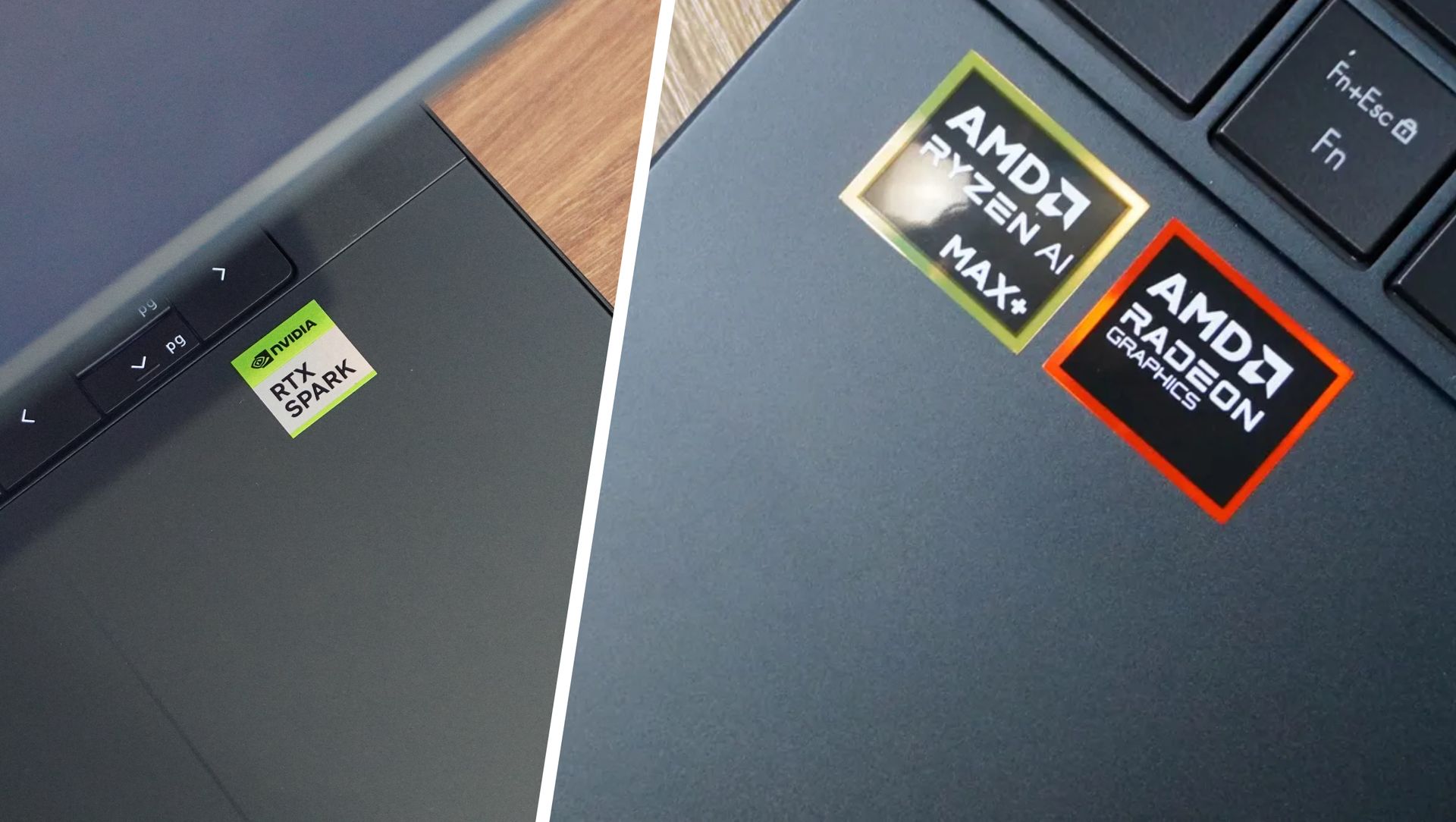
Nvidia has just properly unveiled RTX Spark alongside Microsoft’s flagship Surface Laptop Ultra, heralding what Jensen Huang said about reinventing the PC — massive unified memory, local AI and desktop-class power in a portable chassis.
If you ask AMD, however, Nvidia didn’t invent a new category. Instead, it validated one Team Red has been selling for over a year. Speaking directly after the RTX Spark reveal, Mike Nordquist, CVP of Client Product Marketing, didn’t hold back with me.
Between calls to celebrate industry competition and pointed critiques of Nvidia’s hardware architecture, Nordquist laid out a sharp, pragmatic case for why AMD believes its second-generation Ryzen AI Max 400 series (codename Gorgon Point Halo) leaves Nvidia’s new darling in the dust.
While Nvidia embraces the unified-memory laptop, AMD was quick to point out that it kicked off this exact architecture with Strix Halo back in early 2025.
“The exciting part is just the category development. We introduced a similar product in early 2025, so having more people come in and validate that, and you see Microsoft beefing up, I think that’s good overall. Competition is good overall,” Nordquist commented.
“We’re in our second generation that we just announced in the last month, which brings 50% more capacity [than RTX Spark]. So you can get higher capability [AI] models than maybe what you saw today.”
This cuts straight to the core of one thing AMD does have an advantage over Nvidia on — core memory. RTX Spark caps out at 128GB of unified memory, but AMD’s Gorgon Halo pushes that ceiling to 192GB.
Source link