Researchers track animal movements through tags on their limbs, wings, and shells, but how do you track a creature that weighs less than a gram? To build a device tiny and light enough for a monarch butterfly, designers had to make the smallest wildlife tracking device on the planet.
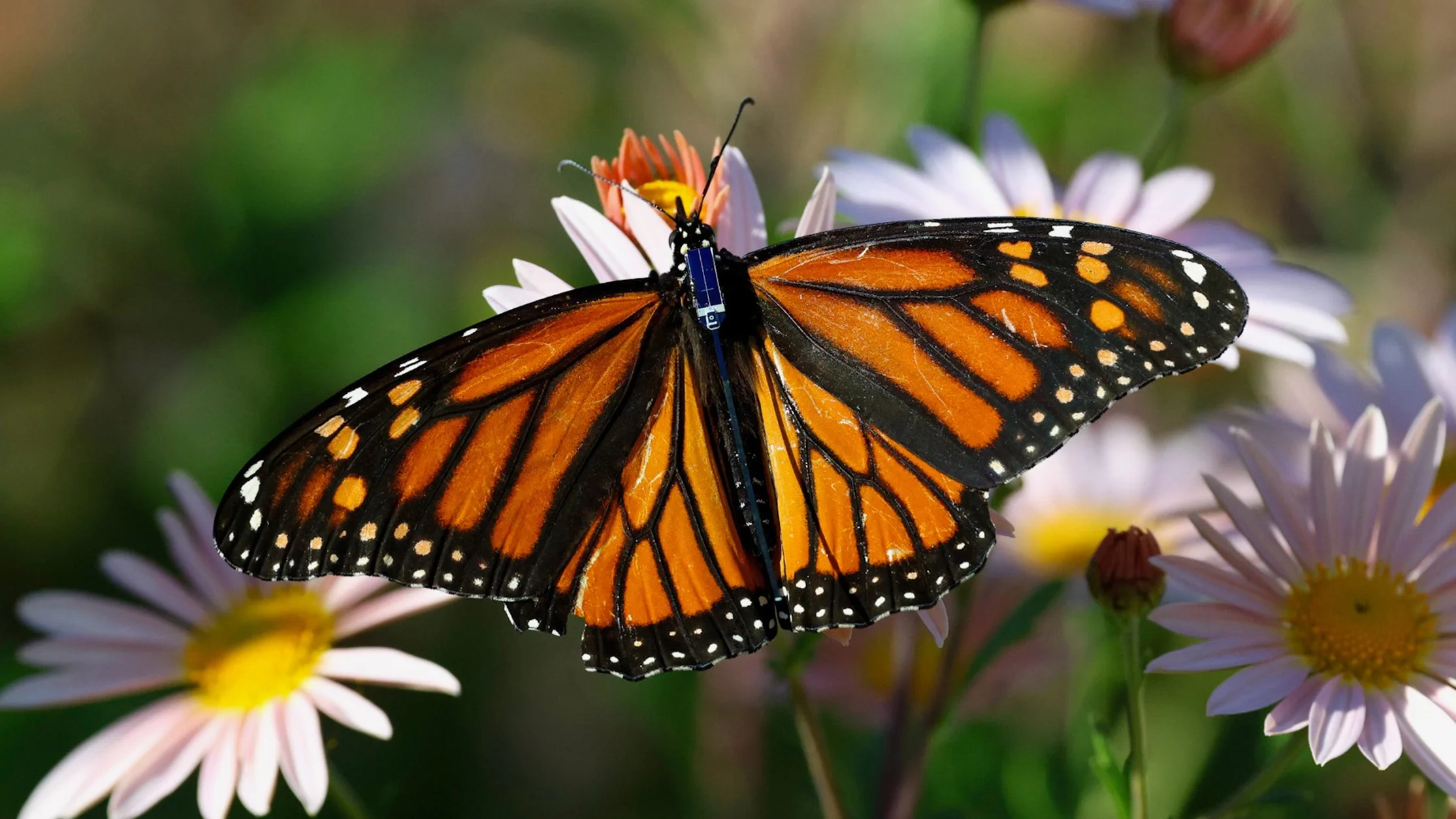
A tiny transmitter for butterflies designed by the New Jersey-based Cellular Tracking Technologies (CTT) is called the BlūMorpho. It’s just three-and-a-half centimeters (1.4 inches) long, weighs about as much as a grain of rice, and works without a battery.
CTT manufactures devices for wildlife telemetry, or tracking the movements and migration patterns of wild animals. After bringing its manufacturing in-house during the COVID-19 pandemic, it was able to make minuscule parts on its own.
“We’ve been a telemetry company since 2007, and we work primarily with birds, so everything is about saving weight,” David La Puma, CTT’s vice president of global market development, tells Fast Company. Designing for a butterfly’s weight, however, was “an extreme constraint,” La Puma says, adding that designing and manufacturing the product took significant investment.
Instead of a battery, the tracker uses a super tiny solar panel, smaller than the torch on the back of a dime, that’s located at the top of the transmitter. Most of the device is a skinny antenna that runs down the body of the model and transmits information to fixed receiver stations.
In spring 2025, 30 butterflies equipped with BlūMorpho were released from Ontario, Canada, to track their migration south as part of a research collaboration, Project Monarch.
Source link