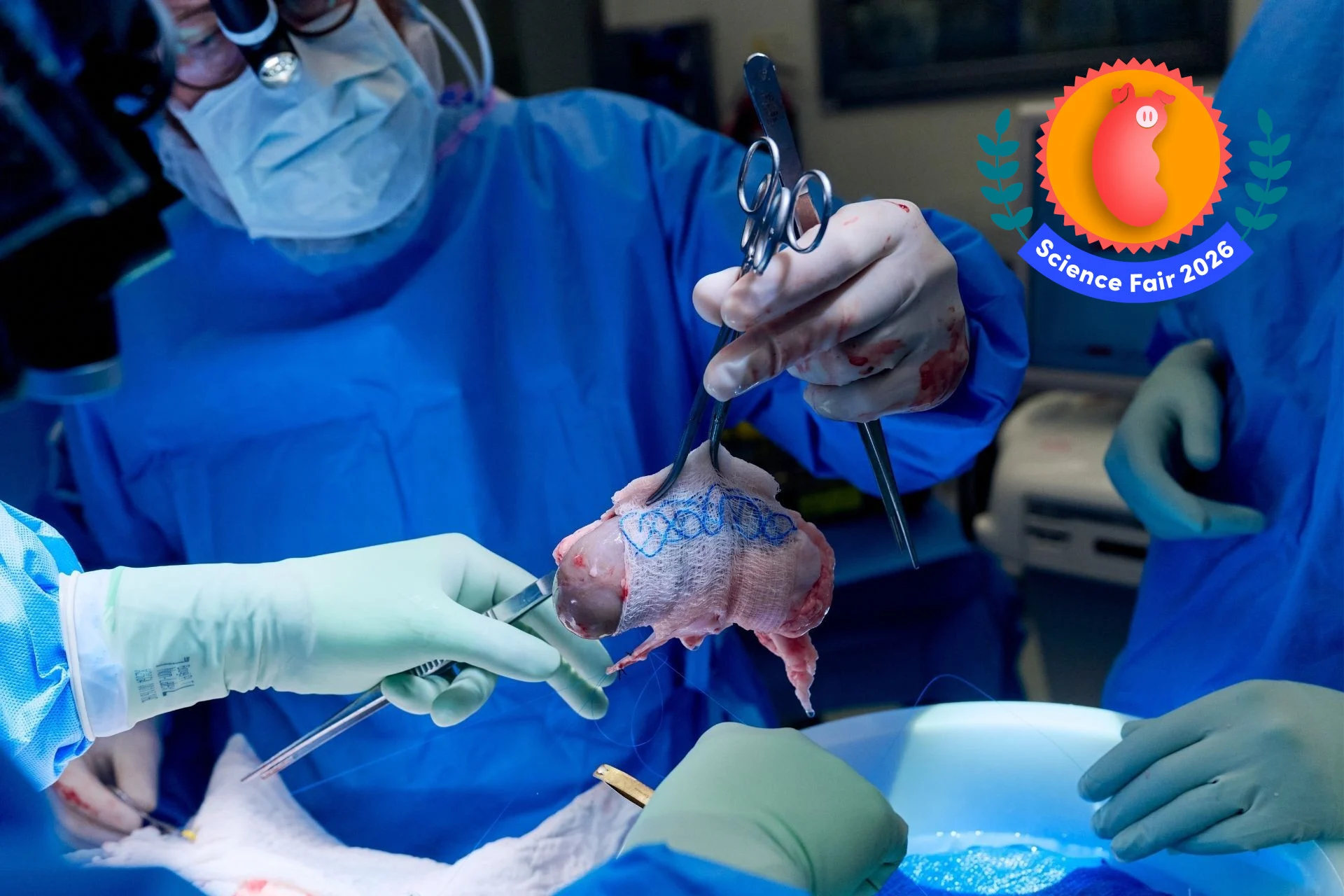
Researchers at the NYU Langone Transplant Institute are the winners of the 2026 Gizmodo Science Fair for their ongoing work in developing animal-to-human transplantation, also known as xenotransplantation.
Can we ever create a reliable and safe supply of new organs for those who need them?
In September 2021, Robert Montgomery and his team performed a novel procedure: the first transplantation of a genetically modified pig organ into a still-intact human body. The family of a neurologically dead patient allowed the team to keep the patient’s body on a ventilator with the transplanted organ during the length of the experiment. For 52 hours, the pig kidney seemed to behave much like a typical human kidney, with no immediate signs of rejection.
Altogether, the team has conducted six of these studies, two of which involved pig hearts. It’s also performed experimental xenotransplantations with living humans on a compassionate use basis, meaning they were performed on people who had no other medical alternatives available to them.
All of this work by the NYU team and others has now culminated in the world’s first clinical trial of the technology for people with end-stage kidney disease: the EXPAND study, which is being sponsored by United Therapeutics Corporation, one of two companies in the U.S. that are creating these edited pig organs. The first patient in this trial received their modified kidney at NYU Langone Health last November.
The simple truth is that doctors don’t have enough spare organs. There are more than 100,000 Americans currently on the waiting list for an organ, with a new person added every seven minutes.
Source link