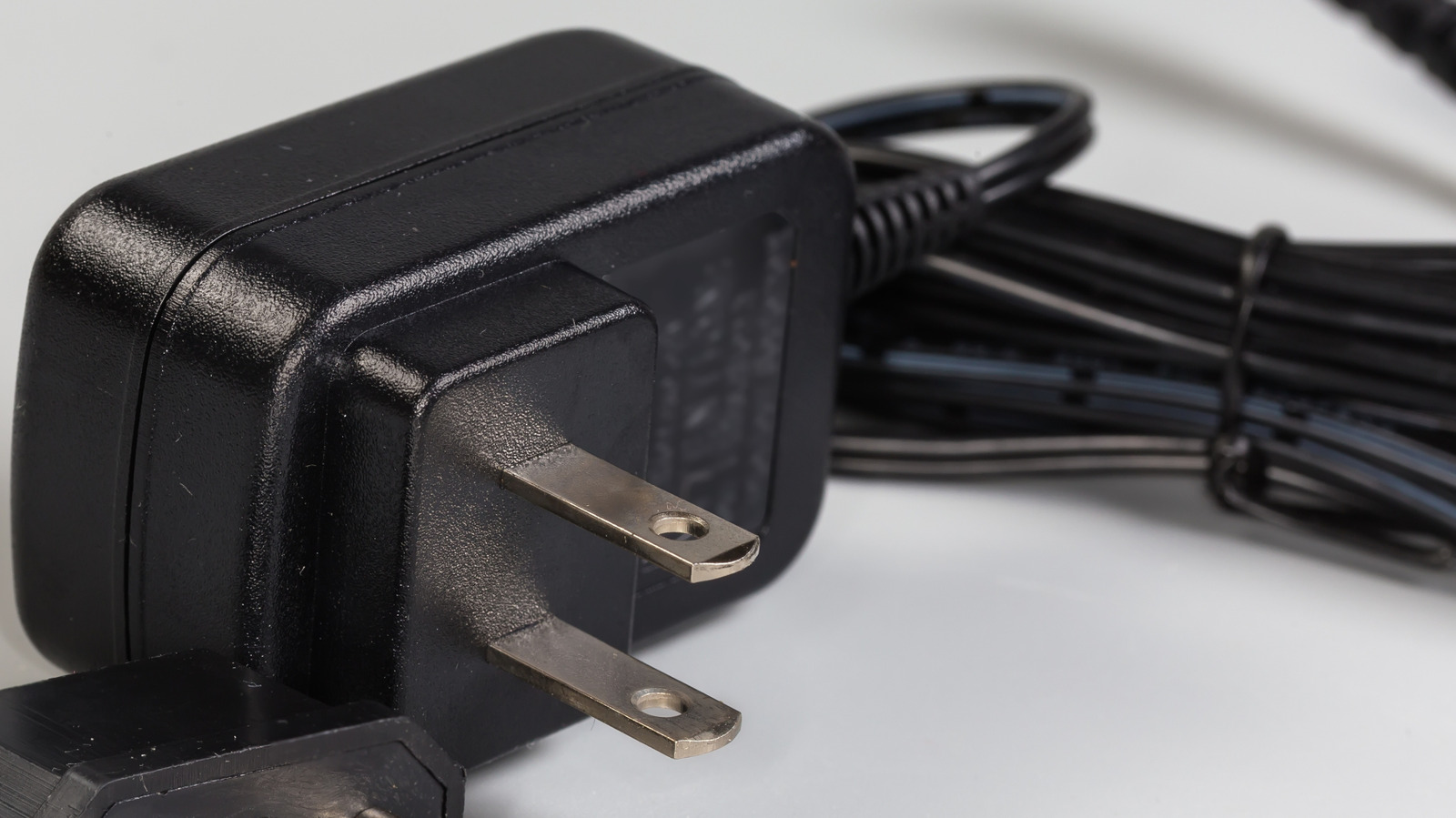
Those little holes play more of a role in making the plug than they do in your home’s wall outlets
Of all the things in the world to sit back and contemplate, holes in electrical plug prongs are one of those great mysteries. It's right up there with the hollow moon theory and underground military bases in Antarctica. Not really. The truth is, while these enigmatic holes once served an everyday purpose (more on that below), they are mainly useful in the manufacturing process today. They help manufacturers position the metal blades during manufacturing, but they aren't openings for electrical current or portals to another dimension.
Basically, a worker passes an alignment rod through the holes to hold the blades in position before plastic is molded around the assembly. The holes also serve as lockout tags, a necessary safety mechanism. A once sensible purpose in the home is now a holding, positioning and locking convenience for manufacturers. It's a simple way to keep components correctly aligned during production. That goes for ordinary plugs on a vacuum cleaner to smart plugs for smart home integration (just don't plug a power strip into your smart plug).
Of course, not every manufacturer uses the same process. It does answer the "why" of today's perforated plug prongs (say that three times really fast!), a feature that doesn't need to perform a specific job in your outlet, but is still useful in a factory.
You've probably come across the "holes help an outlet grip the plug" explanation.
Source link