This article is republished with permission from Laser Wars, a newsletter about military laser weapons and other futuristic defense technology.
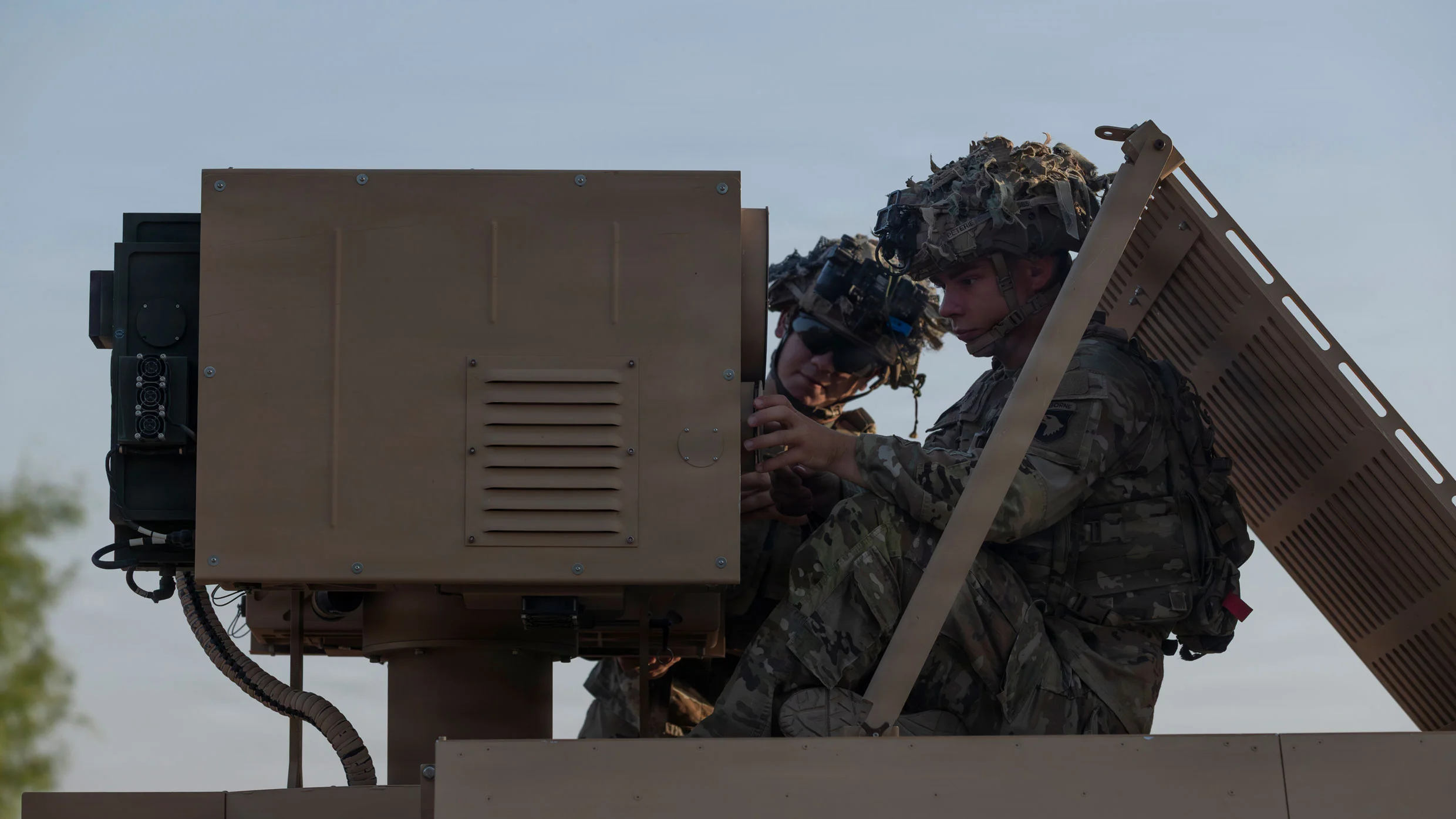
The image shows two U.S. Army soldiers, Spc. Caleb Mullens and Spc. Peterie Gage of the 2nd Battalion, 327th Infantry Regiment, perched atop a Joint Light Tactical Vehicle (JLTV) near Rio Grande City, Texas, on August 31. According to the official U.S. Defense Department caption, the pair are inspecting an Army Multi-Purpose High Energy Laser (AMP-HEL) system, a 20-kilowatt laser weapon currently operating at the southern border with Mexico under U.S. Northern Command’s Joint Task Force-Southern Border (JTF-SB).
To the best of my knowledge, Mullens and Gage are not laser physicists or optical engineers. They are likely regular U.S. service members, deployed to the border with standard-issue small arms, night vision goggles, concertina wire, and grit. And that’s exactly why this photo captures a major challenge ahead for the Pentagon’s plans to field laser weapon at scale: After spending half a century proving lasers can shoot down targets, military leaders must now ensure that junior enlisted troops can maintain and sustain them, day after day, without a clean room, a PhD, or the defense contractor that originally built them.
Military leaders know how critical maintenance and sustainment are for laser weapons. S. S. military directed-energy programs published in April 2023 listed maintainability as a central long-term challenge (alongside battle management, tactics, and user safety) to fielding laser weapons due to their technical complexity.
Source link