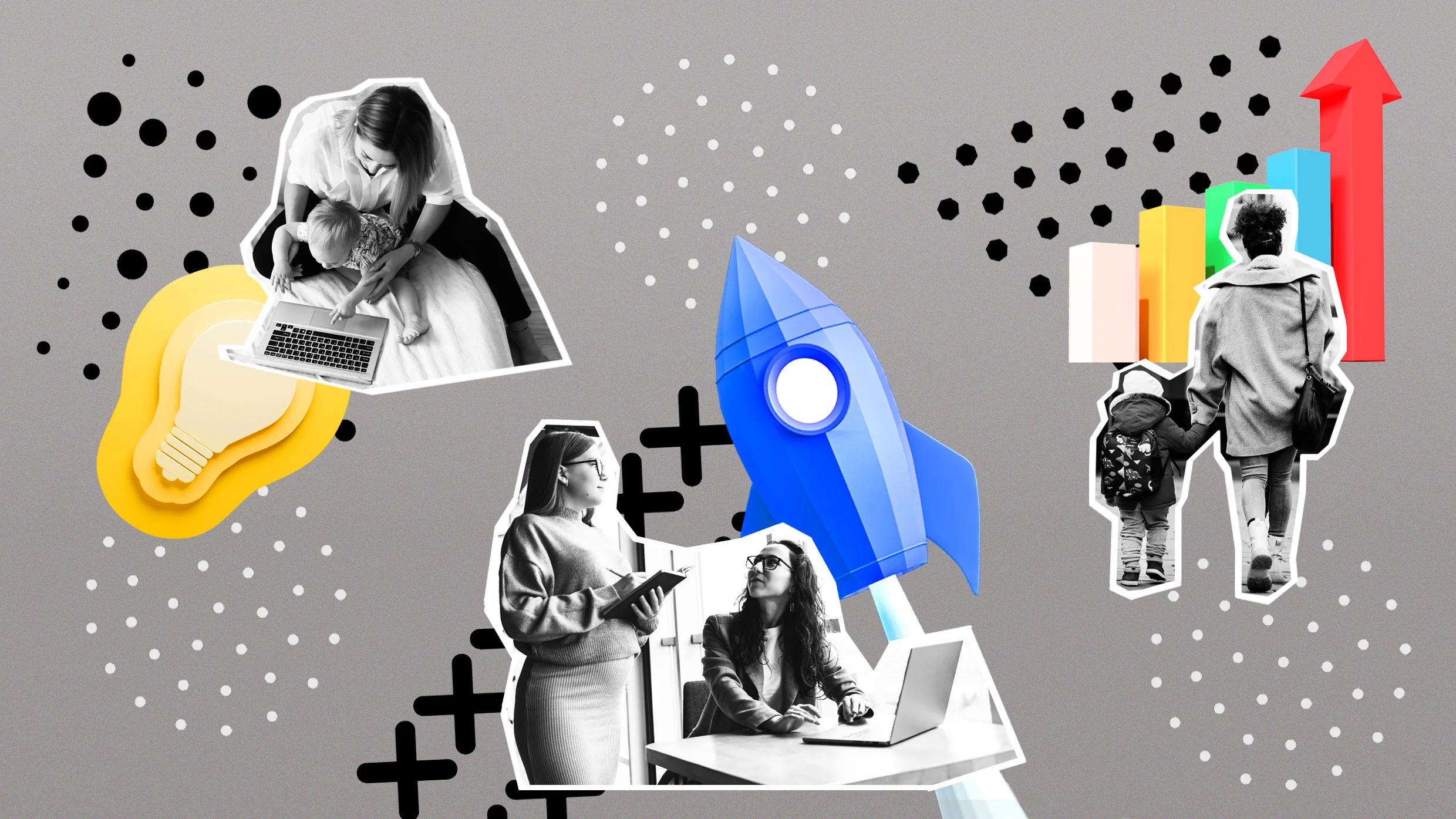
When Stephanie Fornaro was 5 and her younger brother was 6 months old, her mother left and did not come back. When Fornaro had her own children, she vowed she would do better. She left her sales job in preparation for the birth of her second child in 2017.
But after the birth, Fornaro struggled. Her husband, an entrepreneur, was on the road half the time. And she was lost in a fog of postpartum depression. Fornaro didn’t want to hire help. “It felt like I was failing as a mother because I was allowing someone else to raise my son,” she says. “I spent my entire life wondering how does a mother leave her children? It wasn’t until I went through a bout of postpartum depression myself that I understood. It wasn’t a lack of love. It was a lack of resources and support.”
America tells women they can have it all: children, a career—and their sanity. But the numbers don’t bear this out.
Mothers in the United States are not okay. The percentage of mothers with excellent mental health dropped from nearly 40% in 2016 to 26% in 2023. During the same period, mothers who rated their mental health as fair or poor jumped by more than 60%, according to a 2025 study published in JAMA Internal Medicine.
Some mothers are voting with their feet. An analysis by KPMG found over the past three years the number of college-educated women with children under 5 in the workforce has declined, while employment rates for women without children and most groups of men have increased.
Source link