The day was October 25, and the streets of Boston were full of protestors hoisting signs, chanting, and wielding megaphones. Their explicit goal: calling for the head of Liberty Mutual Insurance’s new mascot, Liberty Biberty.
The protest, which took place outside Liberty Mutual’s Boston headquarters, featured signs reading, “May Biberty have no mercy,” “Liberty from Biberty,” and “If you give me Biberty, give me death.”
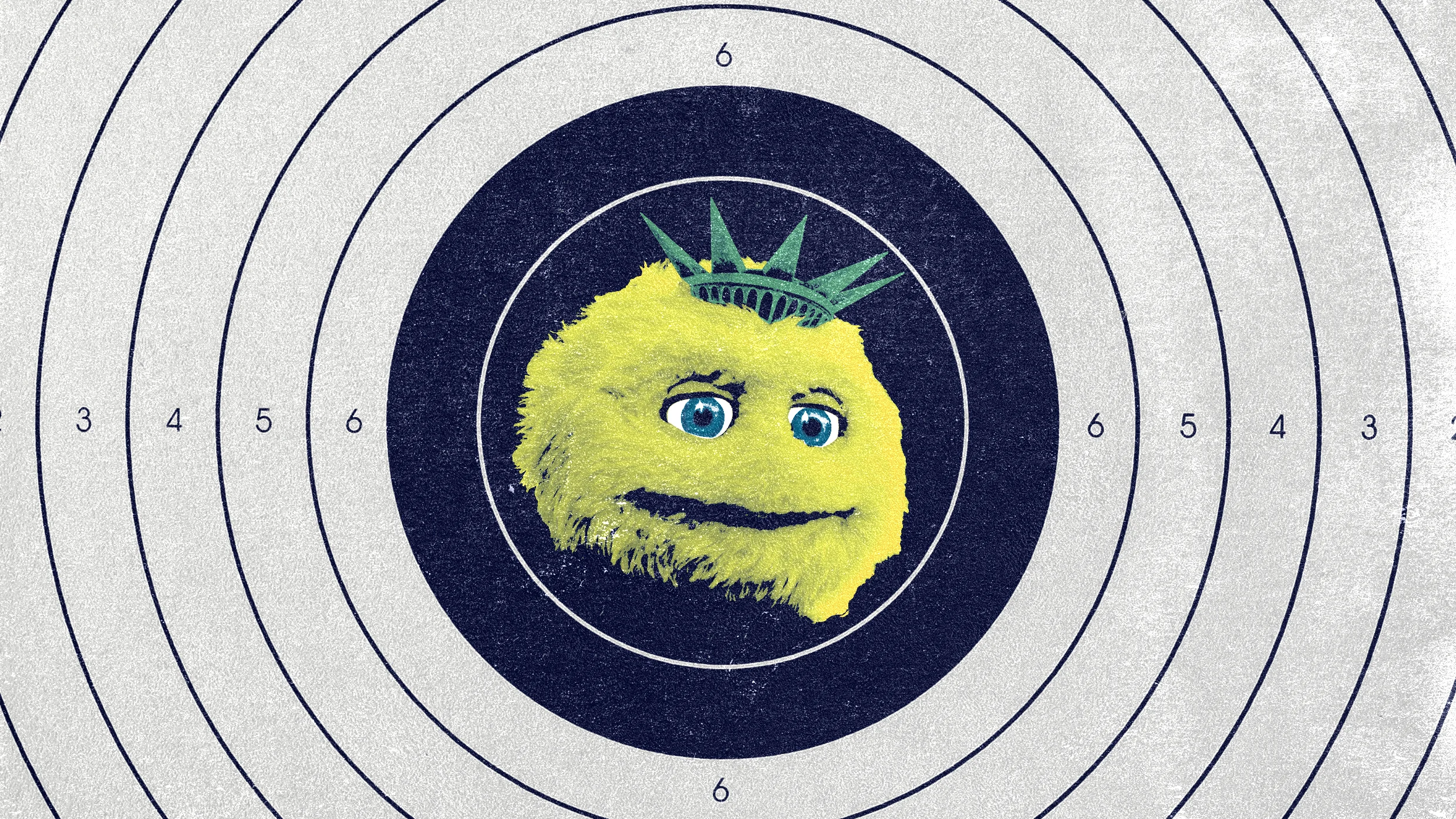
While these sentiments might seem extreme on their own, they’re tame compared to the Biberty-centric vitriol that’s been brewing online for weeks. Liberty Mutual unveiled Biberty in late July with a series of six commercials. He’s a fluffy yellow orb with piercing blue eyes, uncannily human teeth, and no nose, who’s a little bit too into insurance. Since he debuted, he’s turned into the internet’s common enemy—seemingly for being generally unfunny and a bit creepy.
And yet, all of this negative attention is turning hundreds of millions of eyeballs toward Liberty Mutual. According to Jenna Lebel, CMO of U.S. retail markets at Liberty Mutual, Biberty has been an on-paper success thus far.
“We’ve been encouraged by the early results, including independent testing that shows Biberty performing above average on attention and brand attribution,” Lebel says. “At the same time, we’re always listening to consumers and paying attention to how they engage with our brand.”
In the undeniably bland insurance industry, mascots are a common tool for building brand affinity and standing out from competitors. Now, Liberty Mutual is facing a brand conundrum: What do you do when your mascot becomes mega-famous for all the wrong reasons?
Source link