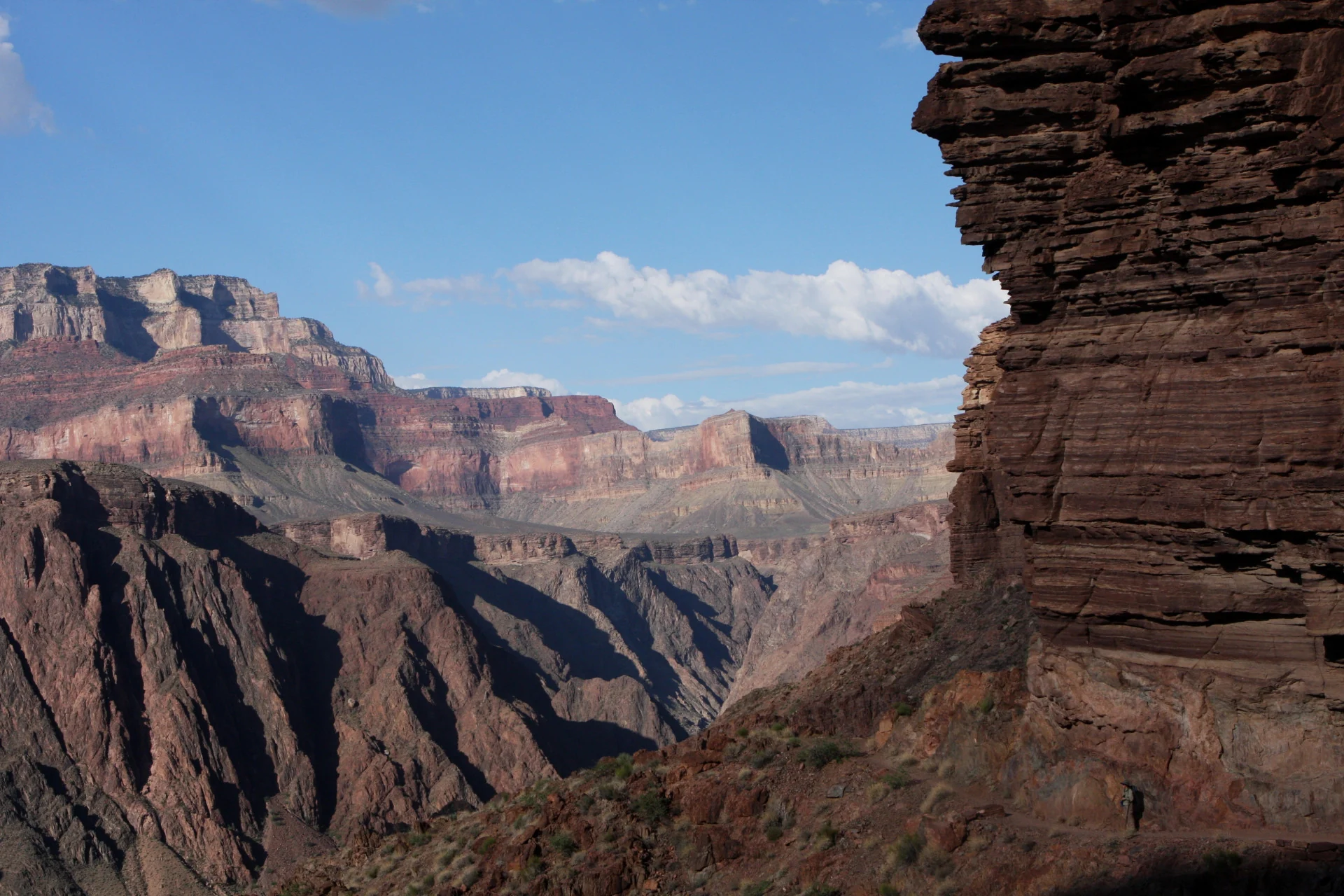
Earth’s geological history is like a book. At the start of this book you have layers of ancient rock from billions of years ago, and these layers grow younger as you turn the “pages.” But unlike your typical book, Earth’s geological chronicle sometimes has entire missing sections covering hundreds of millions to billions of years—and scientists believe they’ve figured out why.
Geologist John Wesley Powell first identified the “Great Unconformity” at the Grand Canyon, explaining how sedimentary rocks from the Cambrian sat right above much older igneous and metamorphic rocks from over a billion years ago. In a paper published today in Nature, researchers demonstrated how mantle convection over hundreds of millions of years may have resulted in this odd geological arrangement we see today. According to the study, this “missing layer” gradually subsided into the ocean during a period of slow sinking that began at the onset of the Phanerozoic, Earth’s current geologic eon.
“Imagine a book where a huge section in the middle has been ripped out,” Santosh Dhungana, the study’s lead author and a PhD candidate at the University of Wollongong in Australia, said in a statement. “The Great Unconformity is that gap in Earth’s story, with the narrative jumping from the early chapters straight to a much later part of the story. Our research suggests these pages weren’t lost by chance.”
2 billion years of missing rock record at the Grand Canyon. These gaps don’t necessarily equate to “missing time” created by “unknown events,” according to a National Park Service (NPS) blog post on the Grand Canyon’s numerous unconformities.
Source link