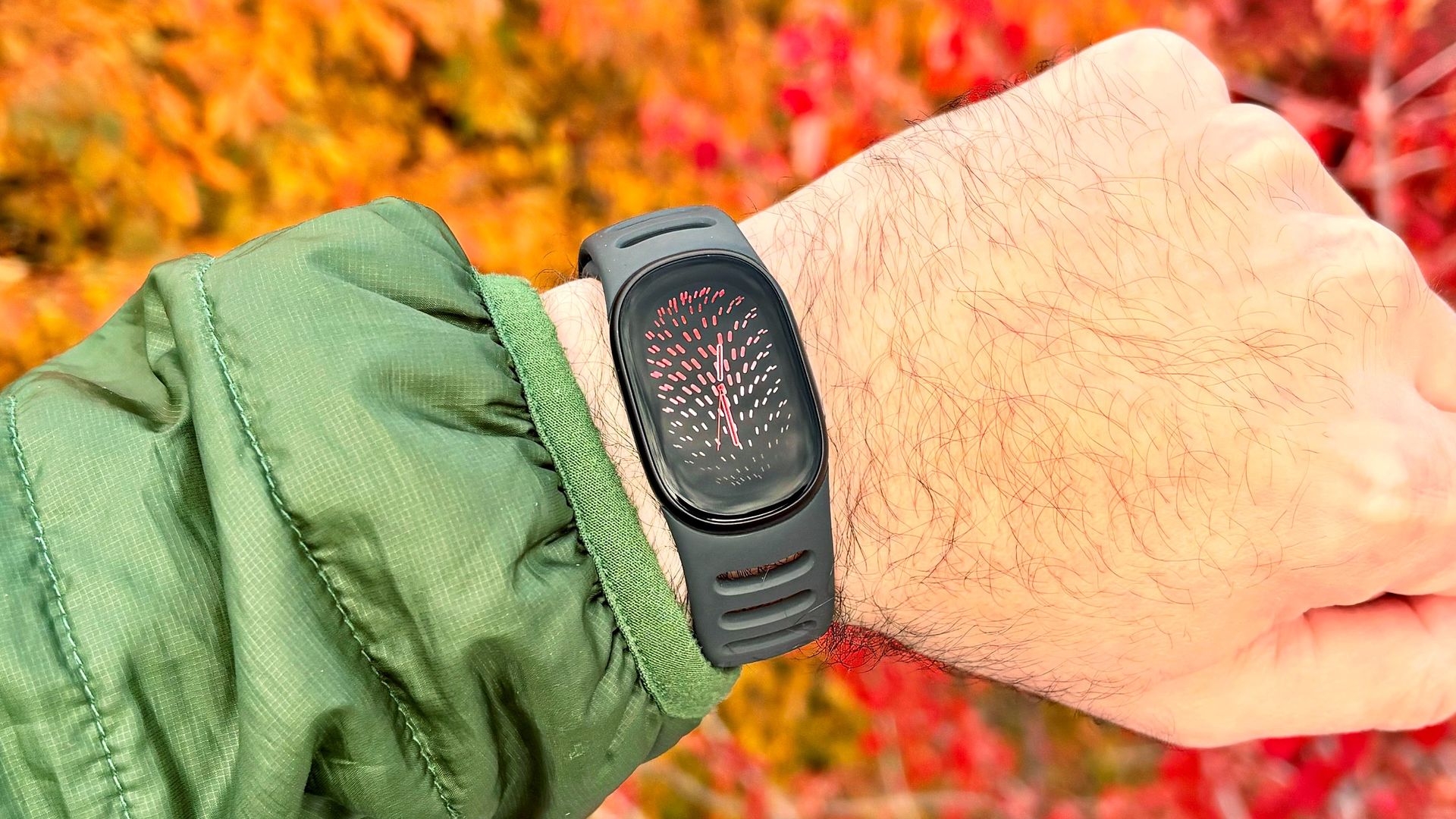
The new Fitbit Edge features onboard GPS, which is a very good thing for folks who enjoy outdoor workouts, and also just one of the many reasons it's one of the best fitness trackers you can buy.
Unlike the more entry-level Fitbit Air, you can accurately log location, distance, speed, pace, climb, and more with the Edge without needing to carry a paired smartphone.
There is one downside to the Fitbit Edge's onboard GPS though: it uses a lot of battery. Just to be clear, the wearable's overall battery life is pretty solid; I averaged about a week of use per charge while writing the Fitbit Edge review.
However, when using the Edge's onboard GPS for location tracking, it burns through roughly 12% battery per hour. This translates to just over eight hours of use before it's lights out.
Fortunately, there are a few ways to minimize battery drain without sacrificing location tracking insights. Both can be found in the Google Health app under Devices > Fitbit Edge > Device preferences > GPS settings.
Here you can switch location tracking from built-in to either dynamic — which uses both your smartphone and the onboard antenna — or smartphone-only.
The disadvantage of switching off the onboard GPS, of course, is that you now need to haul your smartphone along. But then again, if you're logging an eight-plus-hour workout, it may not be a bad idea to carry a means of communication just in case of emergencies.
More crucially, the non-onboard GPS options significantly reduce battery consumption in my testing.
Source link