
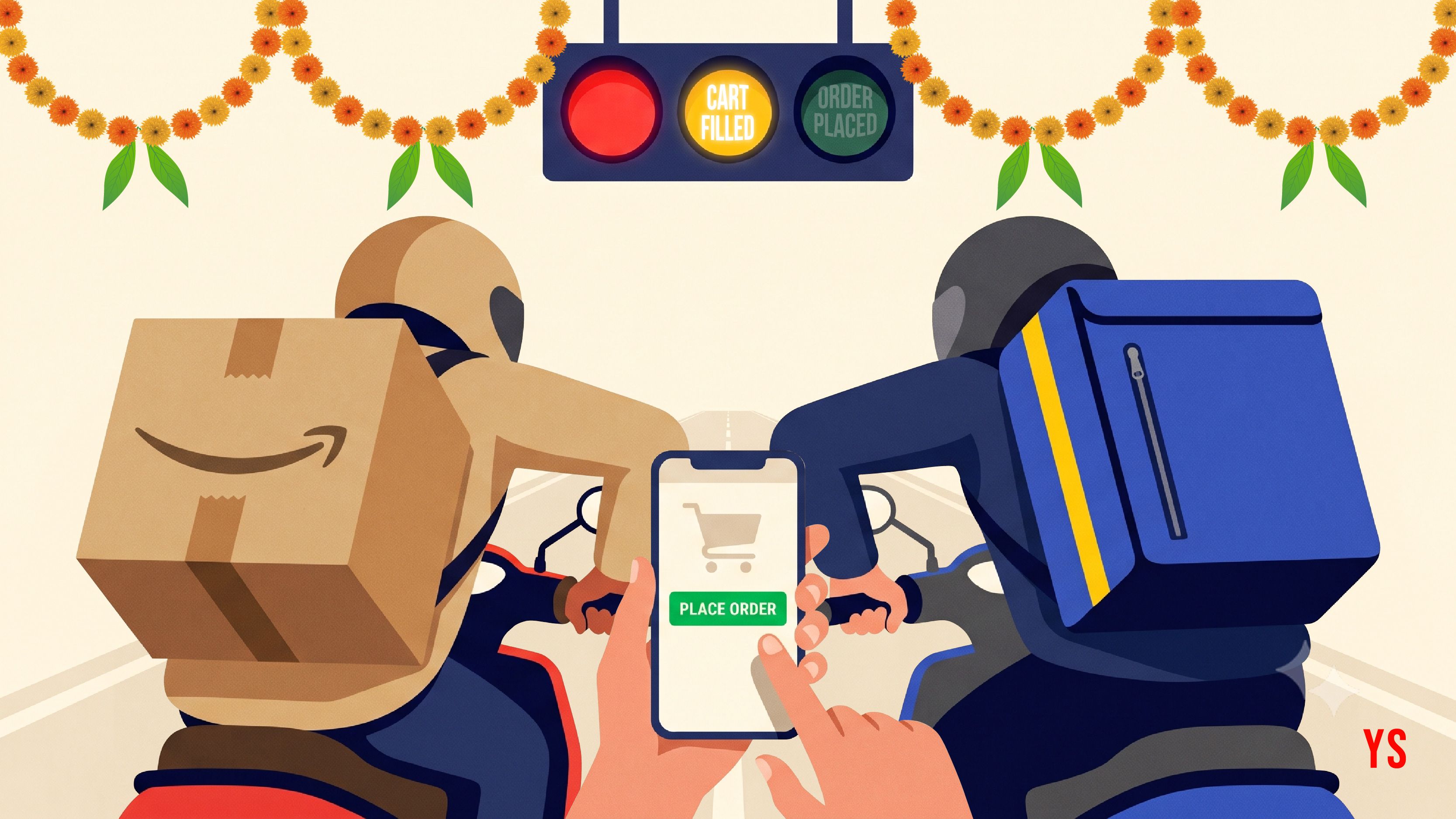
If you’ve been tracking the annual showdown between Amazon’s Great Indian Festival and Flipkart’s Big Billion Days, it’s easy to get bogged down in the hype. Every year brings promises of bigger discounts and flashier launch events. But looking past the standard headlines this season, the actual narrative on the ground has shifted. The real battle isn't just about who knocks a few extra rupees off a television; it’s about instant fulfillment, structural supply chain pivots, and an aggressive push in Tier II and III cities.
The Amazon Great Indian Festival started a day earlier on October 8 compared to Flipkart’s Big Billion Days. Flipkart started its sale on October 9, with early access to select members starting a day ahead. Preparing for the big sale days, Flipkart created 2.5 lakh new opportunities to support this year’s Big Billion Days.
The biggest change in strategy this year comes down to delivery speed. Quick commerce has officially crossed over from grocery apps into mainstream ecommerce. Amazon brought its 10-to-15-minute quick delivery setup, Amazon Now, directly into its main festival sale for the first time. Supported by 800 micro-procurement centers in 120 cities, they were delivering flagship iPhones within minutes of the sale opening at midnight, on 8 October. Beyond the ultra-fast tier, Amazon opened up 10 million products for same-day delivery and another 40 million for next-day delivery nationwide.
Flipkart has responded with a similar operational pivot, embedding Flipkart Minutes (internally known as Magenta) directly into its primary app. Rather than switching apps, shoppers can search once and choose quick delivery for fast-turnaround items.
Source link





