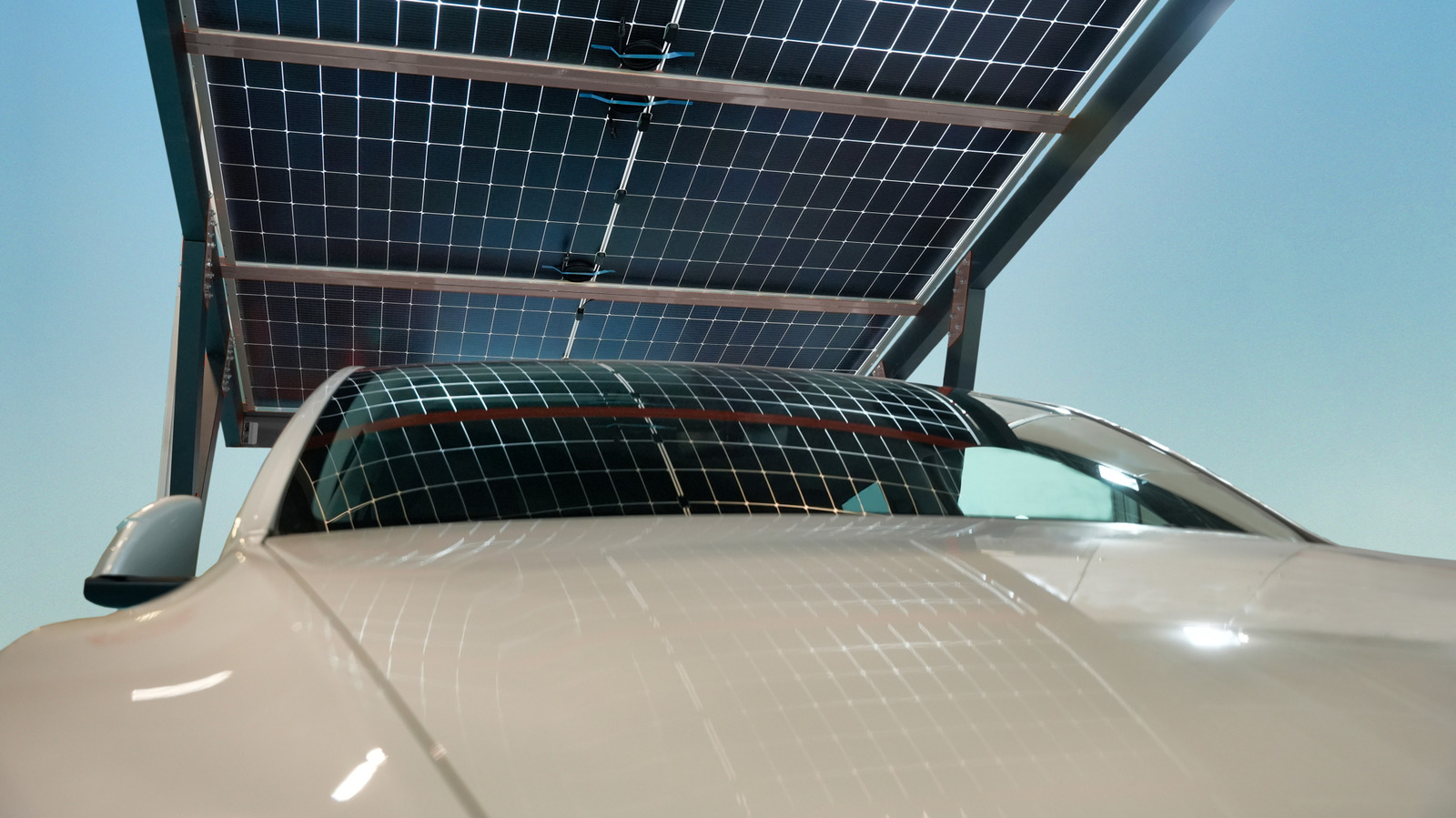
A car roof can only catch so much sunlight, and adding more panels brings its own problems.
A solar roof seems like an ideal EV accessory. Park outside, skip plugging it in, and drive away with a full battery. The problem is that even a relatively large car roof provides little room to harvest solar energy, and driving a modern EV requires significant electricity.
You might think to add more panels. However, additional hardware hinders the car in more ways than one. Added weight requires electric motors to work harder and thus draw more energy. Furthermore, extra hardware can compromise aerodynamics, increasing drag and lowering efficiency.
Car makers are attempting to overcome these limitations by testing solar panels that can be stretched when a vehicle is parked, along with light EVs that can go further on each watt-hour. However, implementing these concepts comes with practical challenges, which we'll explore.
In comparison, RVs are better suited to rooftop solar since panels (such as Winnebago's 210W system on the Revel Sport) can be used to power lights, fans and refrigerators. They're not expected to help move the vehicle.
Begin with the numbers. The EPA estimates the median model-year 2025 EV uses 39kWh per 100 miles, or 390Wh per mile. Let's assume that a 400W solar array is mounted on approximately 22 square feet of an EV's roof. 6kWh before charging losses. This is sufficient energy for approximately 4 miles at the EPA's average consumption rate.
Source link