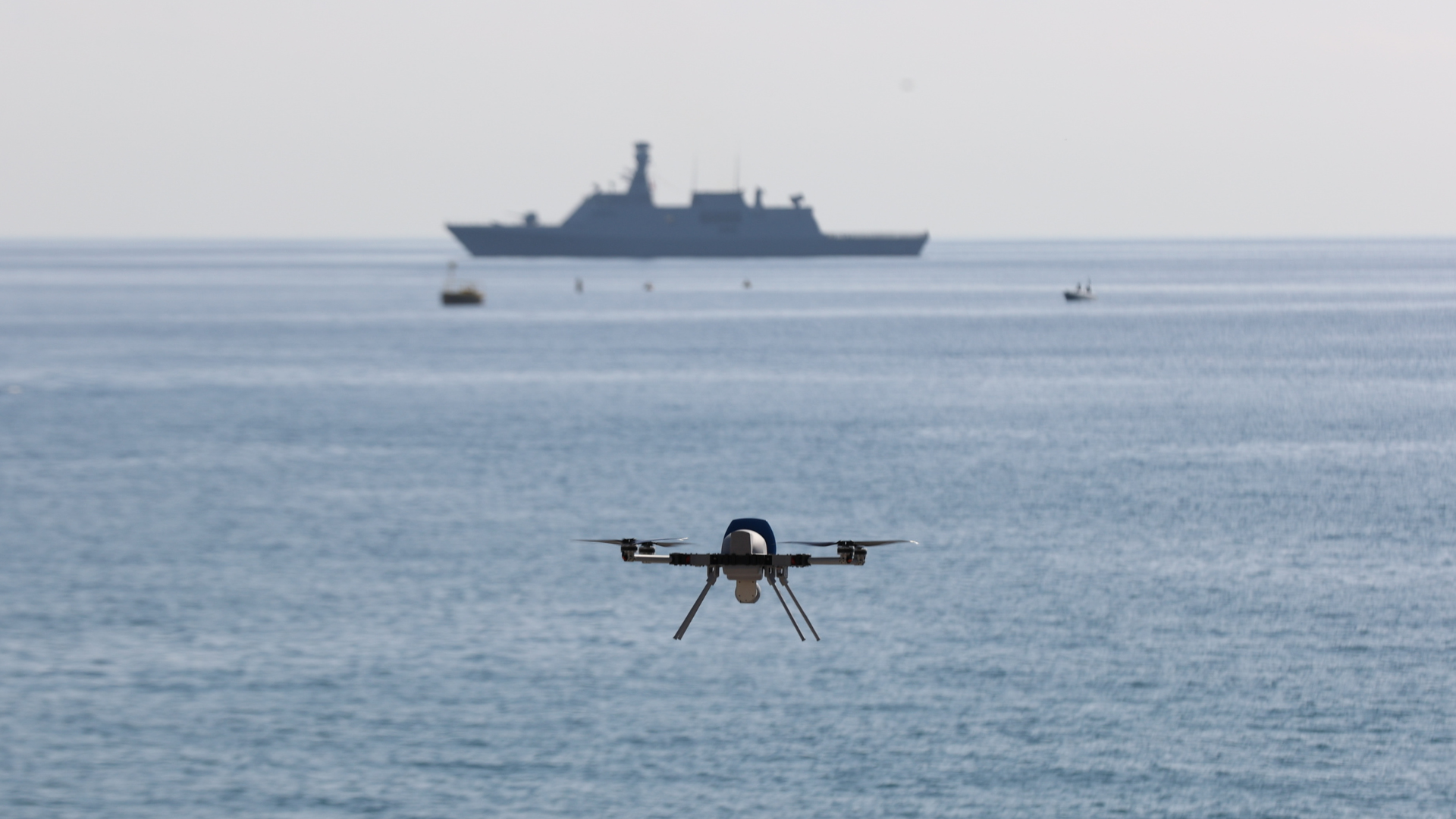
Taiwan’s Ocean Affairs Council is working on an autonomous system that would allow drone fleets to coordinate and execute missions without human intervention in response to "grey-zone" activities carried out by China. According to the South China Morning Post, the council is working with the National Cheng Kung University, which has already completed simultaneous flight simulations of two drone fleets, with each fleet comprising 10 units. This is already the second step of the process, which has shifted from individual aircraft control to the coordination of two drone detachments.
This project is designed to help Taiwan’s Coast Guard Administration (CGA) to counter Beijing’s grey-zone tactics in the waters surrounding the island nation. There have already been instances of civilian Chinese ships damaging undersea cables that Taipei relies on, with the CGA increasing its defensive patrols around 24 undersea cables and closely monitoring nearly a hundred China-linked boats. Despite that, Chinese “research vessels” continue to loiter over Taiwan-U.S. undersea cables, mimicking the activities of Russian trawlers in the Atlantic.
“The next stage will involve hardware-in-the-loop testing, prototype integration and flight trials over actual maritime areas to assess reliability under different sea and weather conditions,” the council said. The researchers programmed the drones to have a minimum separation of 100 feet in 3D space, and they’re also incorporating leader-follower formation flying and dynamic obstacle avoidance. This should allow them to respond to quickly changing conditions out in the open sea and even deal with unexpected hazards.
More than that, the autonomous system Taipei is working on would let different types of drones coordinate their movements, divide tasks, and plan routes, primarily for maritime surveillance.
Source link