Spatial audio: Bose TrueSpatial technology with Immersive Audio modes for Still, Motion, and Cinema
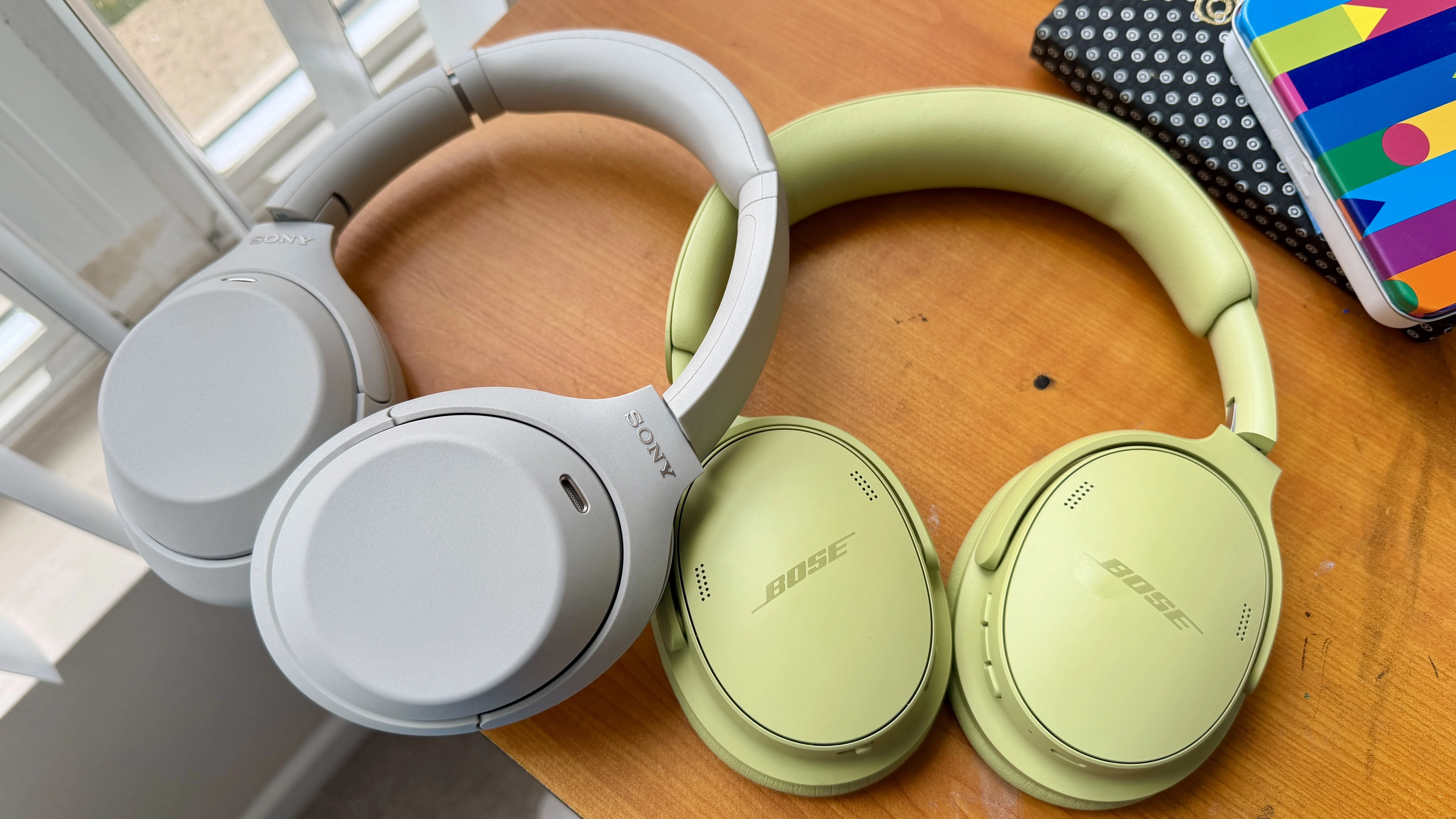
Colors: Black, white smoke, eucalyptus green*, dewdrop mint*, rosewood mauve* (*limited edition colors)
Sony headphones are known for their superior quality, and that trend holds true between these two headphones. Without any adjustments to the sound, the XM4C headphones produced a more nuanced and detailed sound profile with noticeably more clarity. The piano and vocals in Fiona Apple's rendition of "Why Try to Change Me Now" put me in a cozy jazz bar, while I found myself bumping the volume up on the Bose headphones to try to capture the same immersion.
Speaking of immersion, Bose does have the advantage in offering spatial audio in the form of its proprietary Immersive Audio. While it's not the best spatial audio I've heard, it does help live performances and more soaring songs shine — Billy Joel's "New York State of Mind" was especially pleasing in this mode.
Sony technically offers a spatial audio mode in the form of its 360 Reality Audio, but it's only functional with select apps (and none of the major music streaming ones). The lack of spatial audio, however, can be forgiven due to the excellent equalizer found on the companion app, which offers six presets, in addition to three custom settings. Users can also fine-tune their settings with a 10-band equalizer, compared to Bose's three-band equalizer and four presets. Ultimately, Sony provides a much more dynamic listening experience.
Where Sony generally takes the audio cake, Bose is known to be the master of ANC.
Source link