
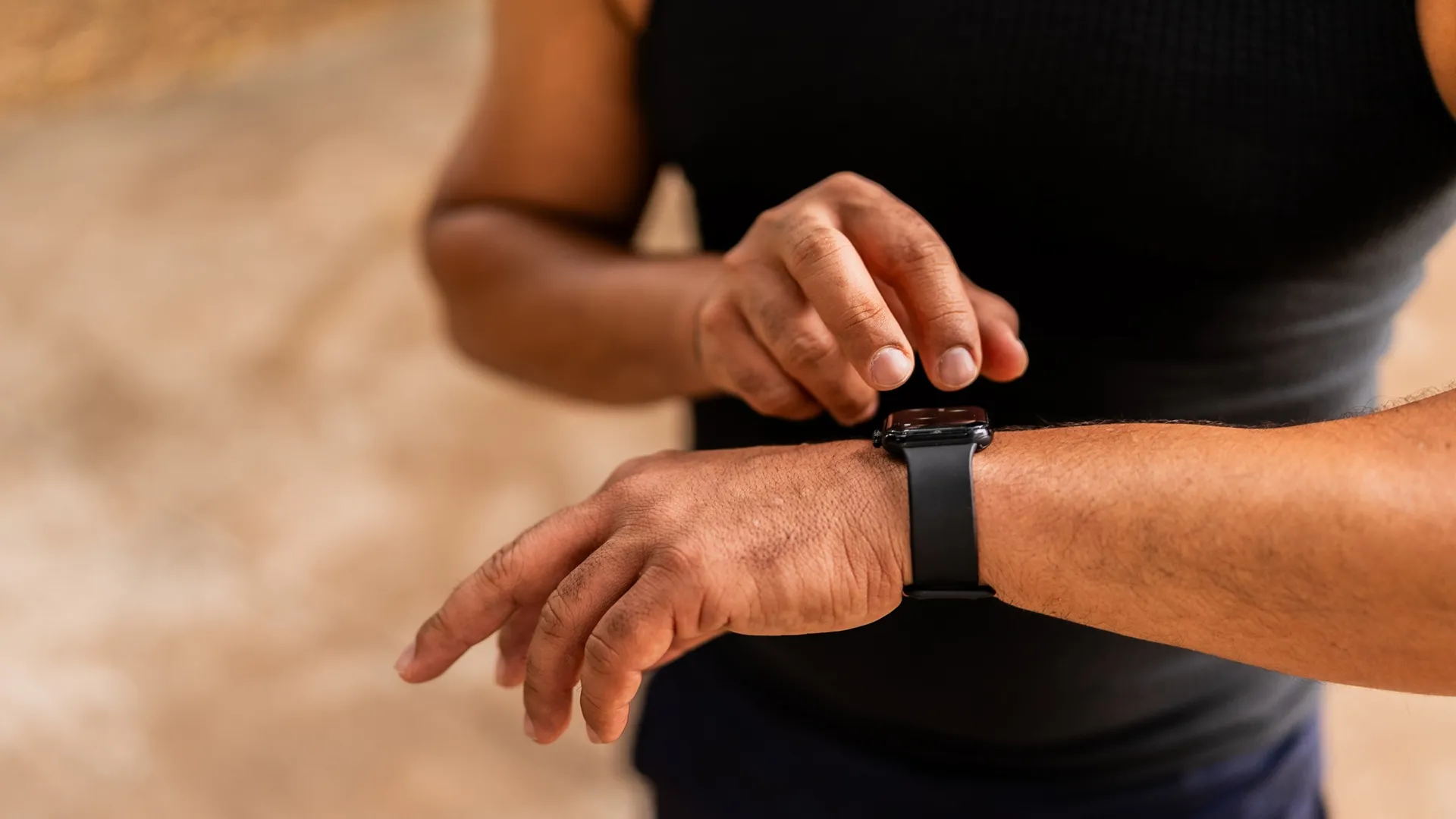
Researchers in Japan have developed a wristwatch-type sensor that tracked sweat-related sodium and potassium signals for 2 hours and 45 minutes during a real-world construction site test.
The wearable device, developed at Tokyo University of Science, combines printed
electrodes, a sweat collection layer and wireless electronics to monitor changes in sweat chemistry while a person works.
Unlike conventional printed sensors that can require lengthy preparation before producing stable readings, the new system uses a liquid-junction reference electrode designed to stabilize quickly.
The prototype was tested on one construction worker during normal activities, including movement, breaks, drinking water and eating. Researchers say the results demonstrate that the system can collect and transmit sweat-related signals outside laboratory conditions.
The sensor measures changes in electrical voltage associated with sodium and potassium ions in sweat. These minerals are involved in several physiological processes, making them useful targets for wearable monitoring research.
Such sensors rely on a reference electrode to provide a stable electrical baseline. Without it, changes in voltage cannot be reliably linked to changes in ion concentration.
Conventional printed reference electrodes can take considerable time to stabilize, limiting their usefulness in wearable systems designed for continuous measurements.
To address this, the researchers integrated a screen-printed liquid-junction reference electrode containing silica gel. The material allows water to enter the electrolyte layer, helping the electrode reach a stable measurement potential without lengthy pre-adjustment.
The device also includes separate sodium- and potassium-selective electrodes, allowing it to respond to both ions.
Source link





