

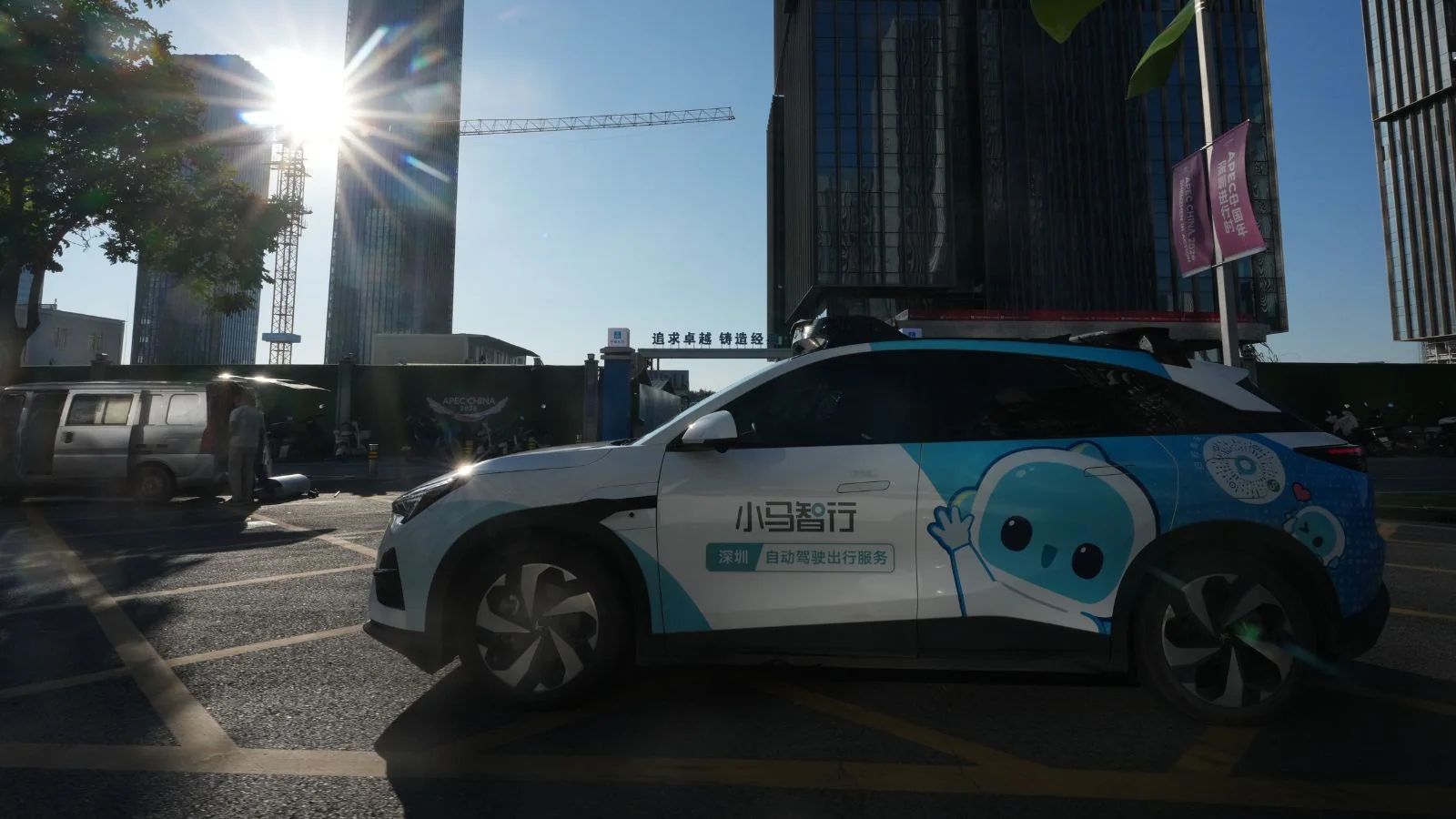
The app showed one minute until the taxi's arrival. Not far from the pickup spot, the blue and white SUV with a small robot graphic on its sides approached through the light traffic. It looked like any other car, except that no one was behind the wheel.
Welcome to Shenzhen, a hub of technological development in China, where some of the latest advancements are taking shape, from artificial intelligence and robotics to electric and autonomous vehicles.
While some of these innovations can now be seen in other Chinese cities, Shenzhen has long been considered one of the country's leading technology centers and is home to some of its best-known companies, like the telecommunication firm Huawei, electric vehicle maker BYD and internet and gaming giant Tencent.
The city will draw more attention as it hosts this year's Asia-Pacific Economic Cooperation summit. Chinese President Xi Jinping will welcome representatives from APEC's 21 members, including U.S. President Donald Trump and Russia's leader Vladimir Putin.
The gathering comes as China and the U.S. compete for leadership in technologies such as artificial intelligence in a rivalry intertwined with disputes over tariffs and access to critical minerals, and as a trade truce was recently extended until January.
Shenzhen's transformation from a testing ground for market-oriented reforms into a tech center reflects China's rise as a global economic competitor.
"Shenzhen is one of the most important symbols of China's reform and opening up through its strong global role in trade, manufacturing, and innovation," said Gary Ng, senior economist for Asia Pacific at French bank Natixis.
Source link





