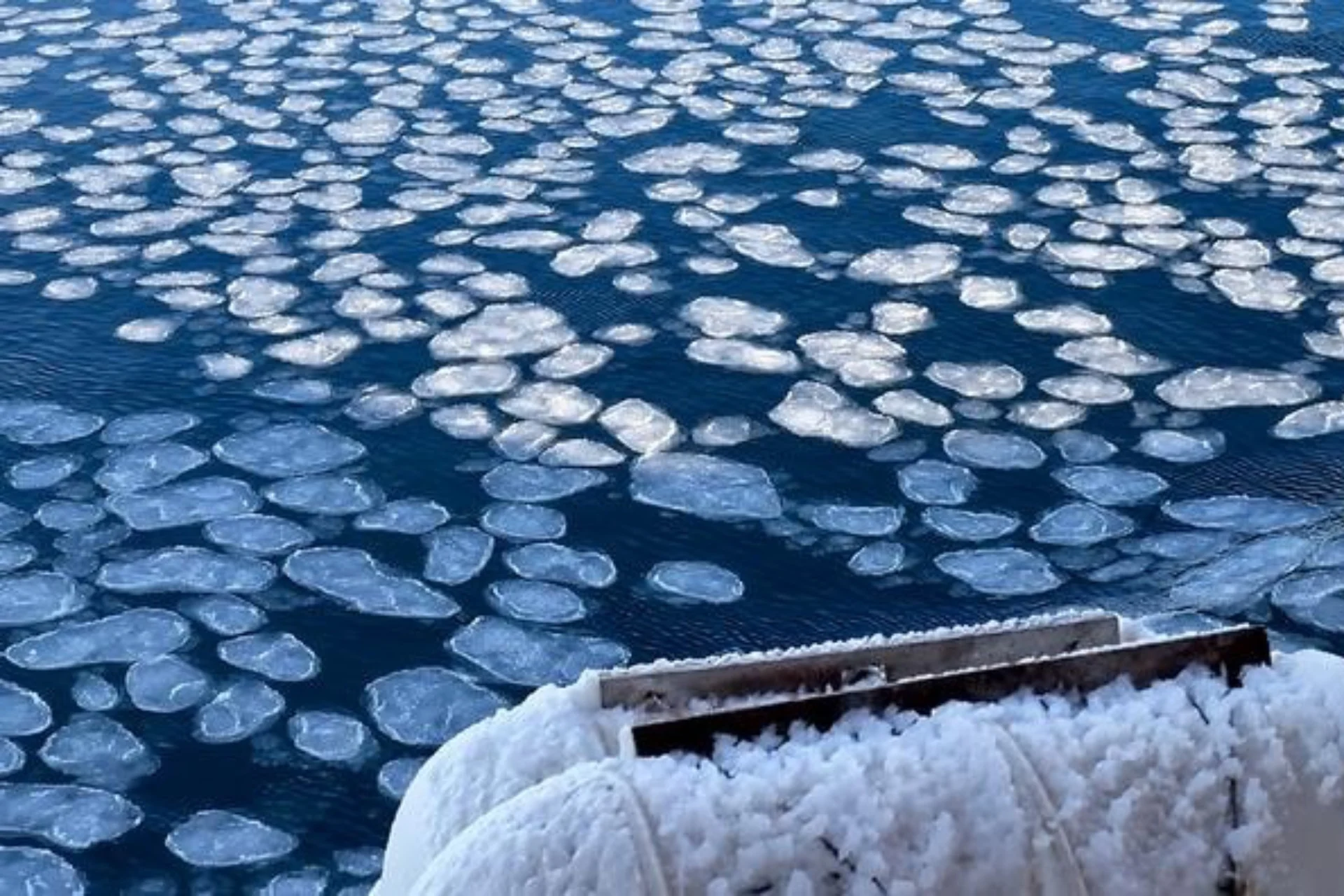
Over the past decade, Antarctic sea ice has rapidly declined, dropping to unprecedented annual lows. This trend has triggered drastic changes in a vast layer of the Southern Ocean that plays a critical role in Earth’s climate system and global ocean dynamics.
That’s according to a study published Wednesday in the journal Nature. The findings show that the Antarctic Intermediate Water (AAIW)—a mass of cold, oxygen-rich freshwater that forms around Antarctica at depths of 2,300 to 4,000 feet (700 to 1,200 meters)—is rapidly growing saltier, denser, and deeper. These changes could have major implications for global sea levels, ocean warming, and weather patterns in the decades to come.
The last time this happened was at the end of the last interglacial period, roughly 130,000 years ago, according to lead author Bishakhdatta Gayen, a researcher and professor at the University of Melbourne and at the Centre for Atmospheric and Oceanic Sciences in Bengaluru, India.
“That transition took thousands of years, not two decades,” Gayen said in a statement.
The AAIW forms a dynamic barrier between the warm upper ocean and the cold deep interior, regulating deep-ocean warming. When it expands northward into the Indian, Pacific, and Atlantic oceans, this water mass transports heat, carbon, oxygen, and nutrients toward the tropics, serving as a vital marine conveyor belt.
Antarctic sea ice melt is the engine that drives that conveyor belt. Every summer in the Southern Hemisphere, melting sea ice dumps fresh water into the Southern Ocean, diluting sea water and feeding the AAIW.
Source link