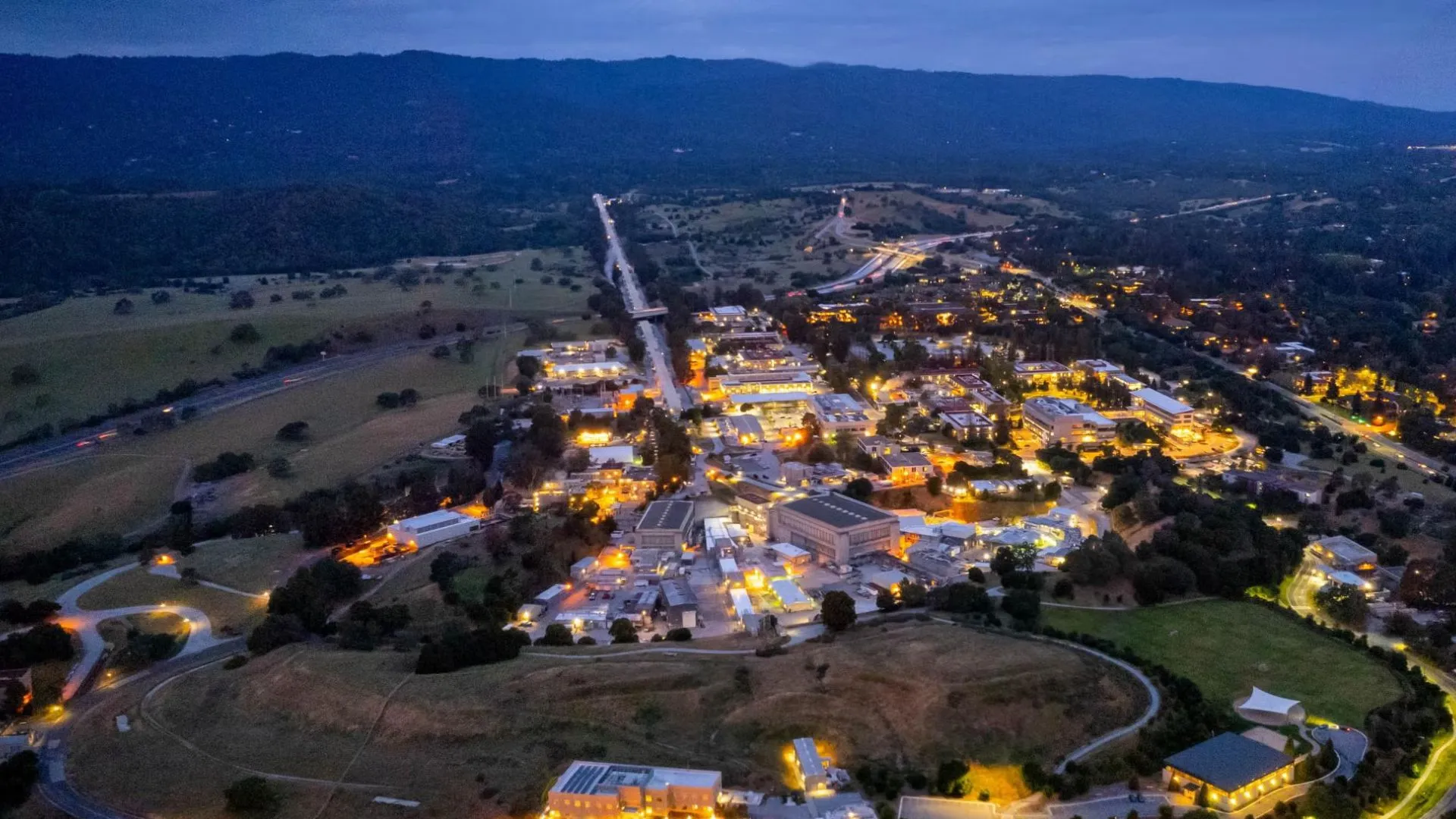
Researchers at SLAC’s Linac Coherent Light Source (LCLS) have generated and measured the shortest high-energy (“hard”) X-ray pulses ever recorded at an X-ray free-electron laser (XFEL).
The study confirms pulse durations between 100 and 400 attoseconds at high photon energies (~9 keV). These “hard” X-ray flashes are fundamentally changing how we observe and control quantum matter.
Scientists are already using these ultrashort flashes to capture the real-time motion of electrons deep within atoms and dense plasmas. These ultrashort flashes let scientists observe pristine structures, outrunning the radiation damage caused by the X-rays themselves.
“This is an important milestone for researchers who want to use attosecond hard X-rays at LCLS,” said Ichiro Inoue, a professor at the University of Tokyo.
Making an attosecond pulse is immensely hard. Measuring one is even harder.
“Over the course of several years, we’ve learned how to create these high-energy attosecond pulses, but measuring pulses this short is really, really difficult. This was the first diagnostic that proves the pulses are indeed only a few hundred attoseconds long,” explained Agostino Marinelli, a study author and professor at SLAC
The solution came from lead author Inoue, who proposed an indirect measurement technique using amplified spontaneous emission (ASE).
ASE is basically splitting an X-ray beam to measure its energy spectrum directly while focusing the remainder onto copper foil to produce forward fluorescence.
Researchers tested SLAC’s Linac Coherent Light Source by firing a high-energy beam and splitting it into two paths. One portion went directly to a detector that recorded its energy spectrum, while the remaining light was focused onto a 150-nanometer spot on copper foil to produce fluorescent radiation.
Source link