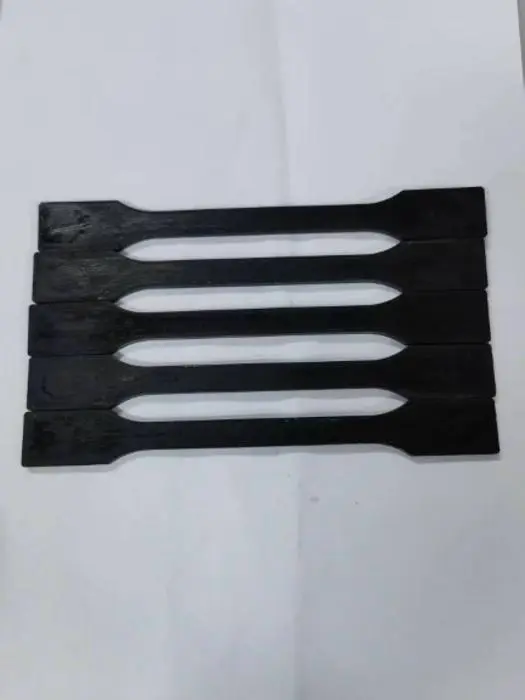
Researchers at Tsinghua University have developed an “upcycling” method using flash Joule heating to turn retired wind turbine blades into silicon carbide and graphene. These two are high-value materials used in manufacturing.
Giant wind turbine blades are designed to survive the unthinkable. They slice through freezing gales, endure relentless UV radiation, and withstand lightning strikes for over two decades. But that extreme durability turns into an environmental issue when their service life ends. Decommissioned blades mostly end up buried in landfills.
China-based team has now unlocked a solution to this long-standing dilemma. The chemical and environmental engineers found a way to transform tough composite waste into high-value manufacturing materials using a brief burst of extreme heat.
The wind power surge of the early 2000s has created an urgent disposal crisis today as the first major generation of 20-year turbine blades reaches retirement. Annual decommissioned blade waste across China, Europe, and the U.S. now reaches thousands of tons. Outright landfill bans on composite waste in nations like Germany and Austria make finding scalable alternative processing methods an imperative for the renewable energy sector.
“As aging turbines are decommissioned, especially in China, where wind power has expanded rapidly, much of the waste has ended up in landfills. It’s a waste of resources,” said Bing Deng, senior author and chemical and environmental engineer at Tsinghua University, China.
The key was found in the raw ingredients already inside every blade. Turbine blades are built from silica-rich fiberglass bound together by carbon-dense resin.
In this new work, researchers used flash Joule heating to zap broken blade material to roughly 2,000°C (3,632°F) in a matter of seconds.
Source link