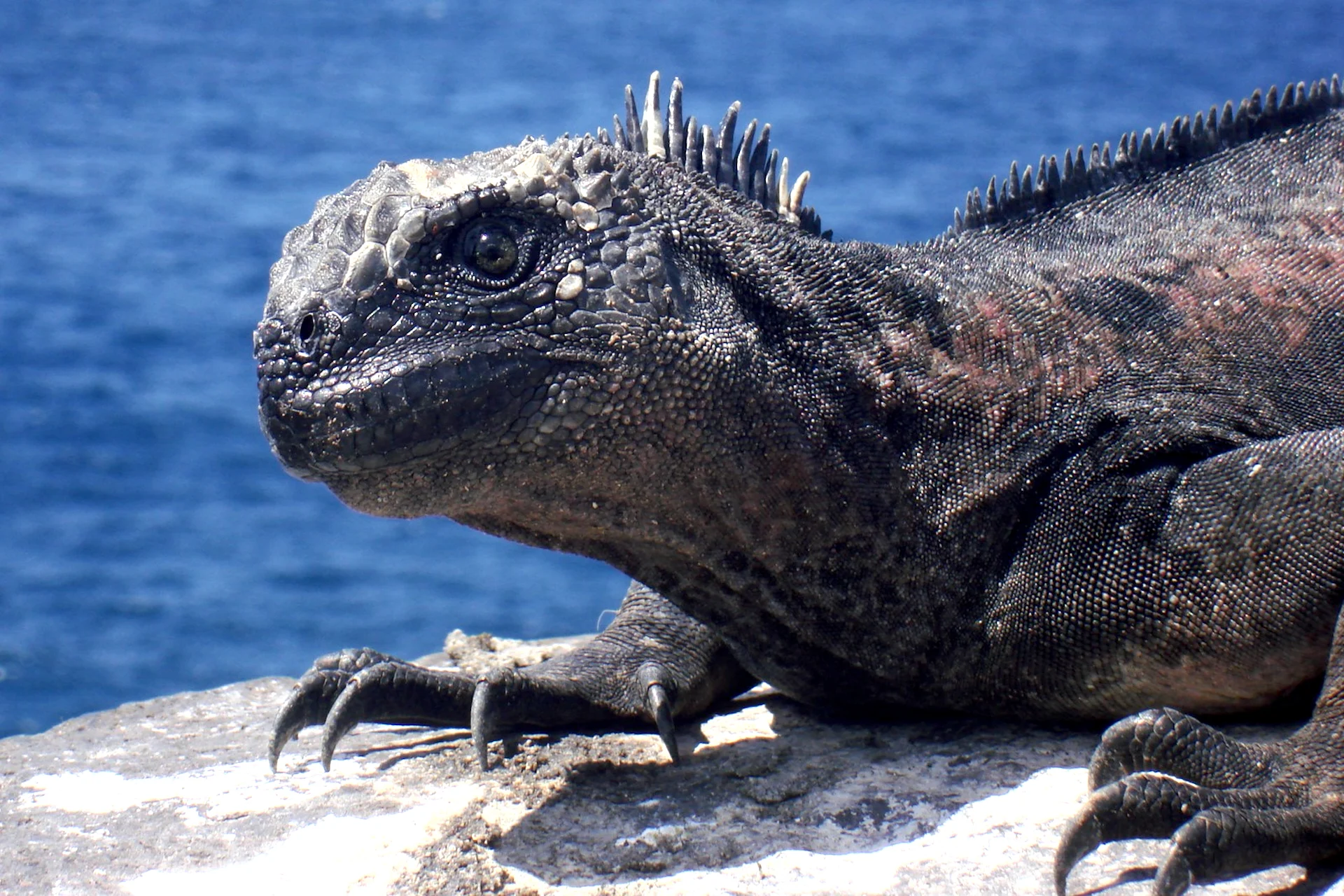
It started this May when Ecuadorian officials recovered four illicitly held Galápagos iguanas from a home near Guayaquil, the South American nation’s largest city. Before the month was through, Ecuadorian police would intercept over a dozen more protected Galápagos marine iguanas from the port city’s Joaquin de Olmedo Airport—stashed away by Thai smugglers in handbags and wrapped in nylon stockings, their little lizard limbs tied down.
Then another 32 specimens were discovered in the suitcase of a Russian national this August, leaving environmental scientists, criminologists, and conservationists worried that the escalation in trafficking might finally push this vulnerable species over the edge. Now, in a letter to the journal Science, marine eco-toxicologist Juan José Alava and his colleagues have warned that the twin burdens of heightened trafficking and the ecological toll of El Niño this year could seriously jeopardize this species’ survival.
“Marine iguana populations already face threats from chemical spills and plastics pollution,” Alava said in a statement put out by Simon Fraser University, where he teaches, “and now this strange uptick in trafficking to supply the exotic pet trade is happening at the same time the Super El Niño is wiping out intertidal macroalgae.”
Scientists have known for at least a decade that an El Niño event of any strength can have an adverse impact on the Pacific Ocean’s aquatic plant life. Chlorophyll-a concentrations visible from space have confirmed the theory that El Niño’s hotter ocean surface temperatures can suppress the natural upflow of the colder, nutrient-rich seawater that ocean vegetation like intertidal macroalgae (AKA “ seagrass ”) and phytoplankton rely on for nourishment.
Source link