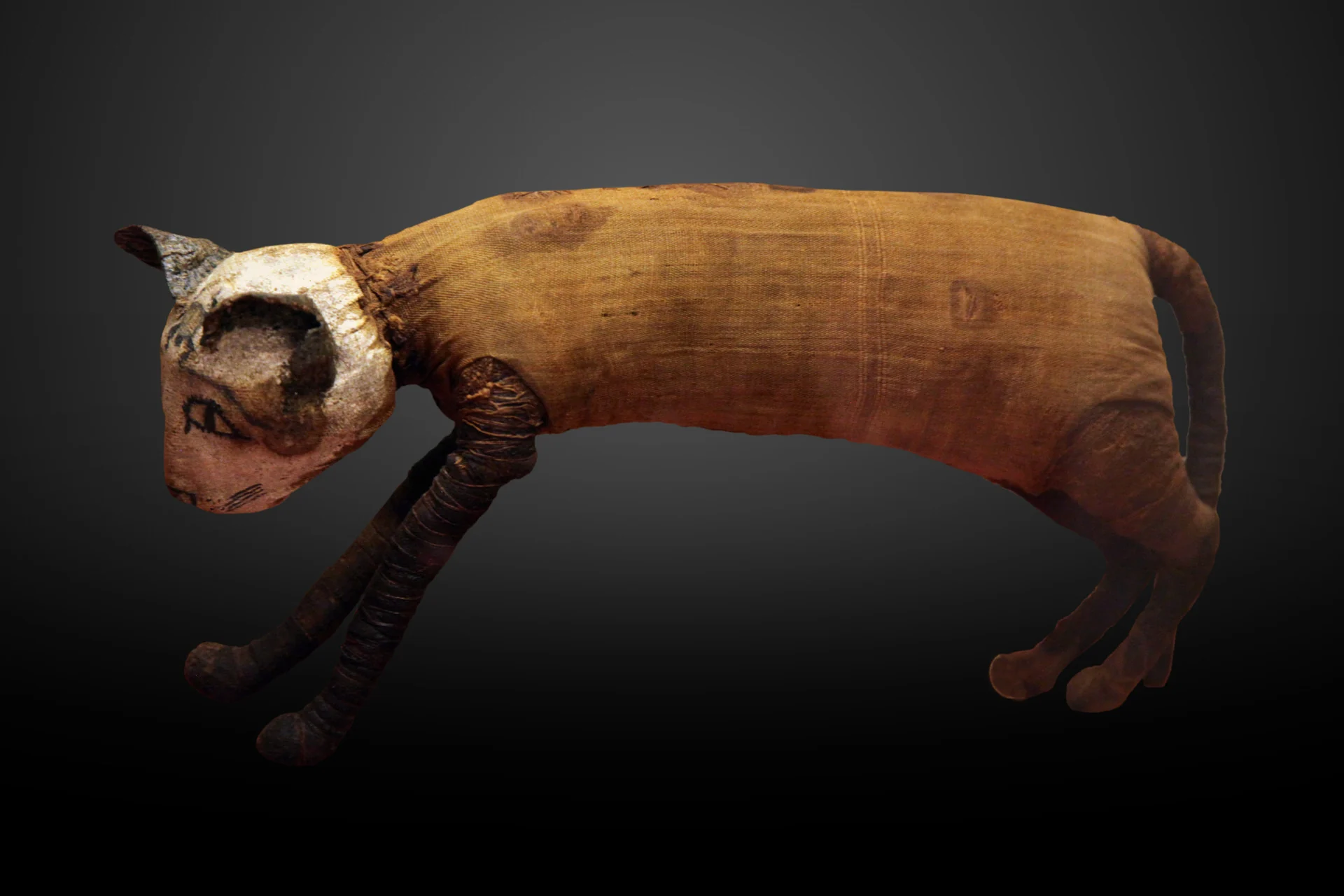
Ancient Egyptians famously loved cats—they appear in hieroglyphics, obelisks, and other art forms, and experts believe cats eventually became symbols of divinity and protection in Egypt. But whether that meant the cats were pampered might be less clear, according to new research.
A close analysis of 131 well-preserved felid skulls from Beni Hassan, a funerary site from ancient Egypt, revealed “pathologies” that suggest cats at the time lived under subpar conditions. For instance, more than half showed signs of gum disease and “healed fractures, puncture marks, and deformations” linked to infections or other illnesses, according to a paper describing the findings, published recently in the Journal of Archaeological Science. There’s also evidence that the cats were packed into crowded spaces—which, if you’re a cat owner or ally, isn’t great news.
“What struck us most was the high proportion of injuries and evidence of disease, suggesting that these cats lived in poor conditions,” Bea De Cupere, a study co-author and a zooarchaeologist at the Royal Belgian Institute of Natural Sciences, told Phys.org. “This is not what one would expect for animals destined to become votive mummies.”
” But the archaeological record strongly suggests cats were important to them, she added. Mummified cats have turned up in human tombs whose walls depict cats lying below chairs, chasing birds, or playing.
Source link