

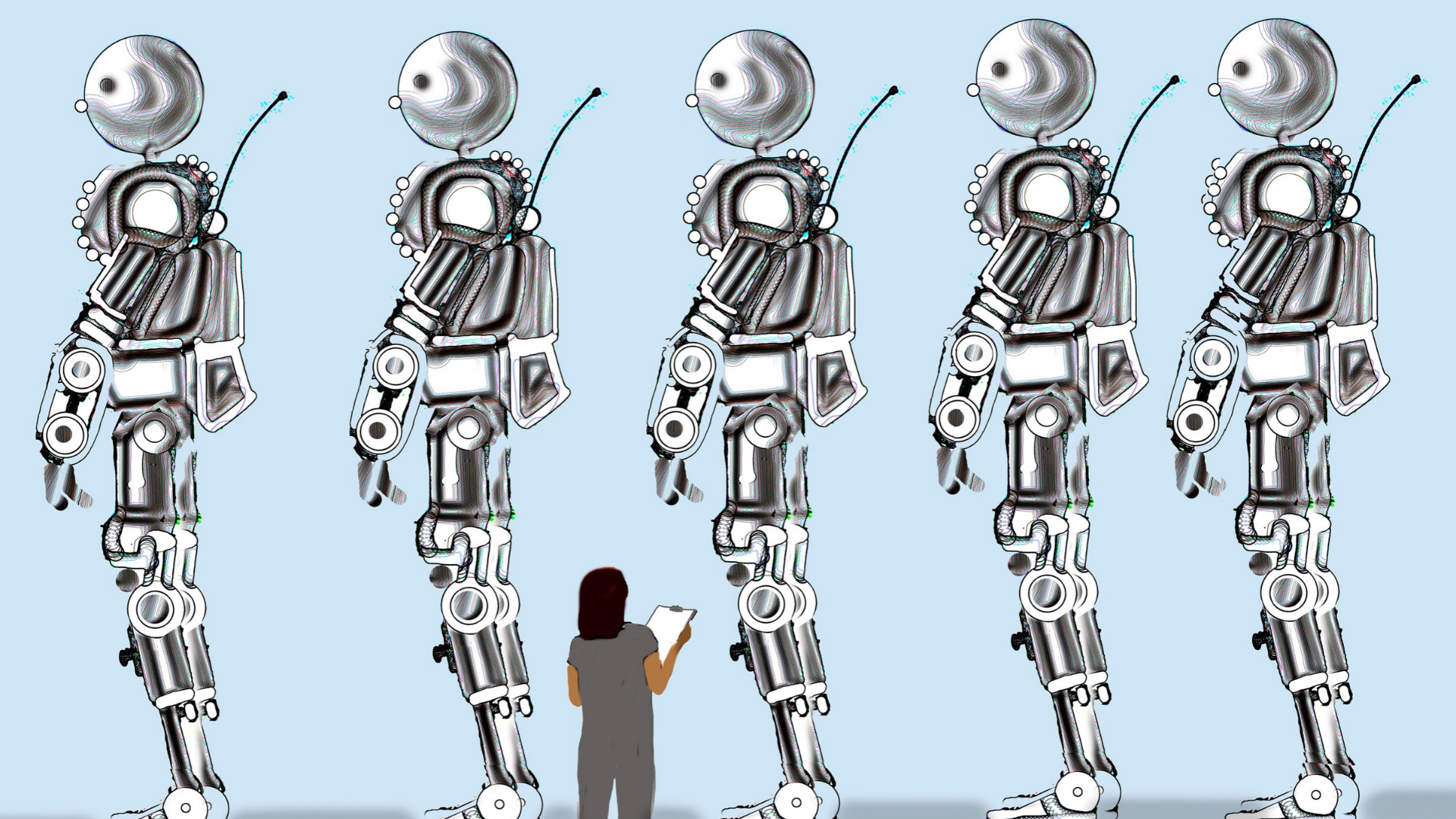
In 1897, Georges Méliès made Gugusse et l’Automate, one of the earliest films to feature a robot. The machine grows, fights its maker, and is eventually destroyed. It set the tone.
For much of the next 120 years, our impressions of robots came from the silver screen. From the terrifying liquid-metal T-1000 in Terminator 2 to the murderous NS-5s in I, Robot, we have repeatedly imagined that the machines we invent will eventually turn on us.
Of course, for every evil machine, there’s a WALL-E or C-3PO. But hostile robots scare us. Negativity bias makes our minds naturally give disproportionate attention to threats, loss, and things beyond our control. Popular culture didn’t invent our fear of machines, but it has had more than a century to compound it. Until recently, those fears could remain safely within our imaginations.
In recent years, investment in robotics and “physical AI” has surged at a record pace, with global funding growing from about $4 billion in 2019 to $26 billion in 2025. China is pushing humanoid robots from demonstrations into factories, with Morgan Stanley projecting that annual Chinese shipments could reach 446,000 by 2030.
But it’s important to acknowledge that robots don’t always have two arms and two legs or look like us. Many have been working alongside us for decades. They arrived in automotive factories in the 1960s and, by the 1980s, were considered a core production technology. We’ve happily watched robot vacuum cleaners make their way around our homes for years.
Source link





