
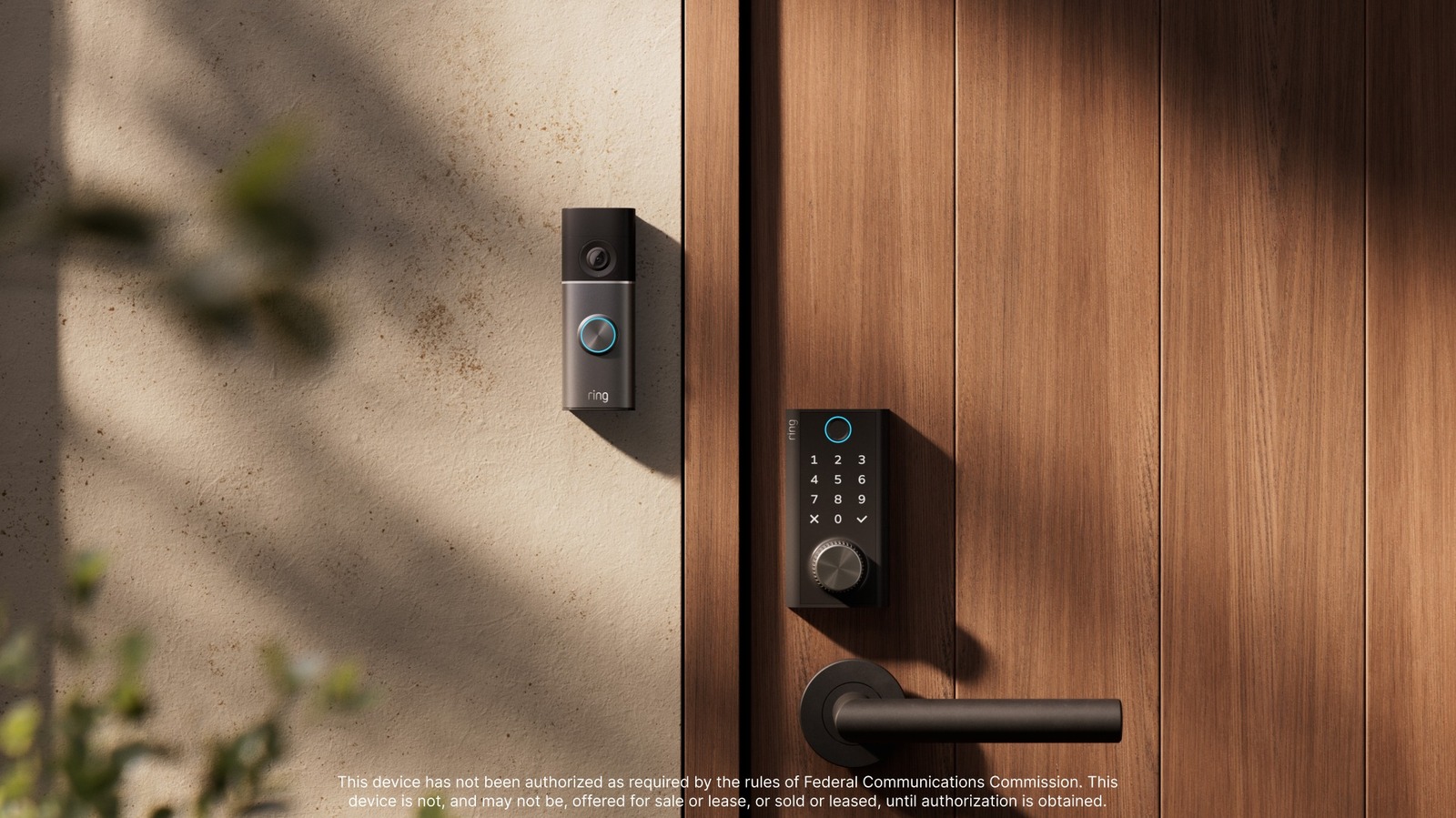
You can generate power by twisting the front latch back and forth.
Ring founder Jamie Siminoff thinks smart locks aren't popular because users are worried about what happens when they run out of power. Say what you like about keys, but you don't need to recharge them once every few months, and they have worked without power for millennia. That issue is what drove him to develop the Ring Smart Lock, which solves the no-power issue with a hand crank. On the front of the unit, there's a wheel for the latch that, if you turn it back and forth three or four times, generates enough power to run the lock for 30 seconds.
Tucked inside the hardware is a small motor and a supercapacitor that, after a few strong turns of the wheel, will generate around three volts. That gives the unit enough power to run fully, rather than in any sort of compromise low-power mode, for about half a minute. That should be long enough to use the fingerprint reader, keypad, access the Ring app or ask Alexa. After all, as a Ring product, it integrates seamlessly with the rest of Amazon's smart home ecosystem.
This focus on the worst-case scenario, as Siminoff explained, is meant to address would-be buyers' fears about losing access to their home. But he sees plenty of other arenas where this sort of technology would work well, such as buildings you don't access regularly. If you can generate power on the fly to run the lock, it'll work equally well for cabins in remote locations.
Source link





