
While AI continues to reshape industries across science and mathematics, traditional supercomputing has seemingly taken a back seat. However, AMD's Scott Tease told Tom's Hardware Premium that most HPC sites “recognize that AI will never replace HPC,” and suggests that building a heterogeneous compute stack is the best path forward to tackle bleeding-edge research, despite Nvidia pushing performance on lower-precision data types higher for AI workloads at the cost of native performance for the important double-precision FP64 format that’s critical for HPC workloads.
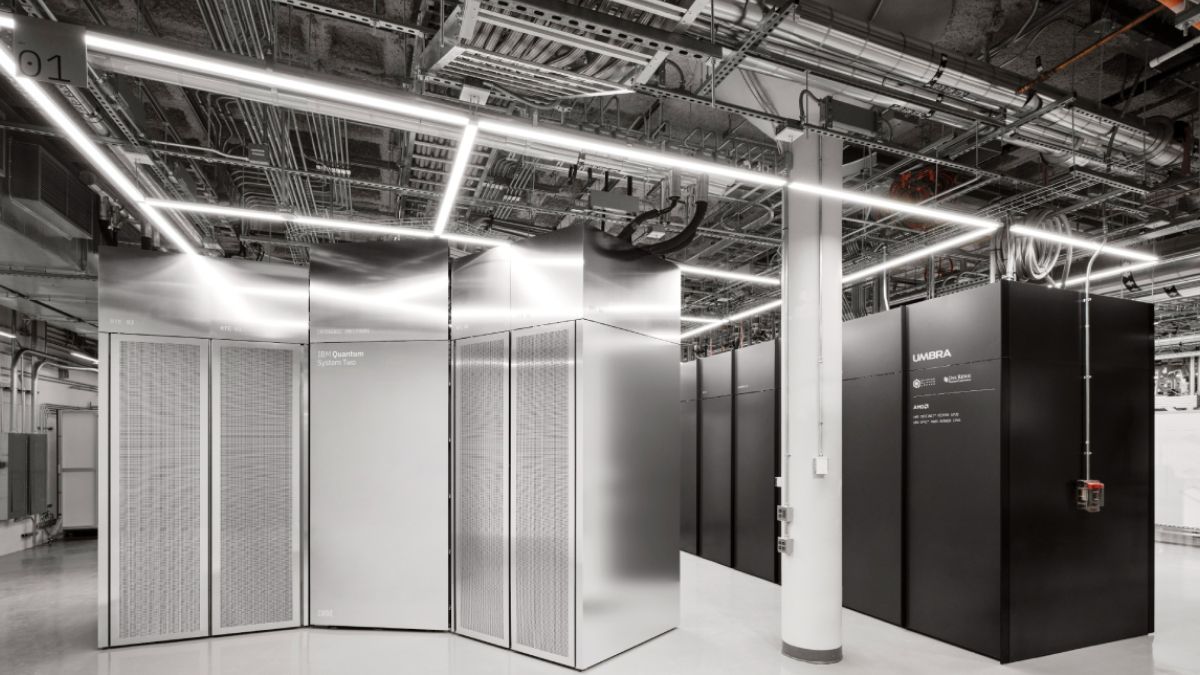
A heterogeneous compute stack brings together quantum, HPC, and AI under one roof, a fleet that AMD is helping pilot at Oak Ridge National Laboratory alongside IBM. Tease is AMD’s corporate vice president of HPC and sovereign AI, who joined the company earlier this year after more than a decade at Lenovo (and, before that, another 13 years at IBM). We spoke with Tease ahead of SC26 to get a read on the state of HPC, how it intersects with AI, and what’s actually driving the research community in a time when computer chips are driving headlines about international espionage plots.
FP64 is important for HPC workloads because of its precision. FP64 is a hot-button issue, largely due to how Nvidia’s GPUs have progressed over the past two generations. Or rather, how they haven't progressed. Nvidia’s latest Rubin GPU has 33 TFLOPs of FP64 compute, which is lower than the four-year-old H100’s 34 TFLOPs of FP64. 6 TFLOPs of FP64 compute, while its upcoming HPC-angled MI430X peaks at 288 TFLOPs.
Source link





