
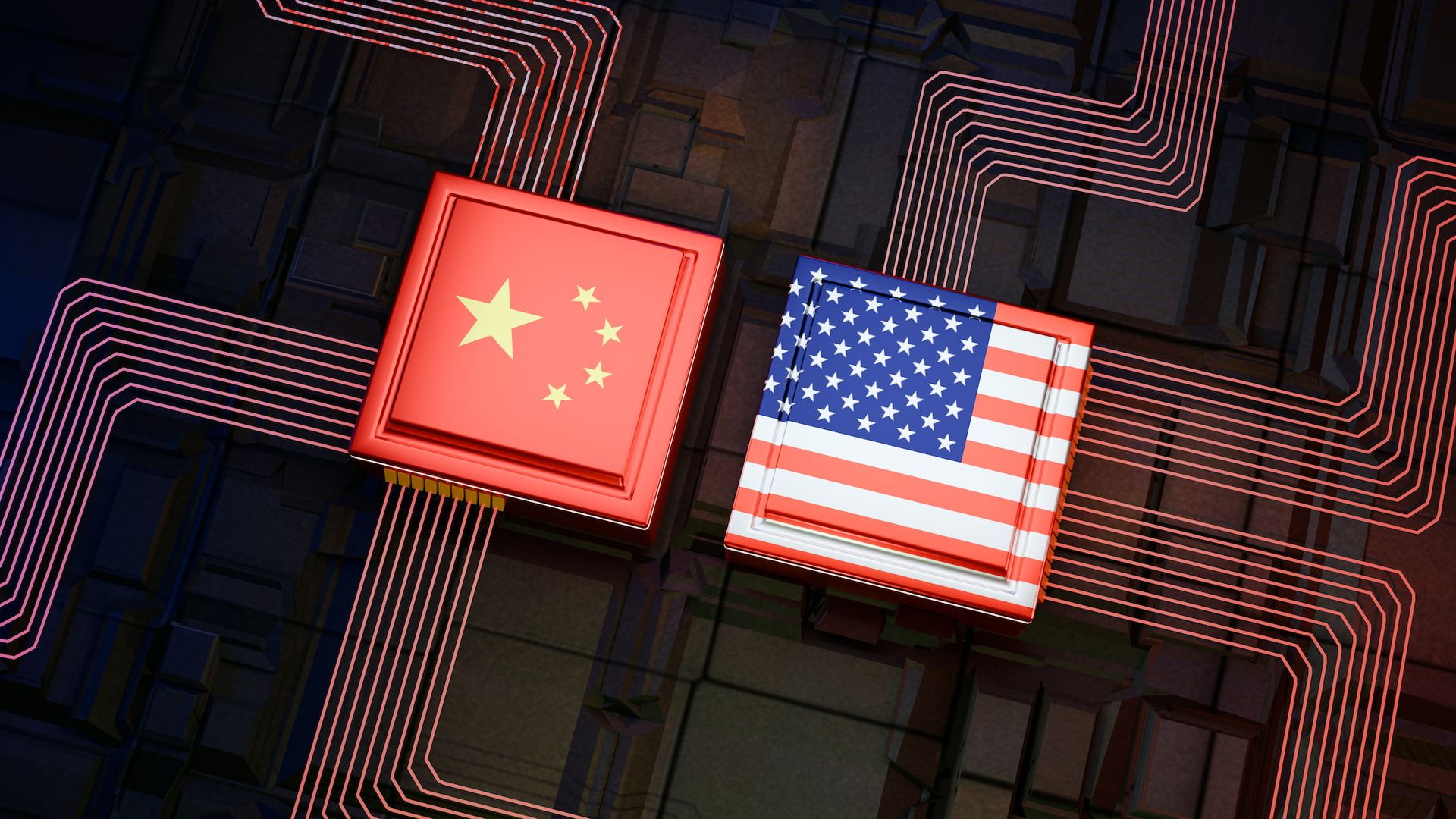
The topic of U.S. trade controls precluding the export of Nvidia and AMD high-end AI accelerator chips to China has taken a few twists lately. Jensen Huang's affairs aside, it's an open secret in the industry that Nvidia's Blackwell silicon finds its way into China, whether physically or virtually. UnemploymentLabs, an independent research outfit, has come up with strong evidence that those chips were used for training open-weight Chinese AI models, including DeepSeek V4, Kimi K3.1, MiniMax-M3, and Ling-3.1-Flash.
The scientists are careful to hedge their findings, noting that while their math checks out, it does not reveal where the chips were, how they were accessed, or prove that export controls were broken. As far as we can tell, it's currently not illegal for Chinese companies to rent Blackwell hardware abroad, and even though Nvidia's grip is tightening, U.S. companies aren't strictly prohibited from doing so, as evidenced by the recent Tencent-Oracle deal.
This identification method is limited to models with open weights, and depends on both hardware and software stacks used for model training — and yet it's both clever and simple, like the Egg of Columbus.
Let's establish some base facts. First, different AI accelerator families have unique counts of shader modules (SMs), marginally analogous to CPU cores — Nvidia's Hopper chips have 132, Blackwell B series have 148, and Blackwell GBs come with 152. Second, while there's more than one software stack for training AI models, PyTorch and its CUDA-aware friends are by far the most widely used on the green team's hardware.
Source link





