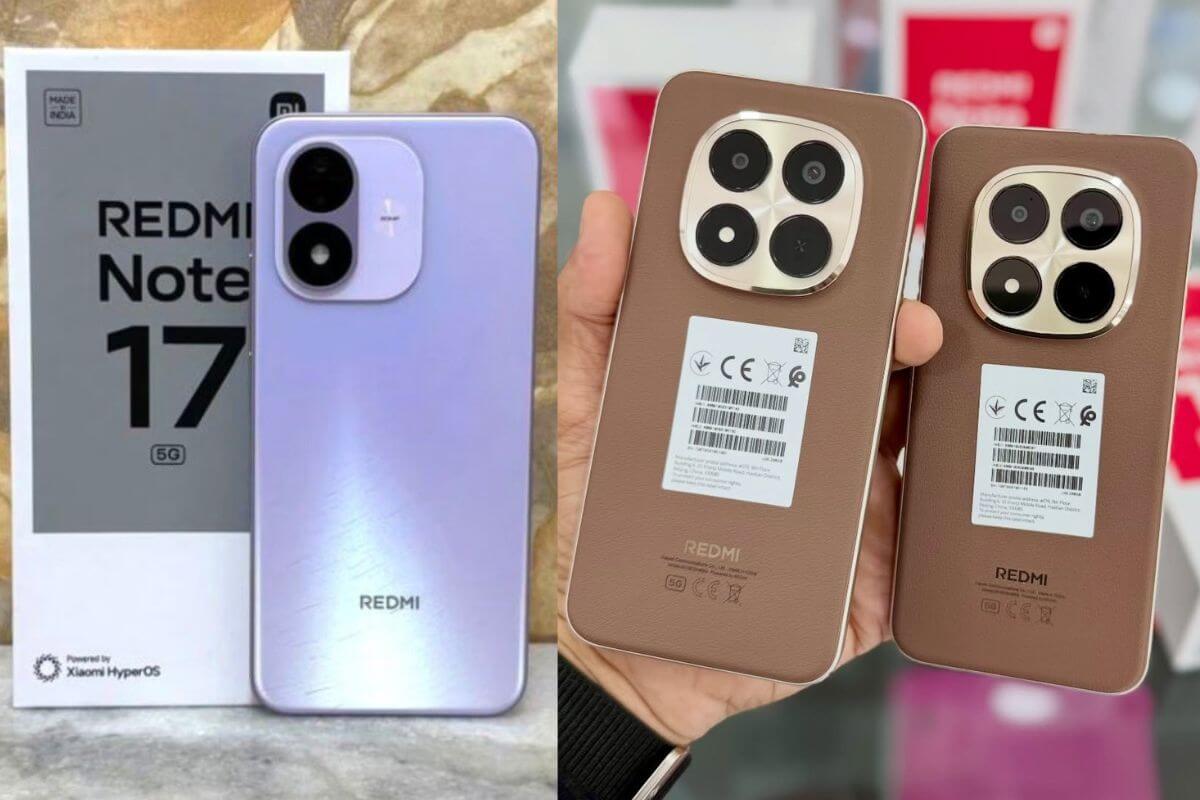
Xiaomi’s India subsidiary, Redmi India, launched its most-awaited Redmi Note 17 5G phone on August 6, 2026. The phone was marketed as a premium midrange device while keeping the price low amid the global chipset shortage, which has driven chipset and memory chip prices higher. So how did Redmi pull it off?
A recent in-depth review showed that Redmi smartly used downgraded chipsets, including an older Snapdragon 4 Gen 4, with less RAM and storage. It also skipped the ultra-wide-angle sensor and stereo speaker support.
Redmi also cut costs by using a dimmer display, while keeping a larger 7700mAh battery. This battery was a major marketing point that helped keep the Redmi Note 17 5G competitive.
Basically, Redmi downgraded the chipset from the previous year’s Redmi 15 series while keeping a larger battery. Here is all we know so far:
The Redmi Note 17 5G offers solid specs on paper, with a larger 6.99-inch front display protected by Gorilla Glass 7i.
The build is a trade-off, using a plastic back and frame. It features an OLED panel with a 120Hz refresh rate and 1800 nits of peak brightness.
Under the hood, it packs the Qualcomm Snapdragon 4 Gen 4 processor, an entry-level 2025 chipset built on a 4nm process.
On the camera side, it has a 50MP main sensor with an auxiliary lens and a 7MP front selfie camera. The phone has a 7700mAh battery and supports 45W wired charging.
So what are the trade-offs here? The Redmi Note 17 5G looks solid on paper, but a deeper look reveals trade-offs compared to the Redmi Note 15 5G.
Source link