India’s private space sector has largely focused on rockets, satellites, and launching payloads into orbit. But Vijayawada-based Red Balloon Aerospace is looking at the region below satellites, developing platforms that can operate at high altitudes for extended periods.
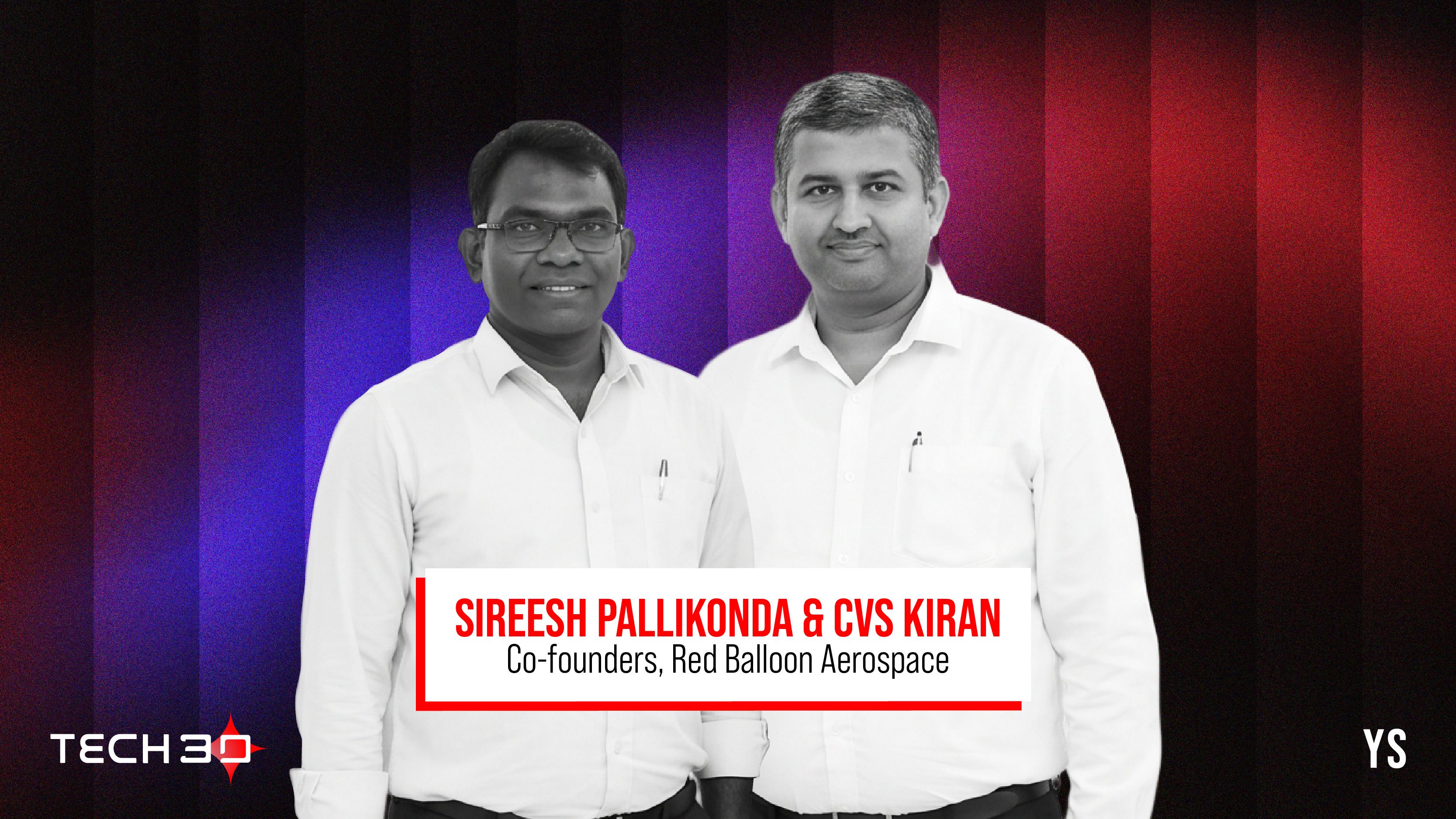
Founded in 2025 by former Skyroot Aerospace Vice Presidents CVS Kiran and Sireesh Pallikonda, the startup is developing what it calls a near-space infrastructure layer using stratospheric airships, aerostats, and super-pressure balloons.
The company is targeting the region between conventional aviation and orbital space.
“Between where aircraft end and satellites begin lies an entire domain that's largely unused, close enough to be affordable, and high enough to be persistent. Roughly 20 km to 50 km above Earth,” says Kiran, CEO of Red Balloon Aerospace.
Kiran, who previously worked at the Vikram Sarabhai Space Centre, says he identified a gap in India’s infrastructure while working on orbital systems. Payload developers need to test technologies at high altitudes before sending them into space, but existing facilities are limited and often oversubscribed.
Red Balloon aims to address this gap by building a commercial infrastructure business.
The startup’s main platform is HELIX, an autonomous stratospheric airship designed for long-duration operations. It is developing two other platforms alongside it: VISTA, a super-pressure balloon, and ALTIS, a tethered aerostat.
In May, the company launched VISTA from Vijayawada's Indira Gandhi Stadium. The balloon reached nearly 25 km, with the mission demonstrating India's indigenous stratospheric super-pressure balloon capabilities alongside those of the US, France, Japan and China.
According to Kiran, VISTA will also serve as a testbed for technologies that will eventually be used in HELIX, while ALTIS is being developed to test other systems.
Source link