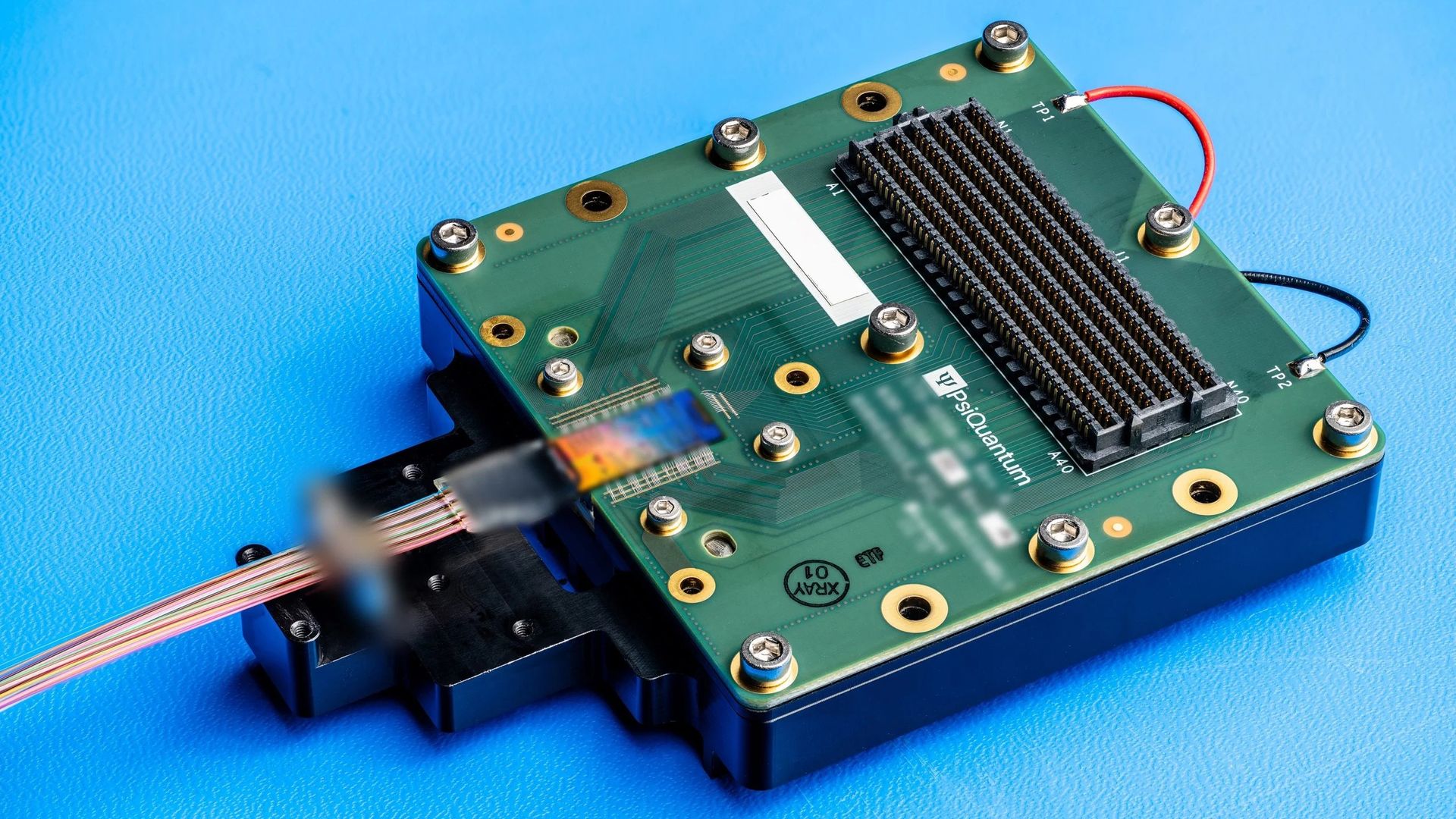
PsiQuantum, a quantum computing company, announced in a release earlier this week that it has turned its low-loss silicon photonics into an optical switch for use in AI data centers. Every optical switch typically comes with loss of light: the more light a switch receives, the less reaches the other side, with the amount of light lost measured in decibels. Typical data center optics can tolerate half the light (3 dB) being lost. PsiQuantum's switch debuted with a demo that typically loses only 1.2 dB of signal, or about a quarter of the light in lab tests, and the all-optical switch can achieve it without an amplifier. The prototype is, however, comparatively small, with eight inputs and outputs (8x8) against competitors’ 32 to 300, but the company says larger devices are in development.
The optical circuit switch (OCS) passes light straight through, from fiber to fiber, without converting it to or from electrical signals. Regular data center switches make that conversion at every hop, which takes power and adds latency. An OCS, instead, uses a fixed light path that it maintains until a change is ordered. Its main penalty comes down to how much light is lost when passing through the switch. PsiQuantum’s switch, which uses circuits etched on a silicon chip with no moving parts, unlike Google’s and Lumentum’s tiny mirrors, or microelectromechanical systems (MEMS), would be used alongside regular packet switches.
Skipping those conversions matters more as AI clusters grow, because moving data between GPUs is quickly becoming a bottleneck.
Source link