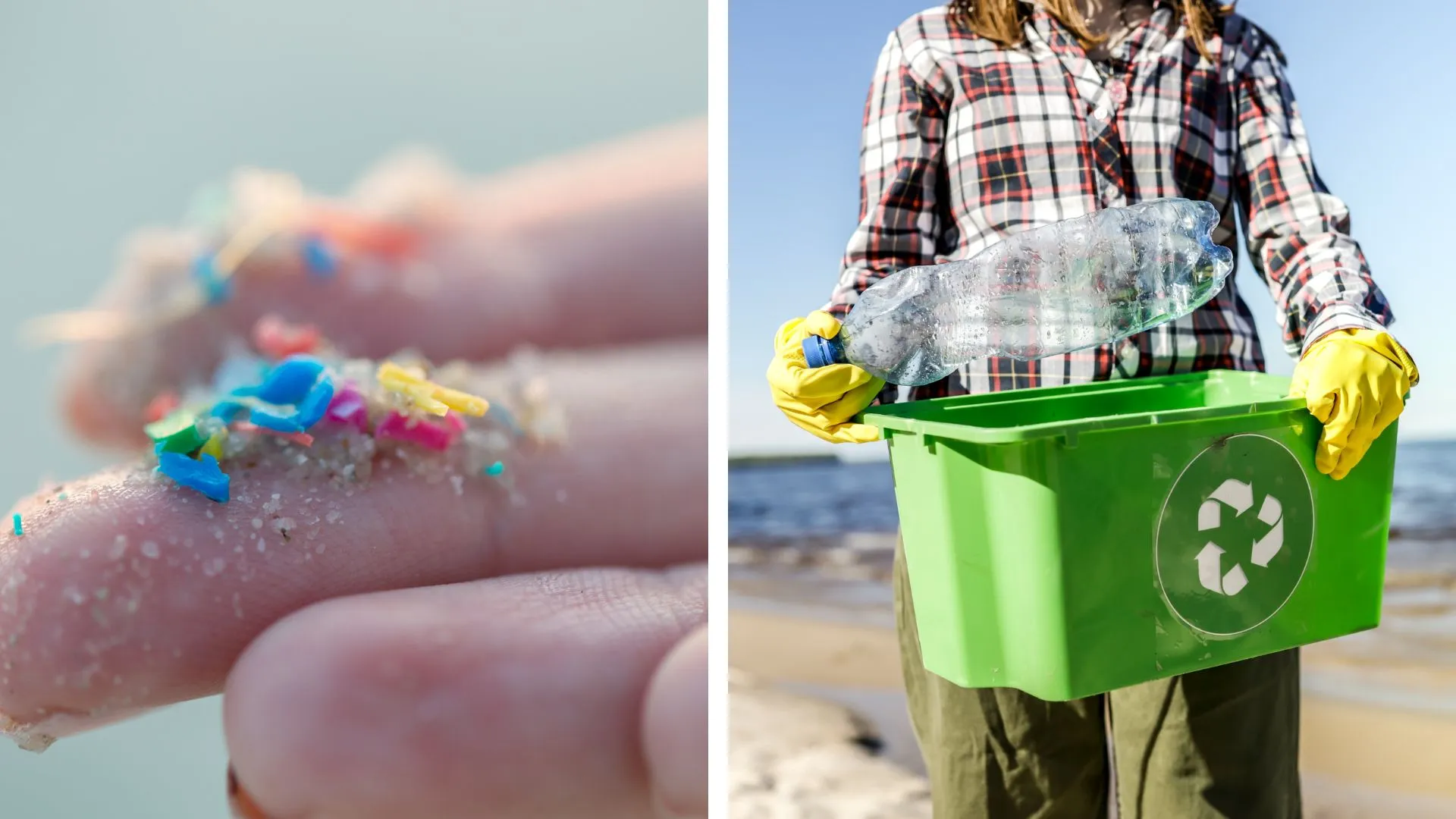
Researchers have found that a way to give plastic waste a second life. Materials chemists from University of Vienna have found a way to convert several types of plastic waste into water-attracting polymer networks. These can take up water even in dry climates and release it again under moderate heating, e.g. using sunlight.
The new effort offers a route to give plastic waste a second life as an adsorbent for atmospheric water harvesting.
Using this method, discarded plastic packaging materials , old CDs, and even LEGO bricks can be transformed into materials that capture significant amounts of moisture from the air. Certain plastics comprise of aromatic polymers, whose molecular structures contain rings of six carbon molecules. These rings act as suitable sites from which to tie the polymer chains together, forming a porous network with tiny internal spaces. A subsequent treatment with sulfuric acid adds sulfonic acid groups that attract water even from relatively dry air, according to a press release. Researchers successfully produced such water-loving molecular sponges from various polystyrene packaging materials, old CDs made from polycarbonate, and LEGO bricks made of acrylonitrile butadiene styrene as feedstock. They also successfully treated a selected mixture of waste plastics , demonstrates versatility across these feedstocks, as per the release. Published in Chem Circularity, the findings establish a route from diverse aromatic plastic wastes to functional materials for atmospheric moisture capture. The ability to process a mixture suggests opportunities to reduce sorting requirements within compatible waste streams. Translation beyond the laboratory will require assessment of variable feedstocks, solvent and reagent recovery, production costs, and environmental impacts, alongside device integration and long-term durability.
Source link