
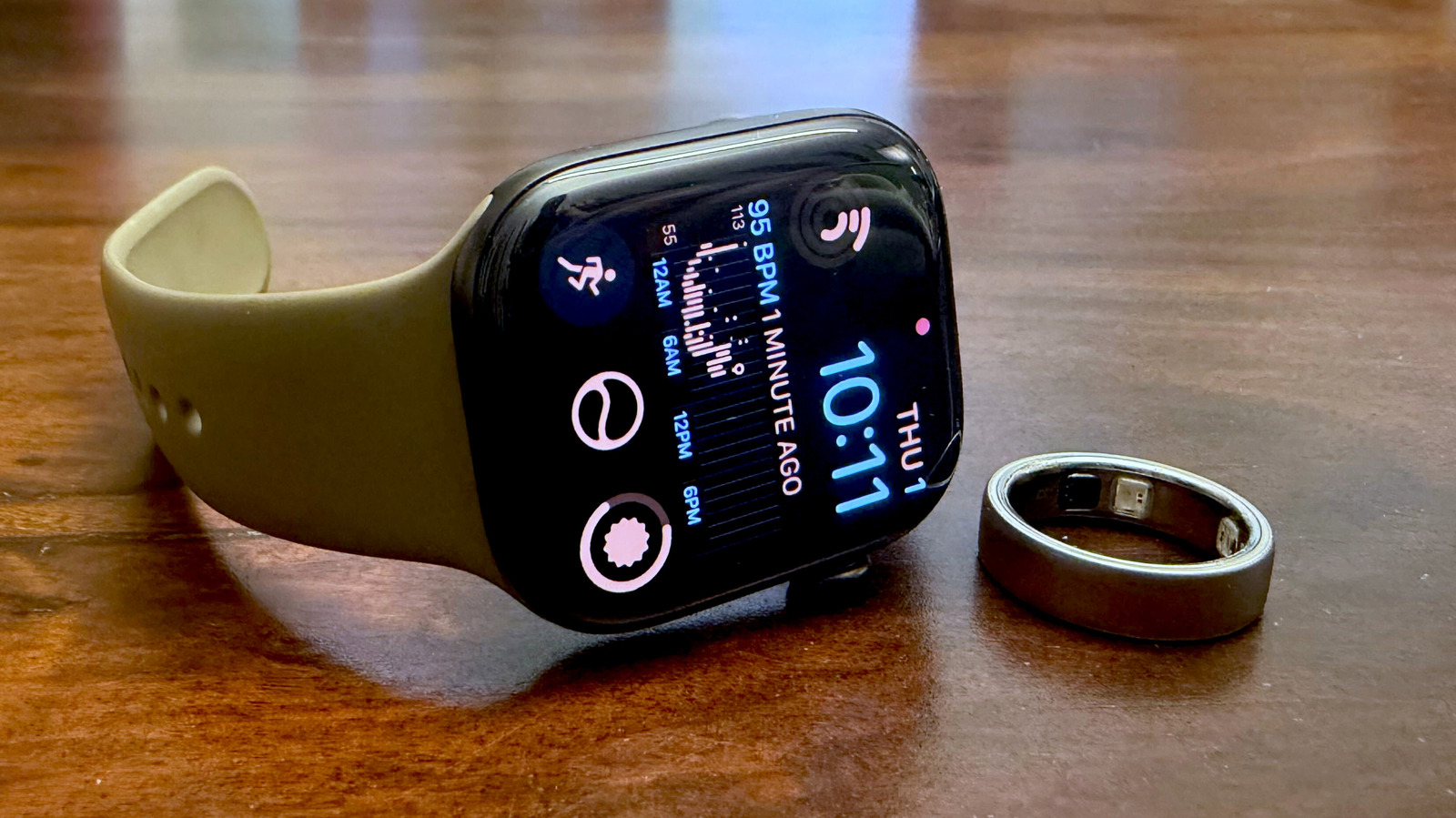
Once niche, health and fitness wearables have become pretty commonplace. It's not that everyone is suddenly into running and weightlifting. Rather, Fitbit helped popularize simple, affordable wristband trackers, and Apple integrated health sensors into the Apple Watch, snaring millions of iPhone owners and inspiring copycats. The benefits of health tracking are also tangible — it's not hard to find anecdotes in the wild from people who say a wearable helped them go from sedentary to fit, or even saved their life.
In recent years, the supremacy of bands and smartwatches has been challenged by smart rings. These provide many, if not all, of the same tracking benefits, but in an even more compact form factor. Some people may also prefer them for their more stylish or "professional" look, though that's extremely subjective.
Starting around the $400 price point, the Oura Ring 5 competes directly with Apple's latest flagship, the Apple Watch Series 12. There are arguments for both devices, although issues like platform support, workout intensity and your willingness to spring for subscriptions will probably dictate your path. This is a case where aesthetics should definitely not rule the day.
The Oura and the Series 12 gather much of the same health data, including metrics like sleep, steps, estimated calorie burn and heart rate (including variability). They also provide tracking related to menstrual cycles, though Oura claims to go a step further in women's health, providing insights related to pregnancy and menopause. They further share Readiness scores, which synthesize various factors to gauge whether you should push for that new squat PR or take it easy.
Source link





