

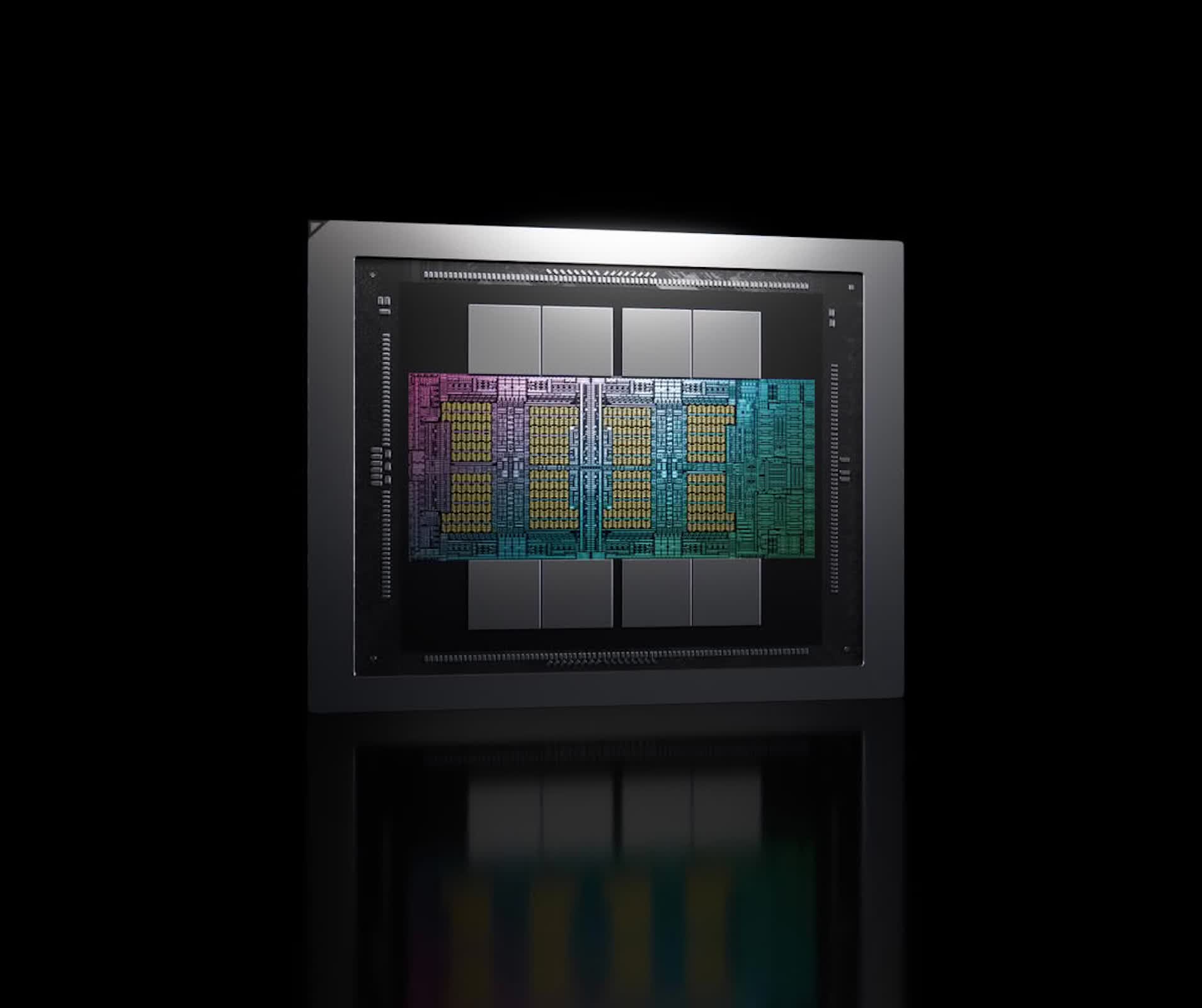
What we know so far: Nvidia is building a GPU with more than 50,000 CUDA cores for one main job: running the simulations that AI agents start when they help scientists and engineers test ideas. The Rubin HPC chip was announced this week at the Supercomputing 2026 conference as a new part of Nvidia's Vera Rubin platform, but it's not expected until 2028, and the company has yet to release several specs that HPC buyers care about most.
The core count offers the first clue to what Nvidia is building. The current Rubin GPU has 224 streaming multiprocessors and 28,672 CUDA cores, so getting past 50,000 would take at least 74% more cores.
That suggests Rubin HPC may spread its cores across several dies in one package, as the two-die Rubin does, or as the four-die Rubin Ultra that Nvidia originally planned, a design since reportedly scaled back. Nvidia has not confirmed the chip's physical layout and describes the core count only as being "on a single GPU." The image it released with the announcement does not appear to show a multi-die design.
Nvidia's pitch is less about raw compute and more about keeping that compute busy. The company says climate modeling, engineering simulation, genomic analysis and financial risk work tend to follow the same pattern: a program reaches into a huge dataset, pulls out a few scattered values, runs a calculation and then repeats that step an enormous number of times. Under that kind of load, a GPU's cores often sit idle while they wait for data.
Source link





