
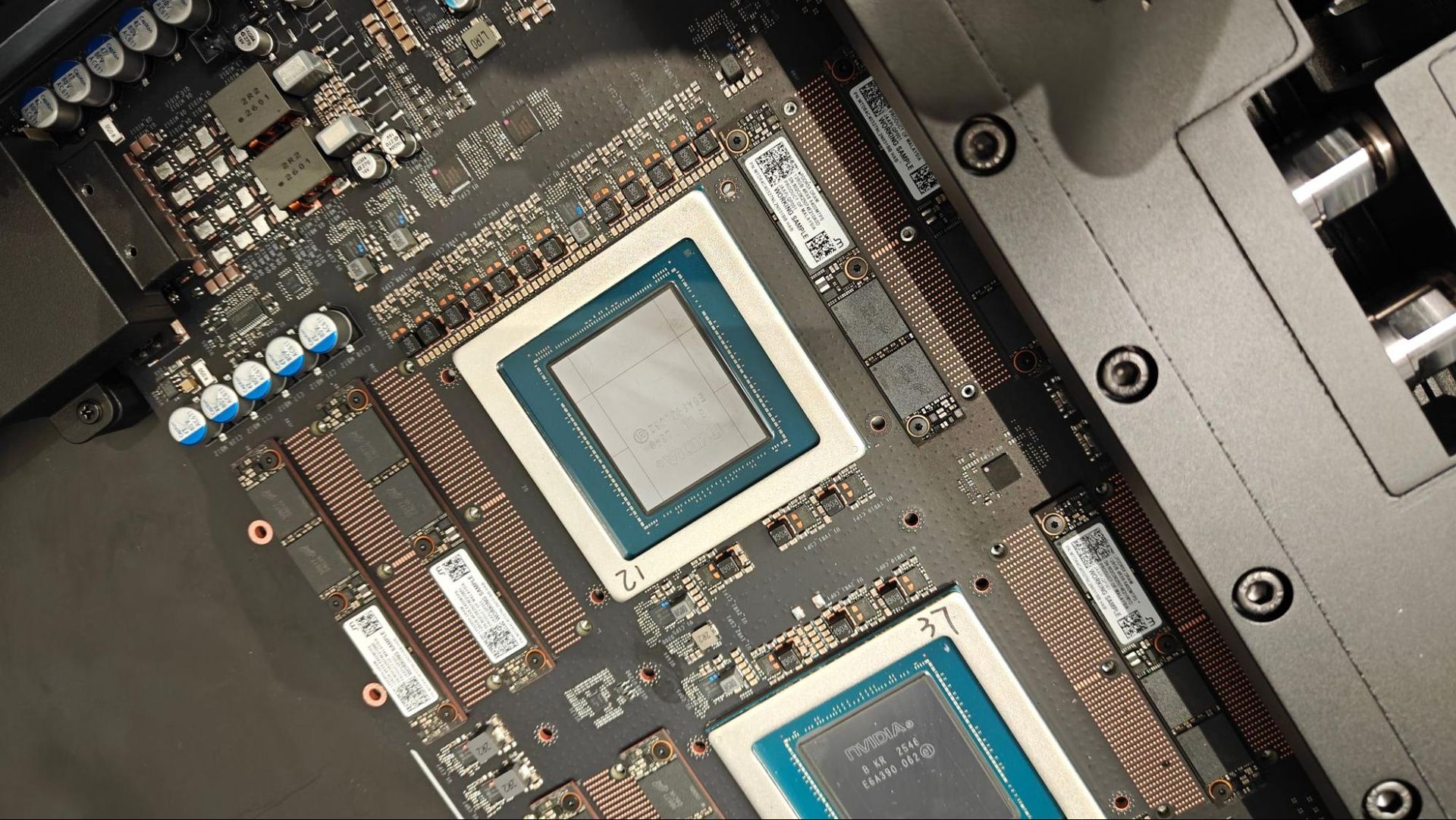
Nvidia's Vera CPU, designed as both a standalone data-center part and a host for Nvidia's Vera Rubin NVL72 servers, offers impressive performance thanks to substantially higher execution resources per core than its predecessor, Grace. However, Nvidia admits at Supercomputing 2026 (SC26) that existing software cannot always take full advantage of Vera's resources without adaptation for the architecture.
The company shared that architecture-specific software optimizations can boost Vera's performance by nearly 39% in certain computationally intensive workloads. But despite offering unbeatable single-thread performance, the CPU is not positioned for general-purpose workloads.
Get the full Tom's Hardware experience on your device with our brand-new app. Bookmark articles, use our smart search feature, personalize your feed, and get push notifications so you never miss a beat.
- Download now on Apple App Store
- Download now on the Google Play Store
Unlike Grace, which relies on off-the-shelf Neoverse V2 CPU cores developed by Arm, Vera uses Nvidia's proprietary Olympus cores specifically designed to maximize per-core performance as well as to ensure high aggregate throughput. To that end, Nvidia equipped Olympus with a wide front end that features a 10-wide decoder, a neural branch predictor, a deep out-of-order execution engine, six vector execution units, four load pipelines, two store pipelines, all backed with large private caches and advanced prefetch mechanisms.
In fact, Nvidia deliberately opted for 88 high-performance general-purpose cores with support for its proprietary spatial multithreading technology (176 threads in total) rather than maximizing the number of cores per socket, as the maximum possible single-thread performance was one of the key design goals for Vera.
Source link





