
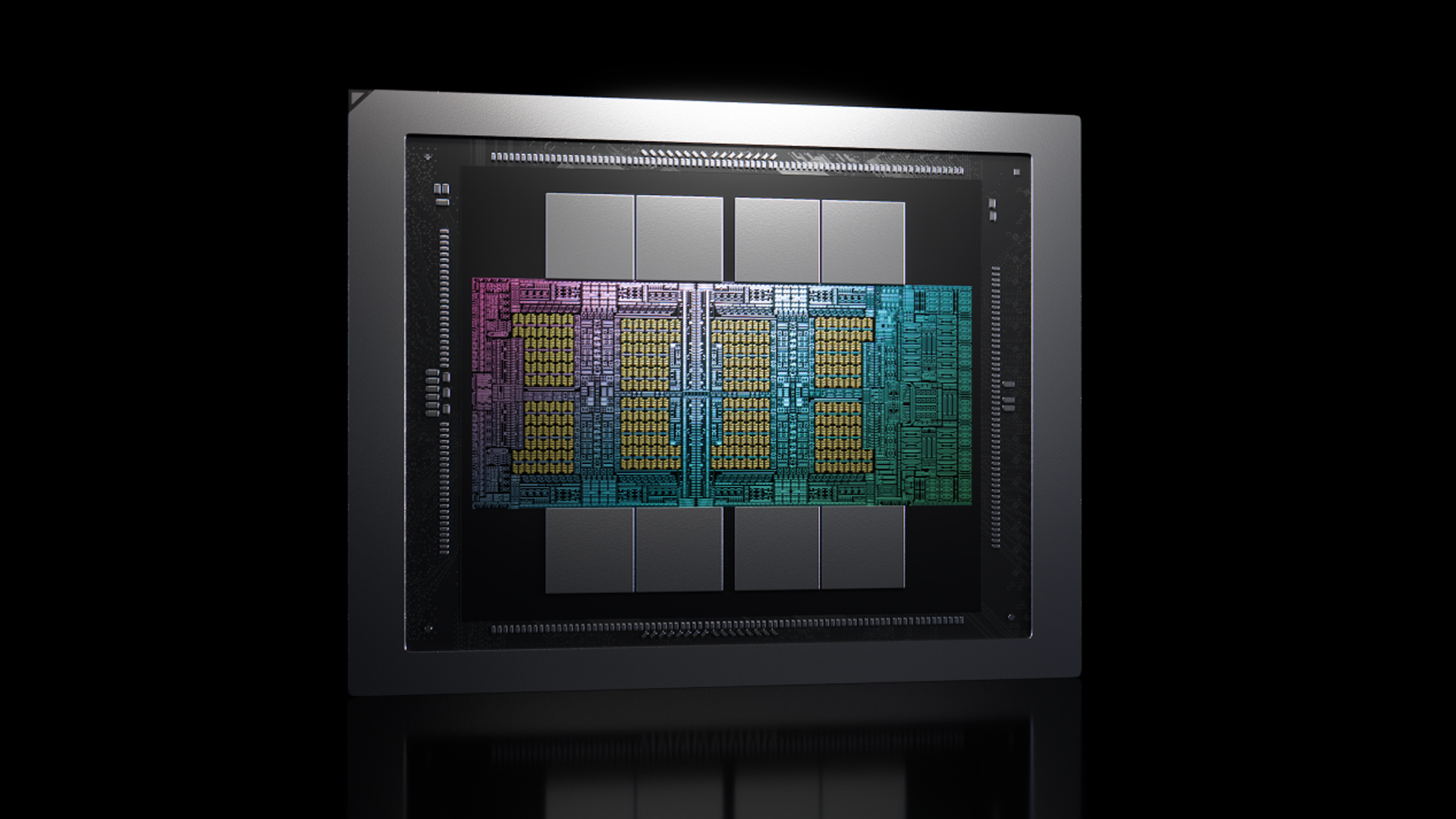
The Supercomputing 2026 conference is under way, and despite continuing turmoil elsewhere in the company, Nvidia has lots to reveal at the show. Foremost among its announcements today, Nvidia took the wraps off a new member of the Rubin GPU family called Rubin HPC, a chip that the company says is meant to accelerate agentic workflows and simulation for scientists, engineers, and analysts working with large data sets.
To accelerate those most demanding workloads, Nvidia says Rubin HPC has the highest number of CUDA cores on any of its GPUs - "more than 50,000" - which might imply that this chip uses a configuration similar to the four-die Rubin Ultra GPU, which links those dies together using NVLink-C2C.
Today's Rubin GPU has 224 SMs and 28,672 CUDA cores, so scaling compute resources to the degree Rubin HPC does would necessarily require more dies on a package. Nvidia didn't reveal more details of the chip's physical layout alongside the announcement. (The representative image shared by the company wouldn't appear to take this into account.)
To keep data moving between Rubin HPC GPUs, Nvidia will use its NVLink 7 interconnect. The company didn't share any new details of the bandwidth or physical layer of this interconnect within the rack, but past disclosures about the tech have indicated that it retains the 3.6 TB/s of per-GPU bandwidth that NVLink 6 delivers while enlarging the size of its scale-up domain.
Nvidia didn't share any details of the Rubin HPC GPU's HBM capacity or bandwidth, and it also didn't share whether this part includes a rebalancing of compute resources towards native FP64, as AMD and Intel are touting at the conference with their own GPUs this week.
Source link





