
Manually inspecting thousands of massive steel canisters packed with radioactive waste, one by one, would be a major logistical undertaking.
Now, the U.S. Department of Energy is working to avoid this logistical challenge.
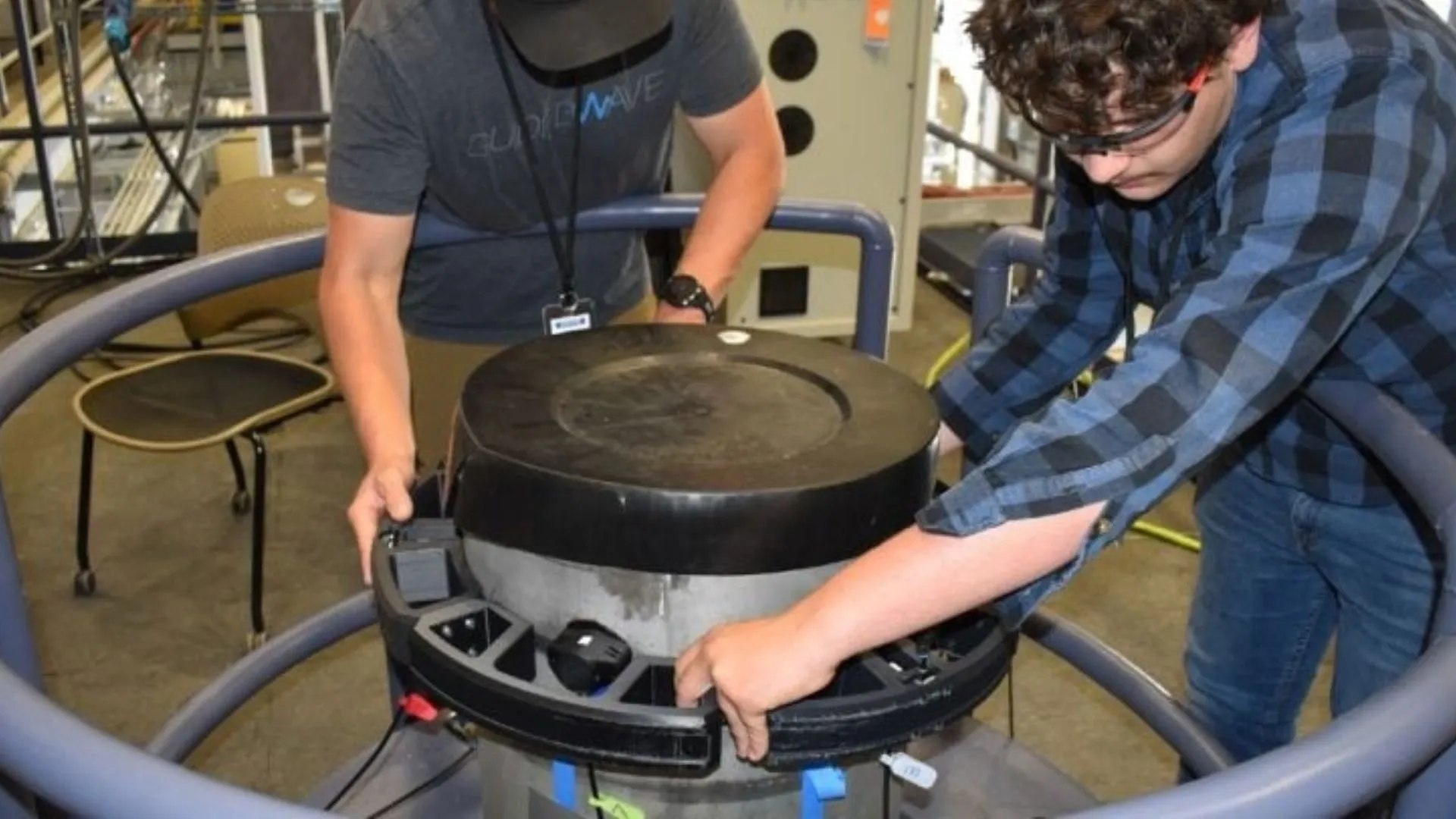
Following successful lab trials in Idaho, the DOE’s Center for Used Fuel Research has tapped Guidedwave to test an automated acoustic emission system at full scale. The technology listens for subtle structural changes in used nuclear fuel (UNF) dry storage canisters. It tracks integrity remotely and continuously.
“A future DOE federal UNF storage or staging facility could store hundreds or thousands of dry storage systems, allowing automated and continuous monitoring and inspection approaches to streamline aging management and reduce operational burdens for UNF management at such facilities,” Idaho National Lab stated.
Metal under stress releases faint, high-frequency ultrasonic waves long before any crack becomes visible to the naked eye. Such microscopic damage, including chloride-induced stress corrosion cracking, poses a well-known risk at coastal facilities like San Onofre.
Rather than blasting signals into the steel like traditional ultrasonic tools, acoustic emission sensors sit directly on the canister surface and passively listen. Acting much like a medical stethoscope, the sensors pick up the metal’s own internal stress signals in real time.
S. Nuclear Regulatory Commission (NRC) aging management rules. Technicians often need to haul specialized gear out to the storage pads for every single checkup. That approach works for individual power plants, though a future federal storage facility could hold hundreds or even thousands of canisters. Automating the process would slash operational costs and human exposure.
Source link





