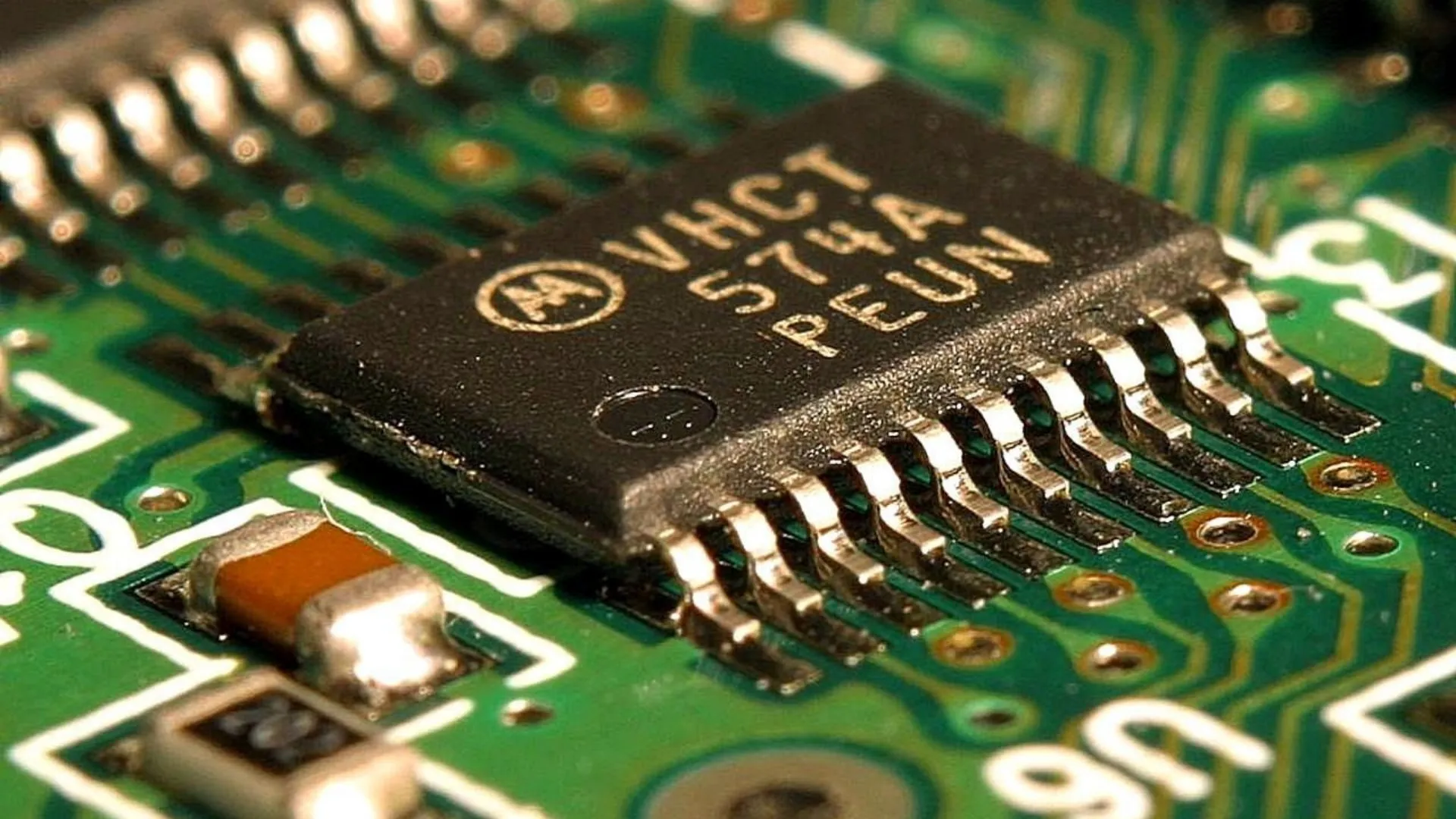
Researchers at Peking University in China have developed an embedded cooling system that uses an electrically insulating liquid to remove heat from electronic chips. It reaches a critical heat flux of 1,570 watts per square centimeter in initial tests.
The design places tiny coolant channels close to heated regions inside the chip substrate. As the fluid passes through these channels, it absorbs heat and partly turns into vapor, which exits through specially arranged outlets.
Integrated circuits contain interconnected components that process information or control electrical signals. Their operation generates heat, making effective cooling important for both performance and reliable operation over time.
Embedded cooling tackles this problem by carving microscopic channels directly into the material supporting the circuits. This brings coolant close to the locations where heat is concentrated, allowing the fluid to absorb and carry it away.
Water offers useful thermal properties, but its potential electrical conductivity requires precautions to protect chip components.
“Embedded cooling—where microfluidic structures are directly etched into the chip substrate to send liquid coolants close to the hot spots—can offer dissipation of heat fluxes up to 3,000 W cm−2 using water as the coolant,” wrote Wei Xiao, Zhihu Wu, and their colleagues.
The team instead used HFE-7100, a dielectric coolant, and designed its system around the fluid’s transition from liquid to vapor.
The researchers fabricated their cooling structure using techniques widely used in electronics manufacturing. Alongside channels near the heated regions of test chips, they created a manifold to distribute incoming coolant and collect fluid leaving the channels.
Source link