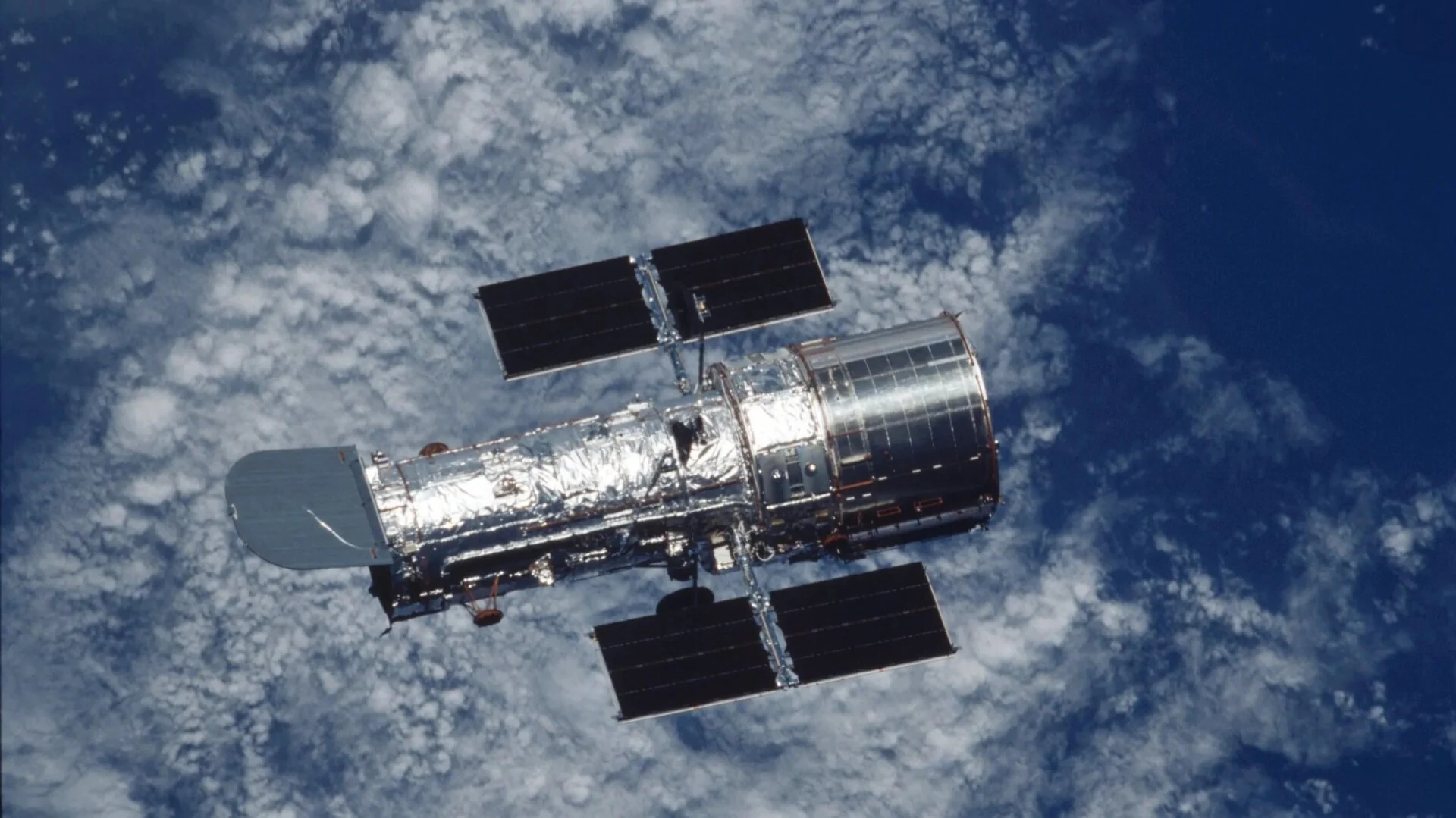
When it comes to photography of the cosmos, the Hubble Space Telescope is one of the best to ever do it—a real astronomical Ansel Adams. Just look at the staggering body of work it’s produced since being launched into low-earth orbit in 1990. While Hubble’s up there snapping jaw-dropping close-ups of our planetary neighbors or gargantuan nebulae light years away, lesser 36-year-old photographers on Earth are sliding into the DMs of the Instagram models they’d “love to collab” with.
It’s Hubble’s unparalleled corpus of works that make its current fate all the more upsetting. It’s slowly but steadily losing altitude as it orbits our planet and is predicted to re-enter the atmosphere, falling from the heavens in a fiery blaze, sometime in the early-to-mid 2030s—an ignominious and far-too-soon demise for one of the most significant achievements in the history of science.
Given that gravity has a tendency to attract smaller masses to larger ones, Hubble’s expected downward drift is a problem NASA’s been trying to mitigate since before the observatory even launched. They even got Space Shuttle Columbia to nudge it back up in orbit a bit during a 2002 servicing mission. While that may have bought Hubble a few extra years, it was only forestalling the inevitable. And with the Space Shuttle fleet now grounded and spending their retirement years in various museums, NASA’s been forced to look to the private sector for Hubble rescue operation ideas.
With no spacecraft of their own left to handle the task, the federal agency released a Request for Information (RFI) on October 29 to see if anyone from the growing commercial space industry might care to offer a proposal on how to boost Hubble’s altitude and/or service it.
Source link